2026-07-27
At a Tokyo Hot-Sake Bar, Temperature Becomes Part of the Flavor
Enrai sits on a back street in Shibuya 2-chome, close enough to Aoyama-gakuin that the crowd skews a little more grown-up than the station-side izakaya scene nearby. It’s a specialist: close to 80 sake on the list, nearly all of them chosen with warm serving in mind, and a dedicated “kanban” — the staff member whose job is reading each bottle and warming it to the right temperature — working a sake-warming device behind the counter all night. On a visit back on June 6, that meant something simple but easy to miss elsewhere: the temperature wasn’t a footnote to the sake. It was most of the point.
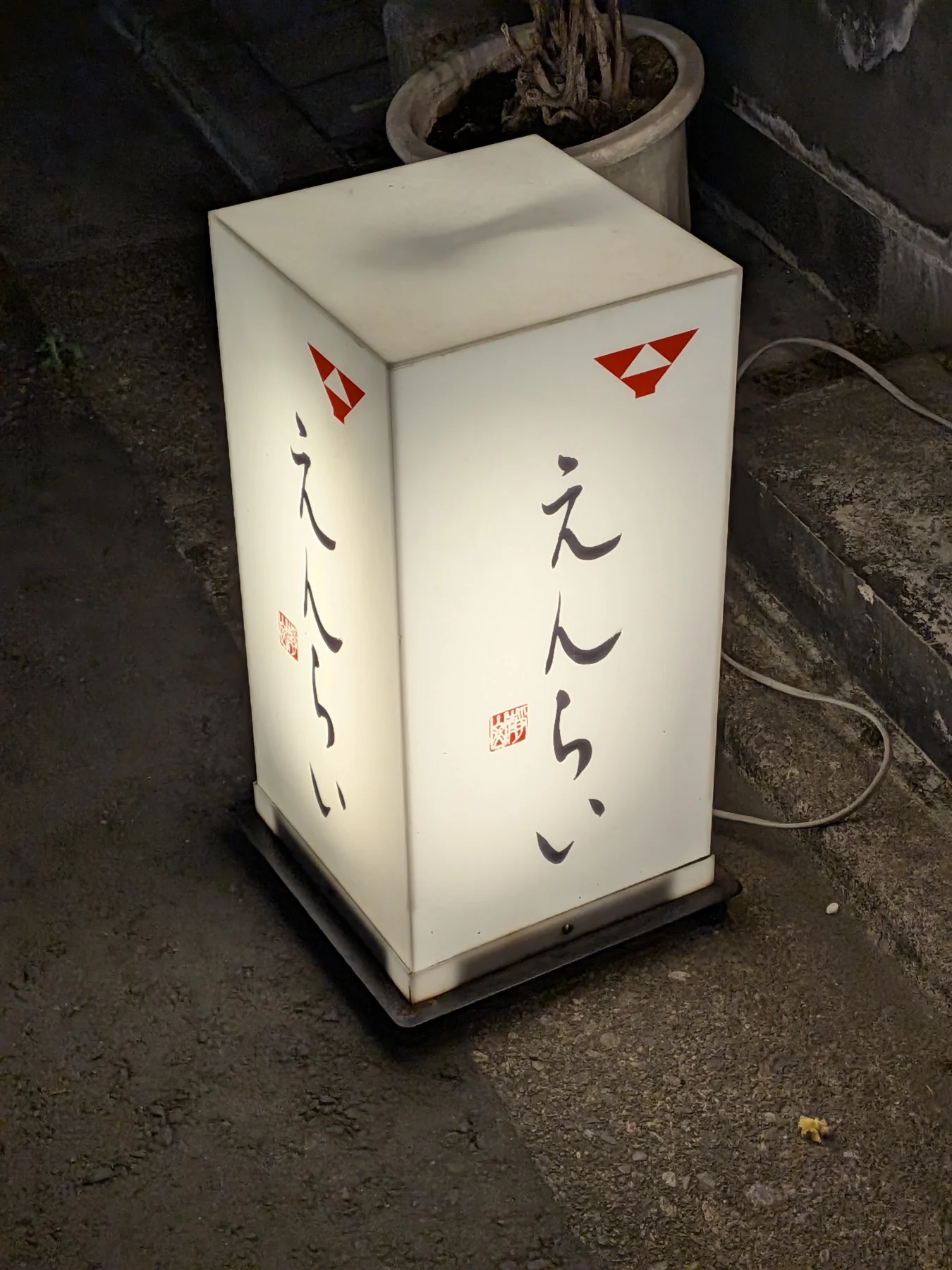
The entrance to Enrai, a hot-sake specialist bar in Shibuya.
What makes Enrai different
Most izakaya treat “atsukan” as one setting — heat it up, pour it out, done. Enrai treats it as a craft decision made bottle by bottle. The room is built around it: a sake-warming device on the counter, close to 80 bottles chosen with warm serving in mind rather than as an afterthought, and a kanban whose whole job is judging how hot each one should go. Walls covered in autographs from manga artists and brewery visitors who’ve clearly kept coming back tell the rest of the story — this is a bar for people who already care about sake, not a tourist stop that happens to serve it hot.
The bottles tasted
Two pours, both heated, both from breweries with real technical range behind them.
Izumibashi Kuro Tombo Kimoto Junmai Yamada Nishiki, from Izumibashi Shuzo in Ebina, Kanagawa, is a kimoto-method junmai brewed from the estate’s own contract-grown Yamada Nishiki and aged two years or more before release.
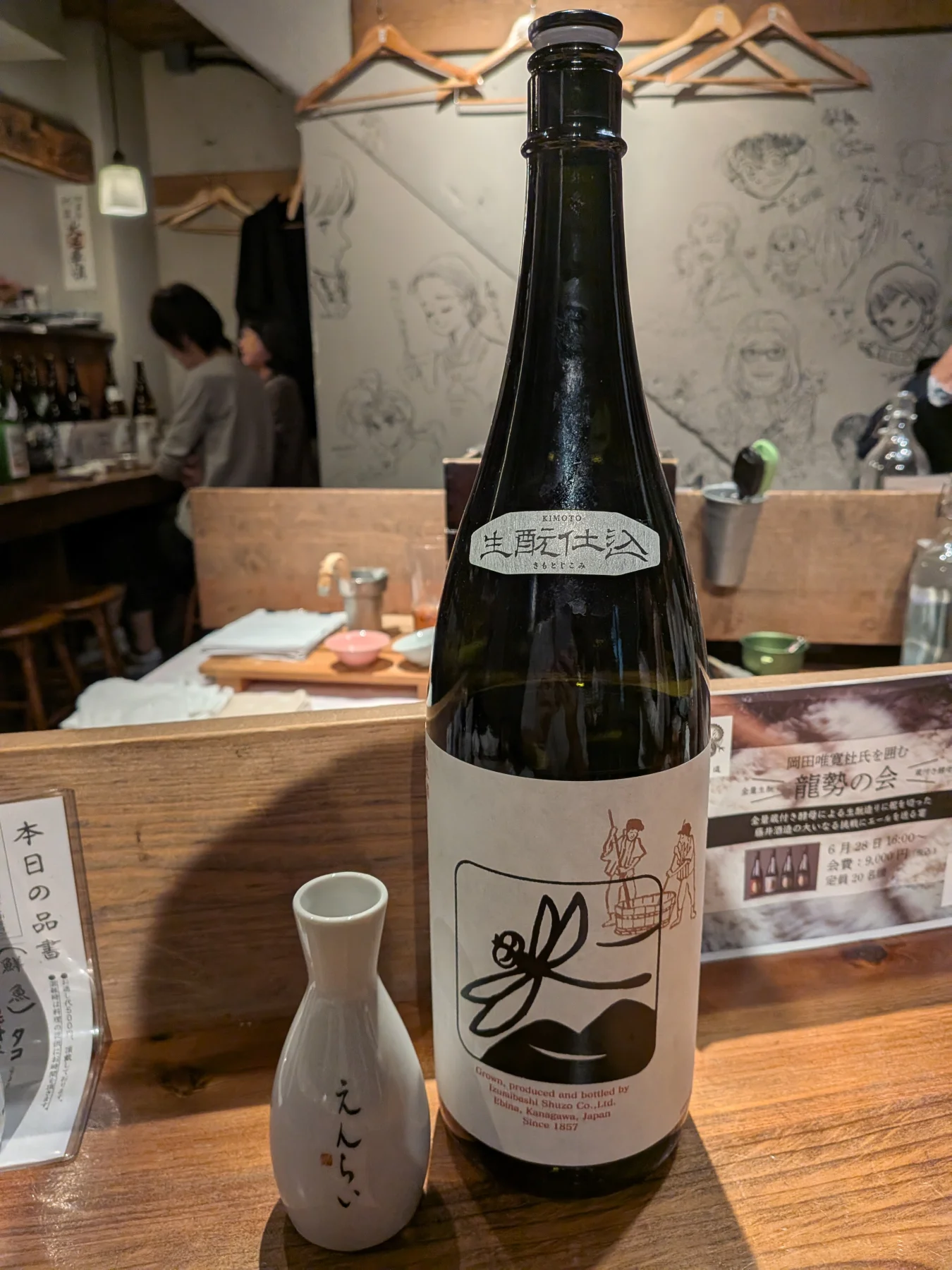
Izumibashi Kuro Tombo, served warm alongside one of Enrai’s house tokkuri.
Fusozuru Junmai Ginjo Omachi, from Kuwabara Sakaba in Masuda, Shimane, is a 100% Omachi rice sake from the 2022 brewing year, bottled this past April — old enough that some extra roundness from aging wouldn’t be a surprise.
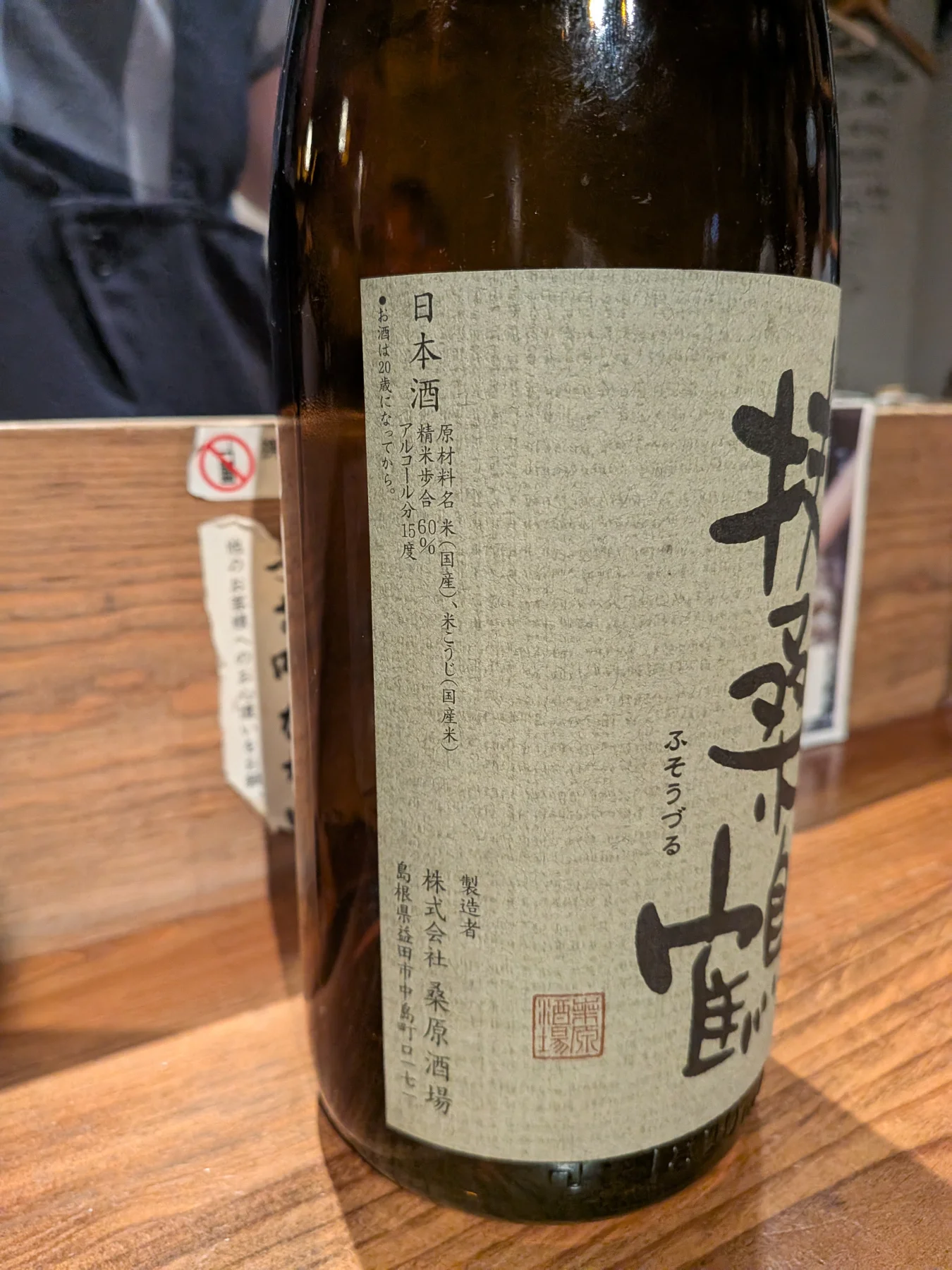
Fusozuru Junmai Ginjo Omachi, the gentler of the two pours.
Heated, the two sat at opposite ends of the same idea. Fusozuru stayed easygoing — soft rice umami, restrained acidity, nothing that pushed hard against the food — served alongside cold tofu and a stir-fry of fermented napa cabbage and pork. Kuro Tombo went the other way: heat seemed to pull more out of it rather than less, until its body, acidity, and umami were doing as much work as anything on the table.
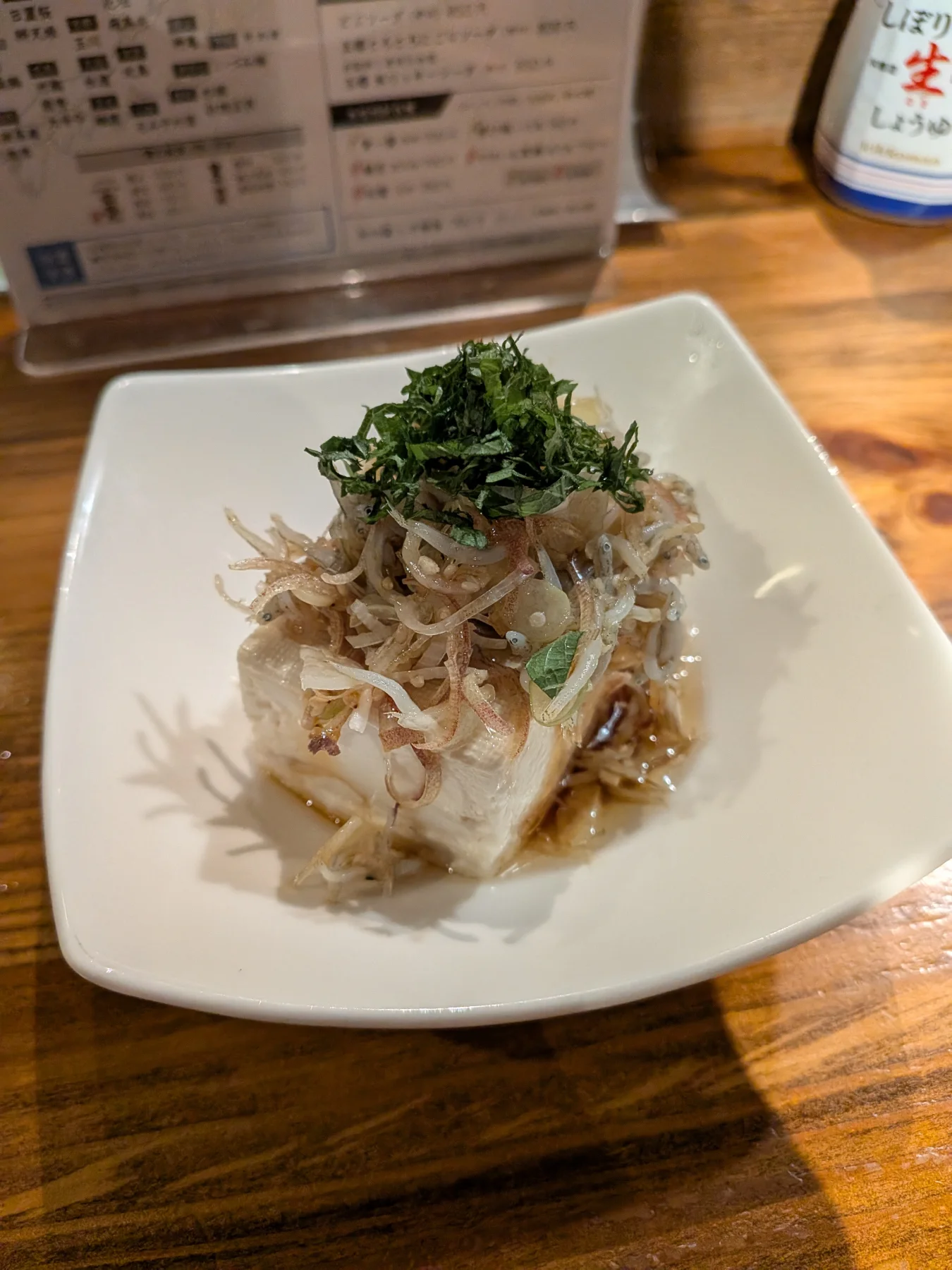
Cold tofu with shirasu, myoga, and shiso — one of the dishes served alongside the Fusozuru.
How temperature changed the experience
Same warming device, same counter, same night — and the two bottles landed in completely different places once heat was involved. That’s the case for warm sake in one comparison: heat doesn’t flatten a bottle’s character into one generic “atsukan” profile; it can bring forward qualities that were already there. A gentle sake can stay gentle and get rounder, while a structured one can show more of its structure.
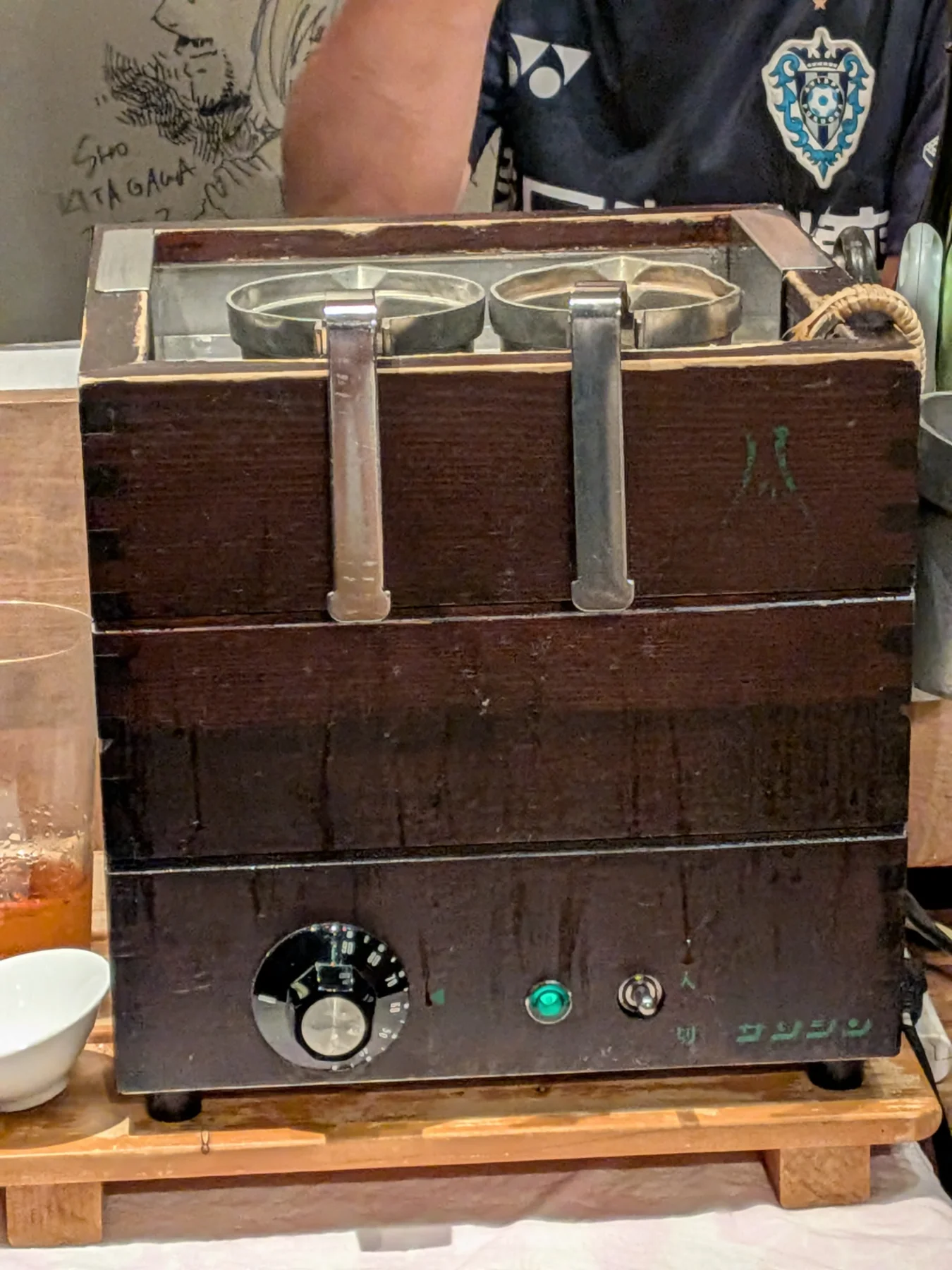
The kanburo — the sake-warming device — in use behind the counter.
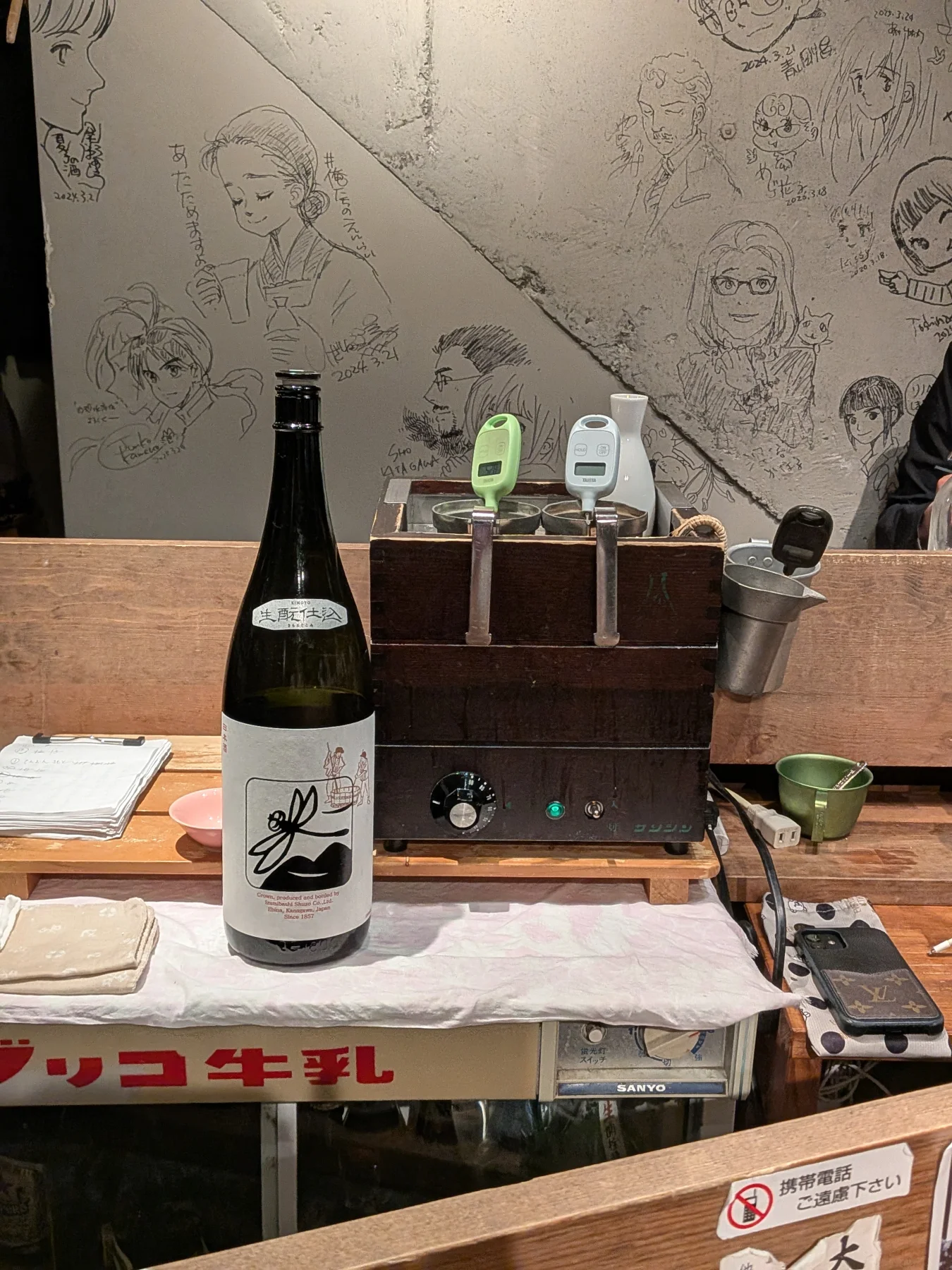
The Izumibashi bottle beside the warming device it was heated in.
Why the pairing worked
The clearest match of the night was Izumibashi Kuro Tombo with ayu (sweetfish) confit. The fish’s own bitterness met the sake’s heated, umami-forward depth almost exactly — the kind of pairing where the sake and the food are working the same register instead of one covering for the other.
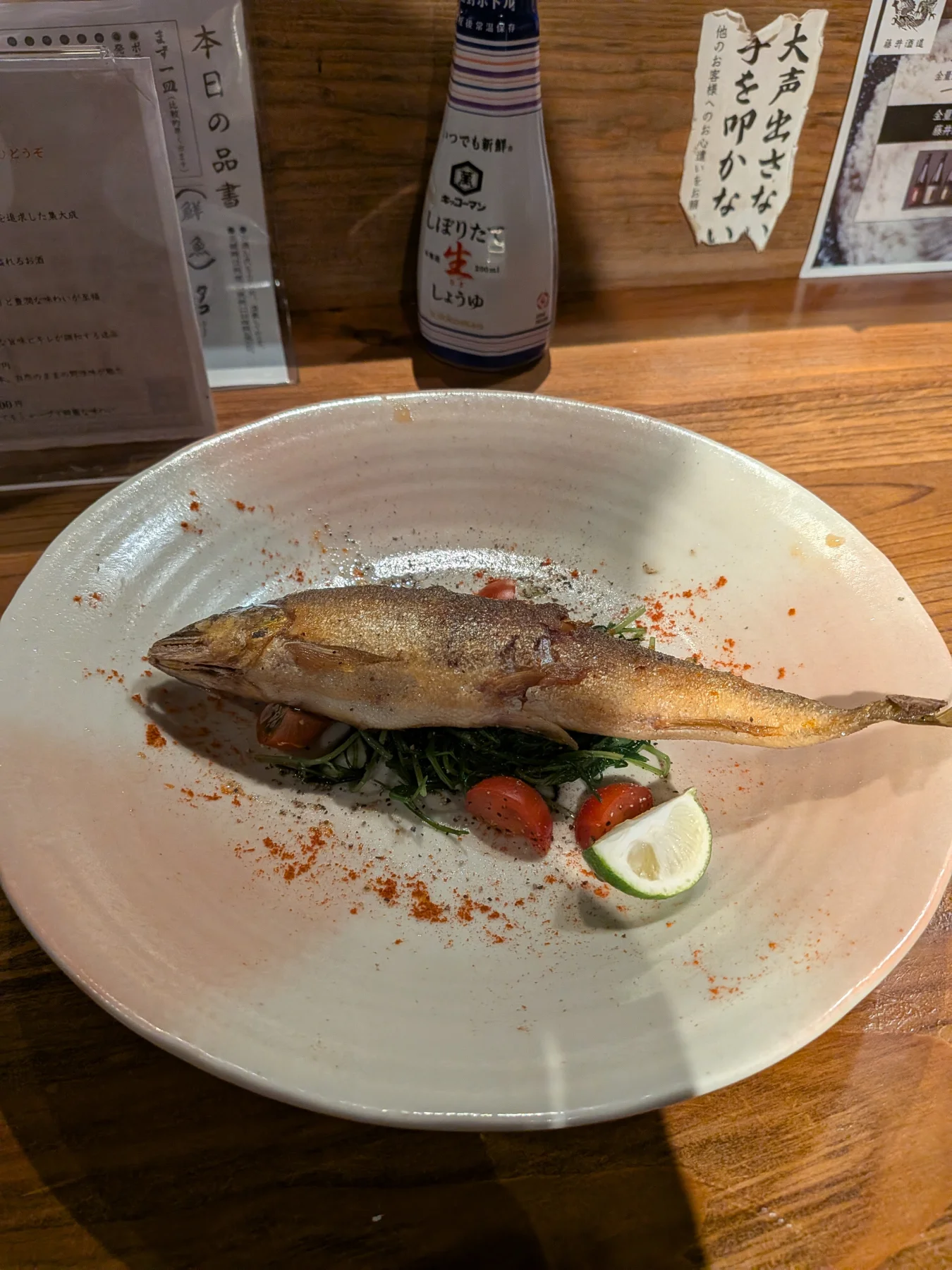
Ayu confit, the best pairing of the night. The sake is not pictured in this frame — the two were tasted together, not photographed together.
What this visit taught me about warm sake
If the only sake you associate with “atsukan” is the cheap stuff at a standing bar, a night at Enrai is the fastest way to unlearn that. Both of these bottles are built with real technical intent — a kimoto mash aged two years, a single-rice Omachi junmai — and heat didn’t erase that, it revealed it. Polish ratio explained little of what happened in these two glasses; temperature explained much of the difference.
The room
Enrai is a short walk from Shibuya Station, tucked into the backstreets on the Aoyama side of the neighborhood. Go with an open mind about temperature — the kanban will ask what you’re drinking and adjust the heat to the bottle, not the other way around.
For the bottle-selection side of that idea, see which sake styles and bottles tend to work warm. For the serving vocabulary and temperature ranges themselves, use the sake temperature guide.
Browse all sake by category, or compare bottles on the Taste Map.