2026-10-12
Furusato, Shimbashi: Four Regional Sake with Bold Izakaya Dishes
On July 7, 2026, I visited Furusato in Shimbashi, Tokyo. Away from the busiest restaurant streets, it felt comfortable to sit and drink alone, even with regulars around. The selection leaned toward distinctive regional sake rather than the familiar labels I often see elsewhere. What stayed with me, though, was the food: soy sauce, herbs, spicy miso, and deeply browned flavors gave the four pours something substantial to work with.
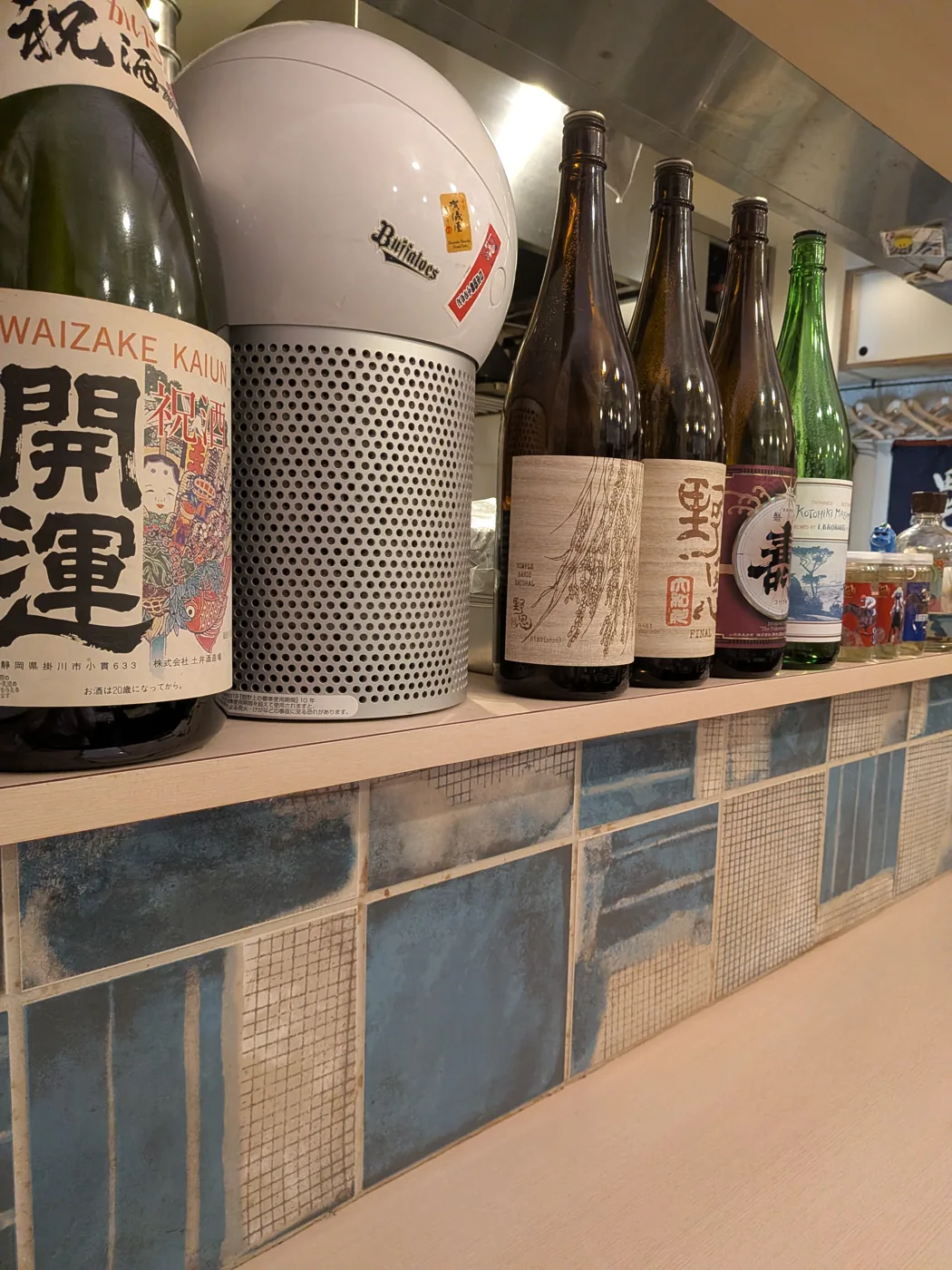
The sake shelf at Furusato during the July visit.
Food built around seasoning
The dishes I tried included Japanese-style mapo tofu, Furusato salad with shungiku (chrysanthemum greens) and crispy rice, horse sashimi with spicy miso soy sauce, browned-soy grilled chicken thigh, and a chilled chive-and-egg dish (nira-tama ohitashi). This was not a tasting where delicate dishes simply stepped aside for the sake. The food kept bringing its own savory flavors to the table.
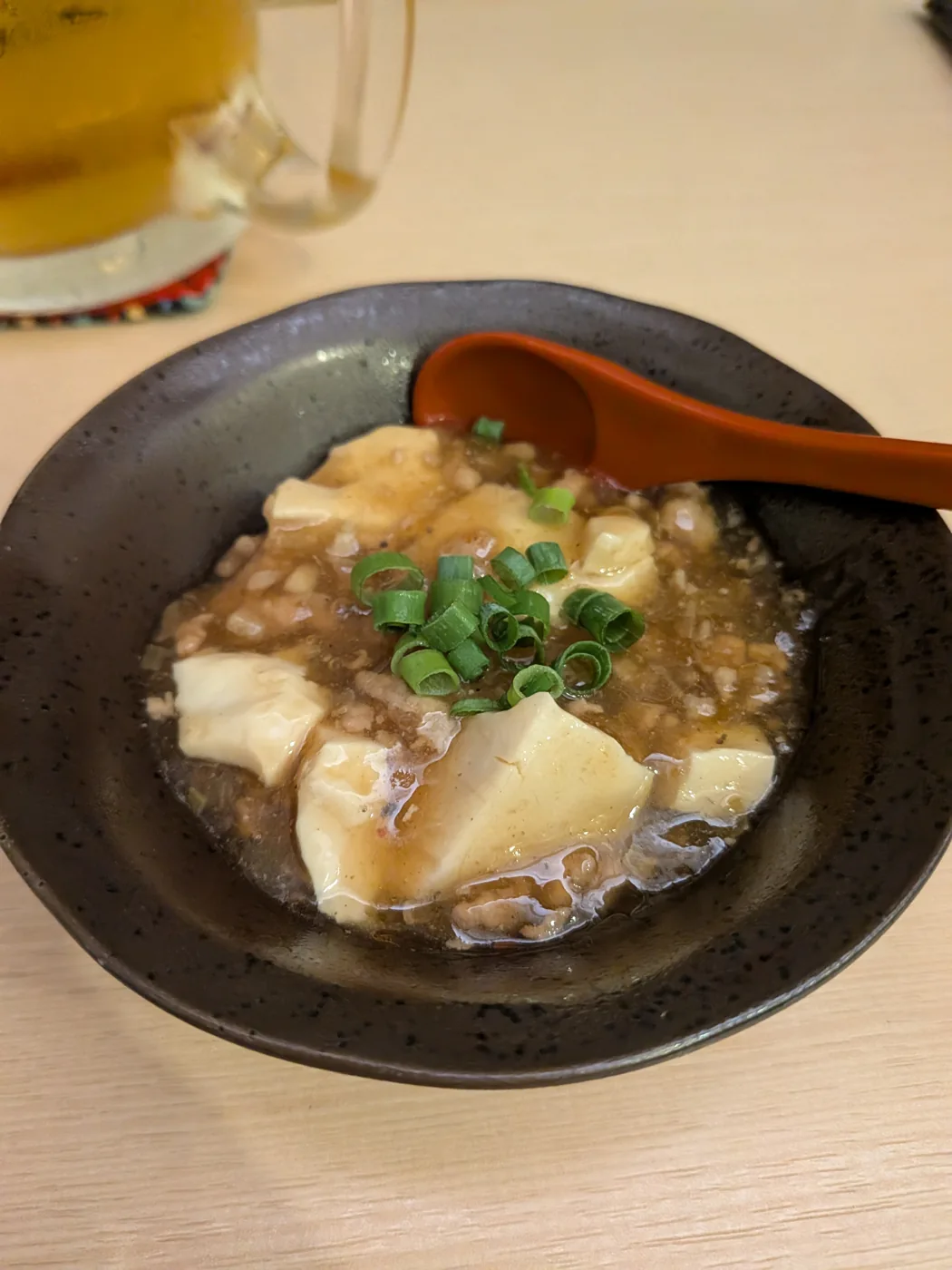
Japanese-style mapo tofu, one of the strongly seasoned dishes from the meal.
Azumamine: rice depth against shungiku and crispy rice
Azumamine Azumashii Junmai Ginjo Miyamanishiki Nama Genshu was served chilled. I found it weighty and strongly rice-driven, with pronounced umami and body but relatively subdued aroma and sweetness. My six-axis notes were sweetness 2 / aroma 2 / body 4 / acidity 3 / umami 4 / finish 2 (out of five).
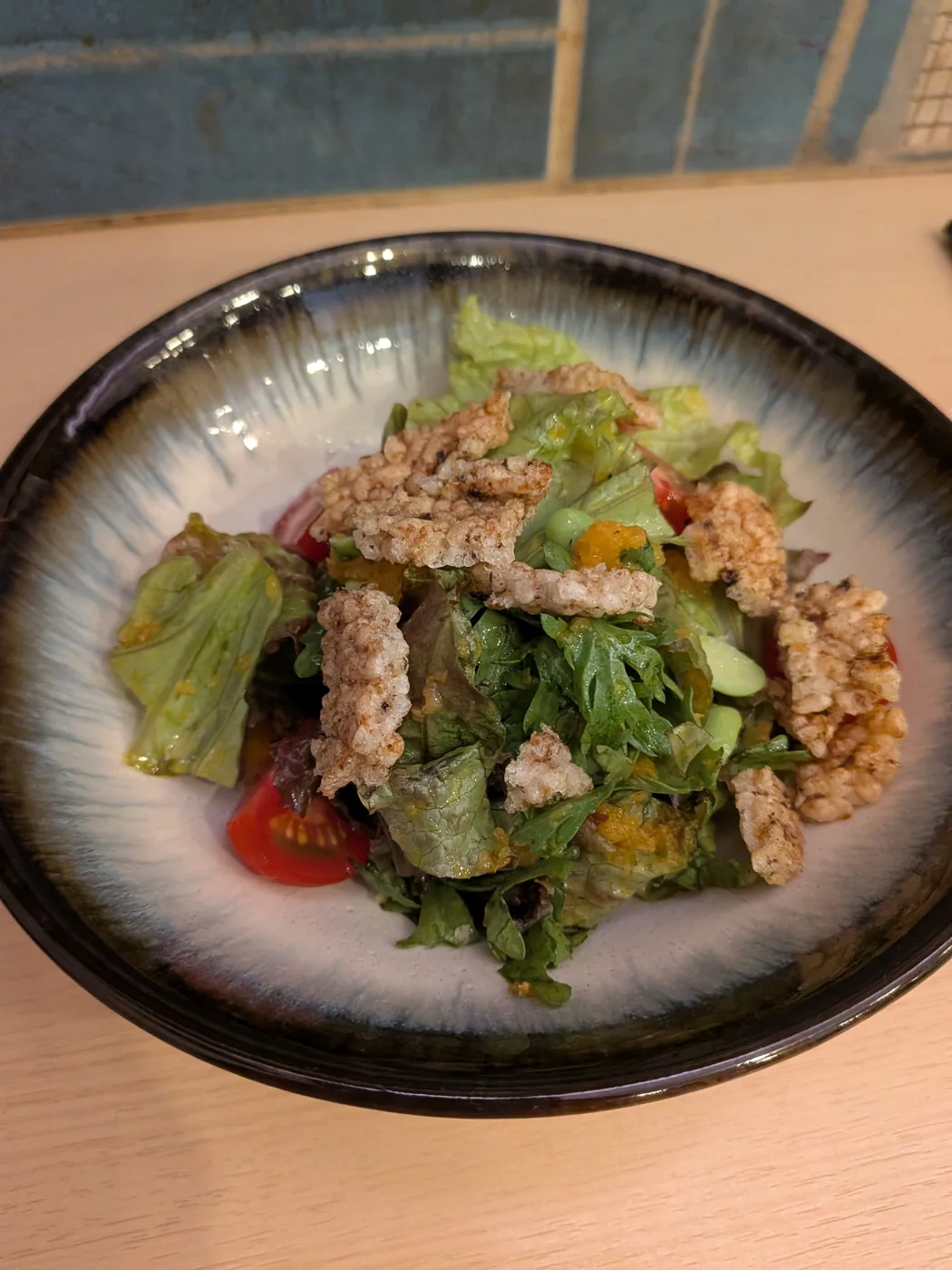
Furusato salad with shungiku and crispy rice, the dish paired with Azumamine. The sake bottle is not in this frame.
The strongest match for this pour was Furusato’s salad. Shungiku, crispy rice, and soy-seasoned dressing made this a notably savory salad rather than a delicate side dish. Azumamine’s rice flavor and weight stood up to the dressing, while the crispy rice echoed its grain-driven character. I also liked it with the mapo tofu. These are observations from this meal, not a general claim about every bottling of Azumamine.
Kihotsuru: even more umami, less emphasis on aroma
Kihotsuru Junmai Hiyaoroshi was served chilled to closer to room temperature. Compared with Azumamine, I noticed even more emphasis on umami. The profile was 3 / 2 / 4 / 2 / 4 / 3, in the same six-axis order.
It was a better fit for assertive seasonings than for anything especially restrained. Japanese-style mapo tofu, spicy miso soy sauce with the horse sashimi, and the browned soy notes of the chicken all provided enough flavor to meet the sake’s rounded, savory character. I did not test the same pour at two controlled temperatures, so this is not evidence of how warming changed it.
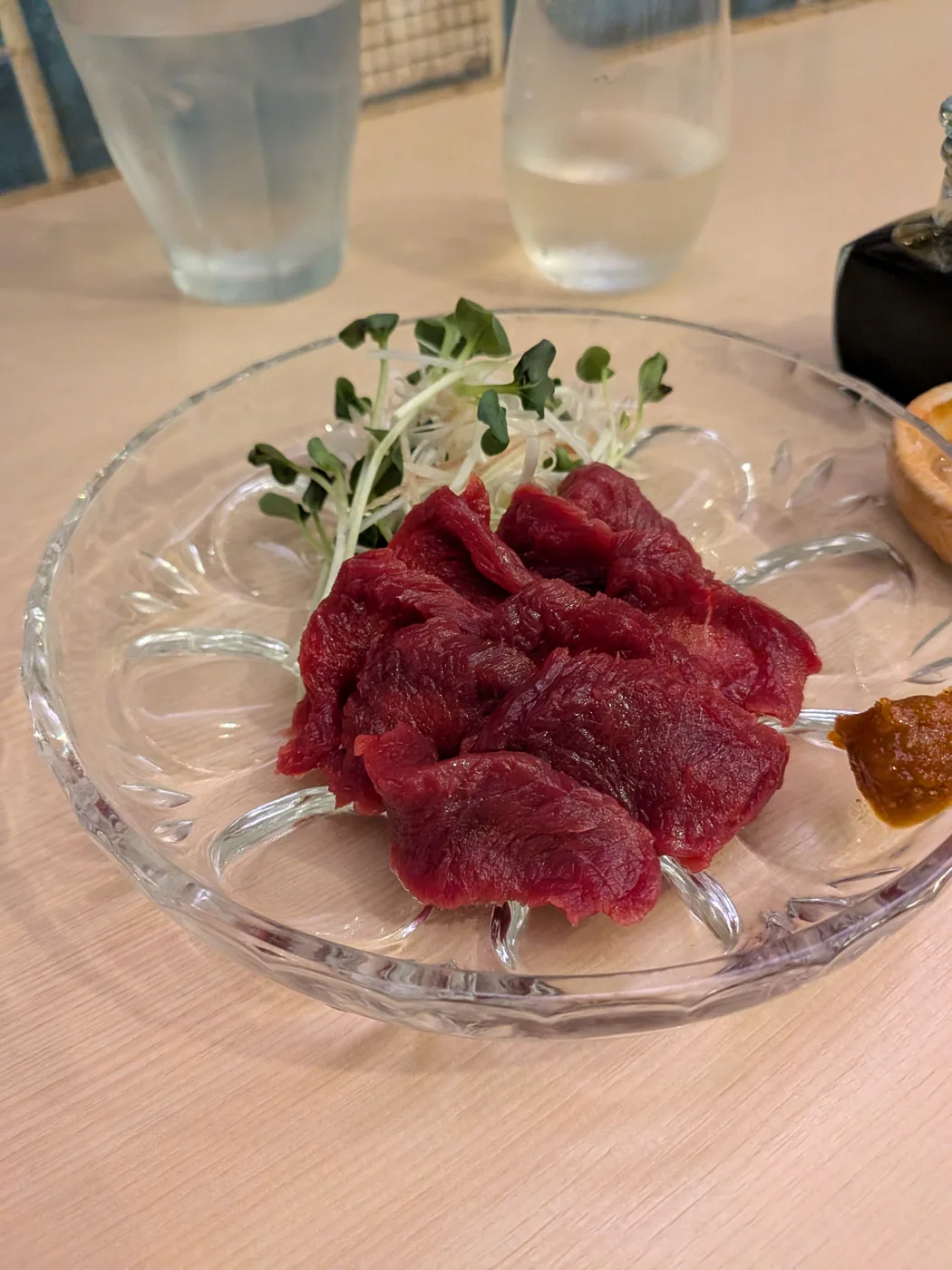
Horse sashimi from the visit, served with a boldly seasoned accompaniment.
Iyo Kagiya: a gentler aromatic contrast
Iyo Kagiya Limited Selection Single Tank No. 9 Junmai Muroka Nama Genshu, served chilled, felt gently more aromatic than the first two pours, without coming across as particularly sweet. Its profile was 3 / 4 / 3 / 2 / 3 / 3. There was enough body and rice umami to stand up to spicy miso and the browned-soy chicken. Rather than treating it as a stronger or weaker version of Kihotsuru, I remember the change in aroma as the useful contrast.
ILAKA: the chive-and-egg pairing
ILAKA Gin-Beni Hitogokochi Muroka Genshu Nama was the most aromatic of the four that evening. It also had a softer impression of sweetness, with umami still at the center: 4 / 4 / 3 / 2 / 4 / 3. Served chilled, it worked particularly well with the nira-tama ohitashi. With the chive-and-egg dish, I noticed the sake’s aroma and softer sweetness alongside its umami. It also went well with the browned-soy chicken. I did not photograph the ILAKA bottle that evening.
Four different roles at one table
These were four single-visit tasting records, not a controlled blind comparison. Azumamine gave the shungiku salad a rice-rich partner; Kihotsuru met the force of miso and soy; Iyo Kagiya added an aromatic shift without losing savory weight; ILAKA made the chive-and-egg pairing especially memorable. Those roles mattered more to me than trying to rank the bottles.
Furusato made me want to return for another set of regional pours. I left thinking less about which sake was ‘best’ and more about how thoughtfully seasoned food can bring out their differences.
For broader context, read our Tokyo izakaya pairing notes, explore the umami-forward sake collection, or compare the six taste dimensions on the Taste Map. See also Kuri’s sweet-savory Ginza pairing for another example of how a dish can change what stands out in the glass.