2026-07-11
Kuri Ginza: Fuku Komachi Kijoshu and a Sweet-Savory Sakura Shrimp Pairing
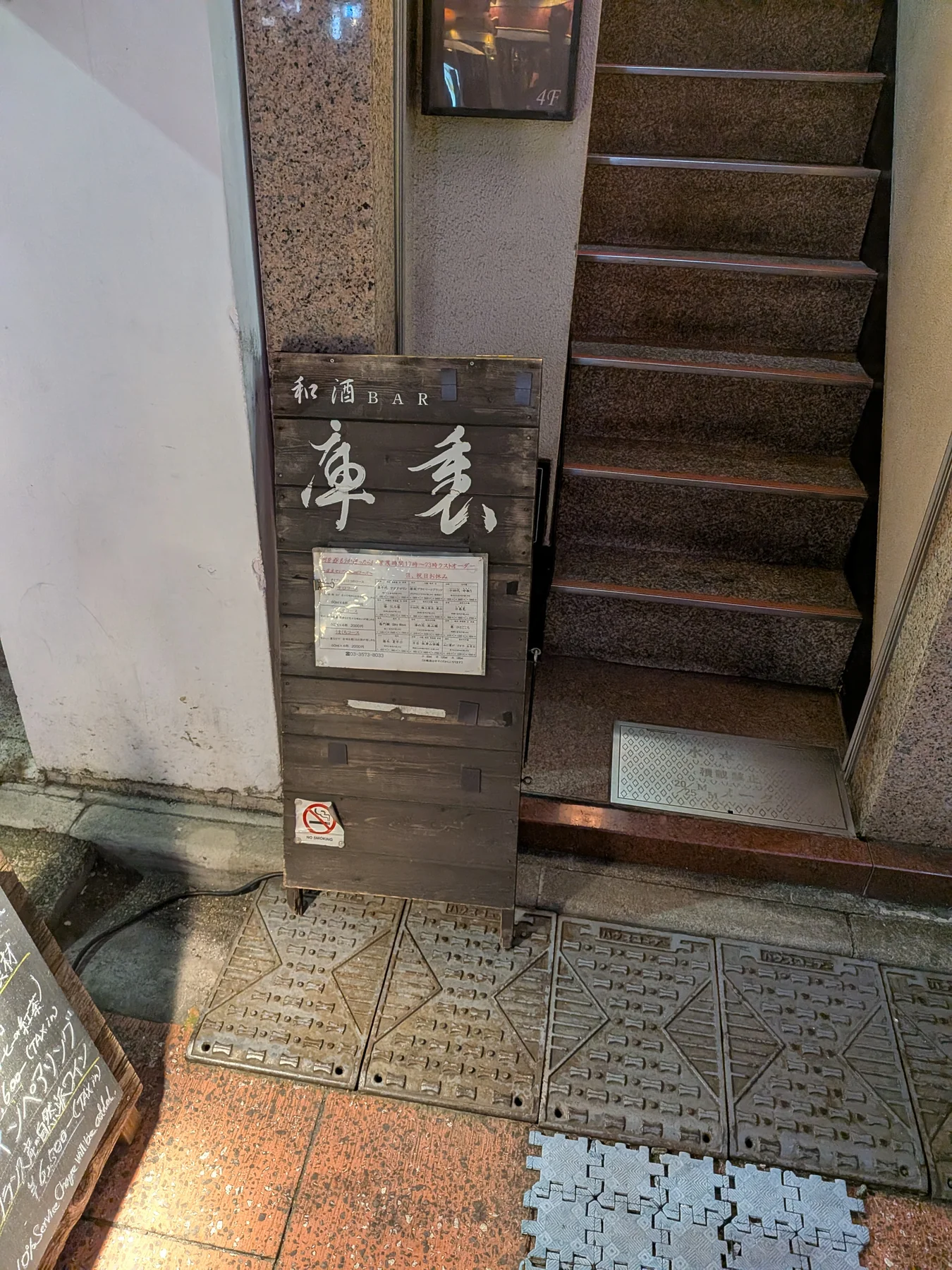
Kuri sits in Ginza, one of a small group of old-school sake bars run under the same name around Ginza and Shimbashi. The format is simple and effective: 60ml pours, so a night here becomes less about one bottle and more about tasting four or five side by side. On a visit back on June 11, that’s exactly what happened — four house pours plus one more the counter suggested along the way — and the standout of the night was Fuku Komachi Kijoshu Nama, paired with a sakura-shrimp potato salad.
The best pairing of the visit
The best match of the night was Fuku Komachi Kijoshu Nama with the sakura-shrimp potato salad. Kijoshu-method sake is brewed using sake in place of some of the water. In this Fuku Komachi, the result was a sweetness closer to a dessert wine than a typical junmai — and that sweetness lined up almost exactly with the potato salad’s own sweet-savory profile. The kijoshu guide separates that brewing method from assumptions about age, alcohol, or one fixed flavor profile.
The sake: Fuku Komachi
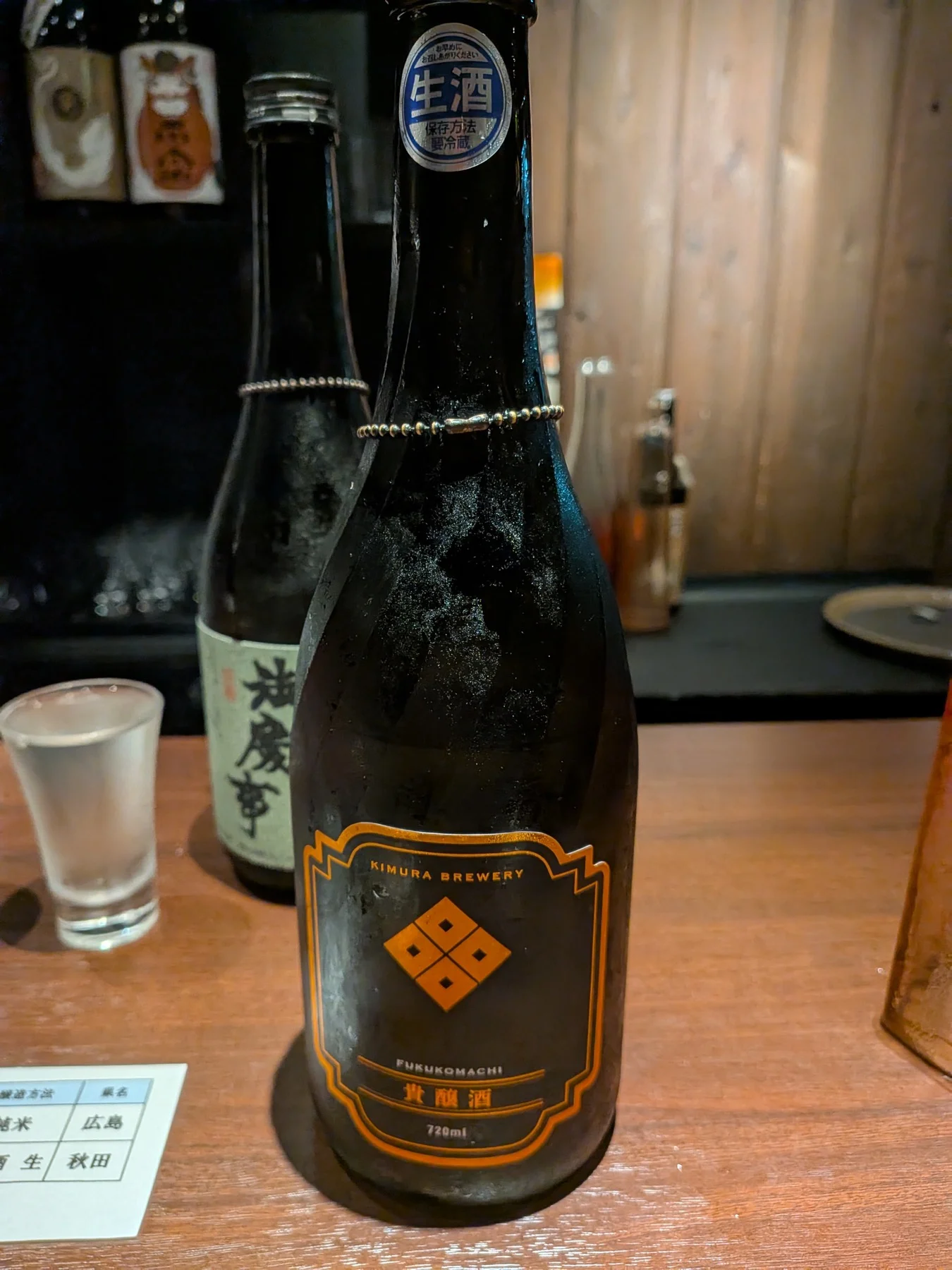
Fuku Komachi was the standout pour of the visit.
Fuku Komachi Kijoshu Nama was one of four house pours in that night’s “umakuchi” (sweeter, rounder) flight, alongside Kamonishiki’s Nifudazake Bizen Yamadanishiki 2024BY Suzuden Bespoke, Gokeiji Junmai Ginjo Omachi Nama, and Shinrai White Label Junmai. None of these are exported to the US, which is typical of what a small, regulars-heavy sake bar like this pours by the glass.
The food: sakura shrimp potato salad
Food came as an appetizer platter — asparagus and young corn, ankimo (monkfish liver), a sakura-shrimp potato salad, and edamame — plus a plate of tachiuo (largehead hairtail) nanbanzuke on the side.
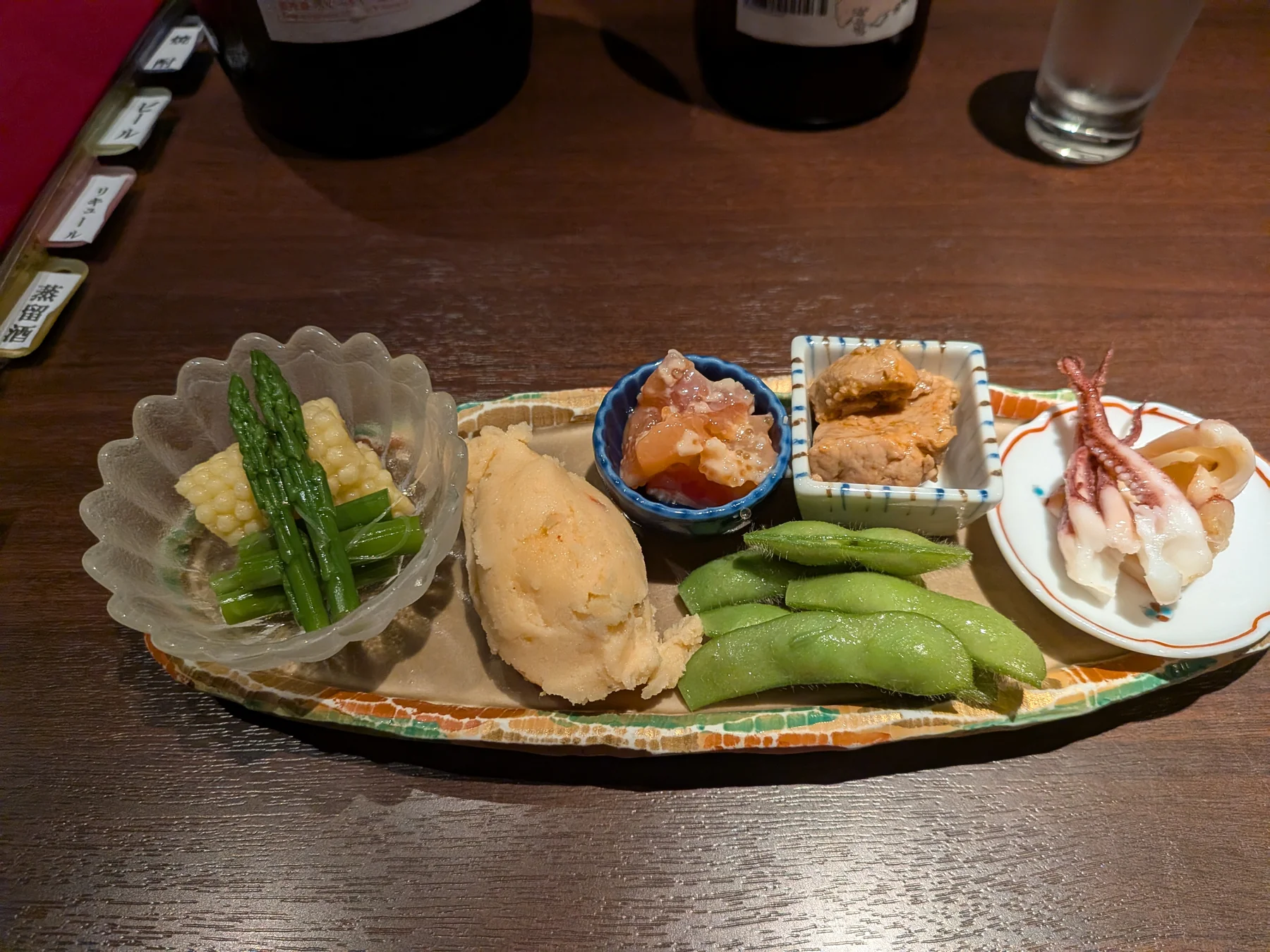
The appetizer platter included the sakura shrimp potato salad paired with Fuku Komachi.
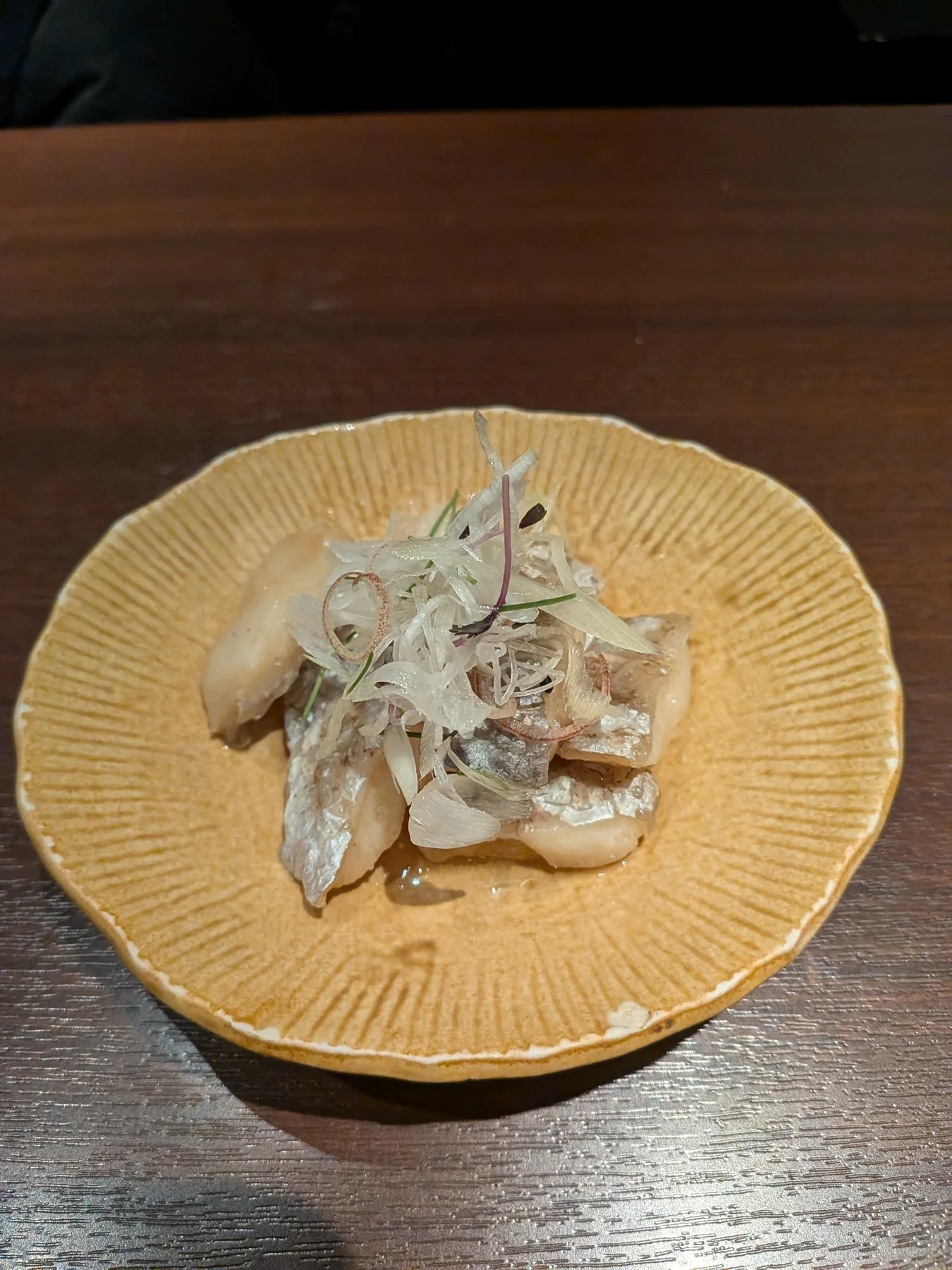
Tachiuo nanbanzuke, one of the dishes from the night.
Why the pairing worked
Fuku Komachi’s kijoshu sweetness met the sakura-shrimp potato salad’s own sweet-savory profile almost exactly, making it the clearest match of the flight. Nothing else on the table lined up quite that closely — Nifudazake’s fruity, low-ABV genshu style and Gokeiji’s Omachi-driven umami and body both leaned into the ankimo’s richness instead, while Shinrai’s dry, clean finish suited the lighter asparagus and young corn better than it did anything richer.
Other pours from the tasting
Tsuchida’s Hatsushibori Ichi, the counter’s recommendation, closed things out. It’s a sweet-and-tart kimoto-method sake with vivid acidity, and it met the tachiuo nanbanzuke’s own vinegar note directly instead of competing with it.
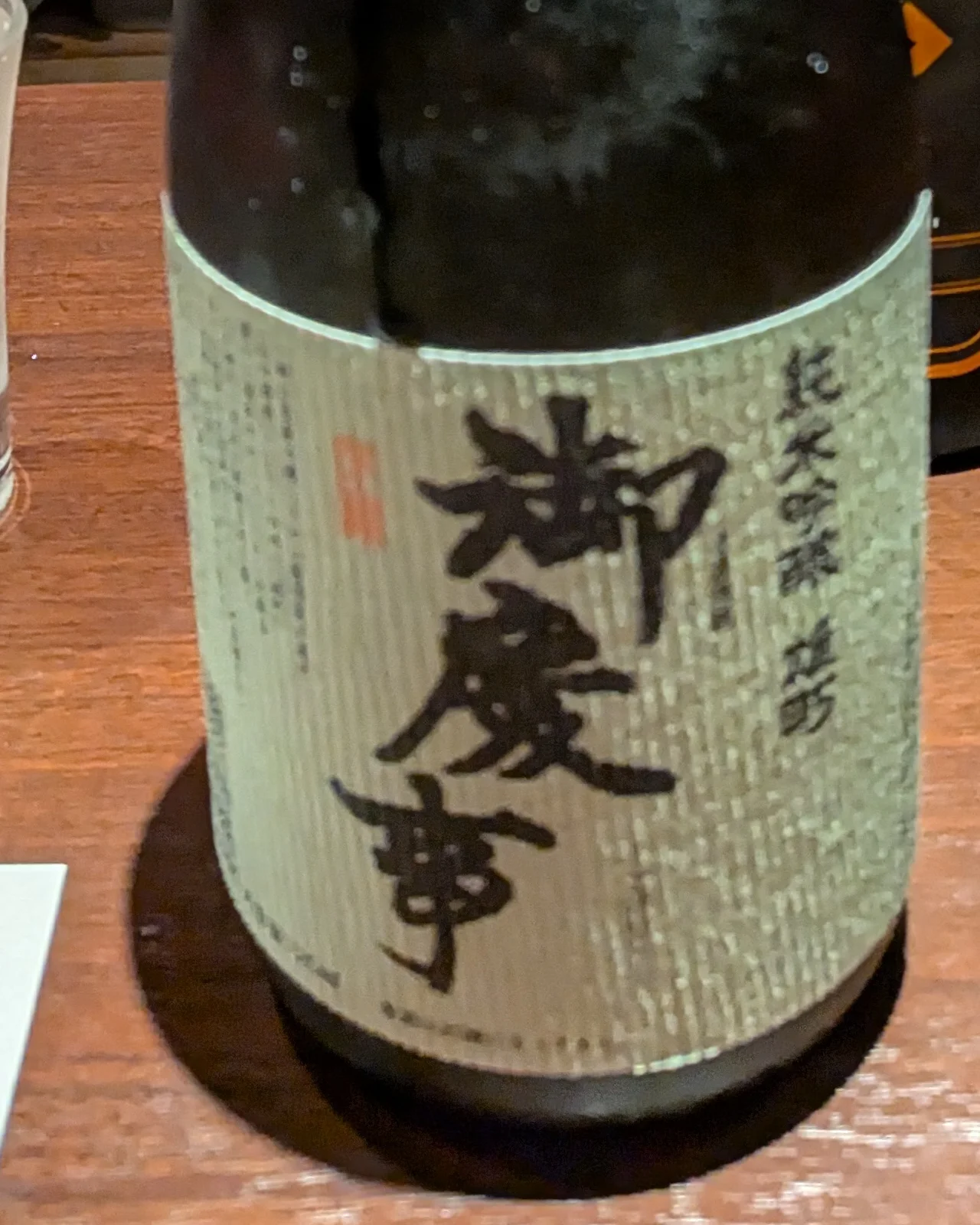
Gokeiji Junmai Ginjo Omachi Nama, one of the flight’s other house pours.
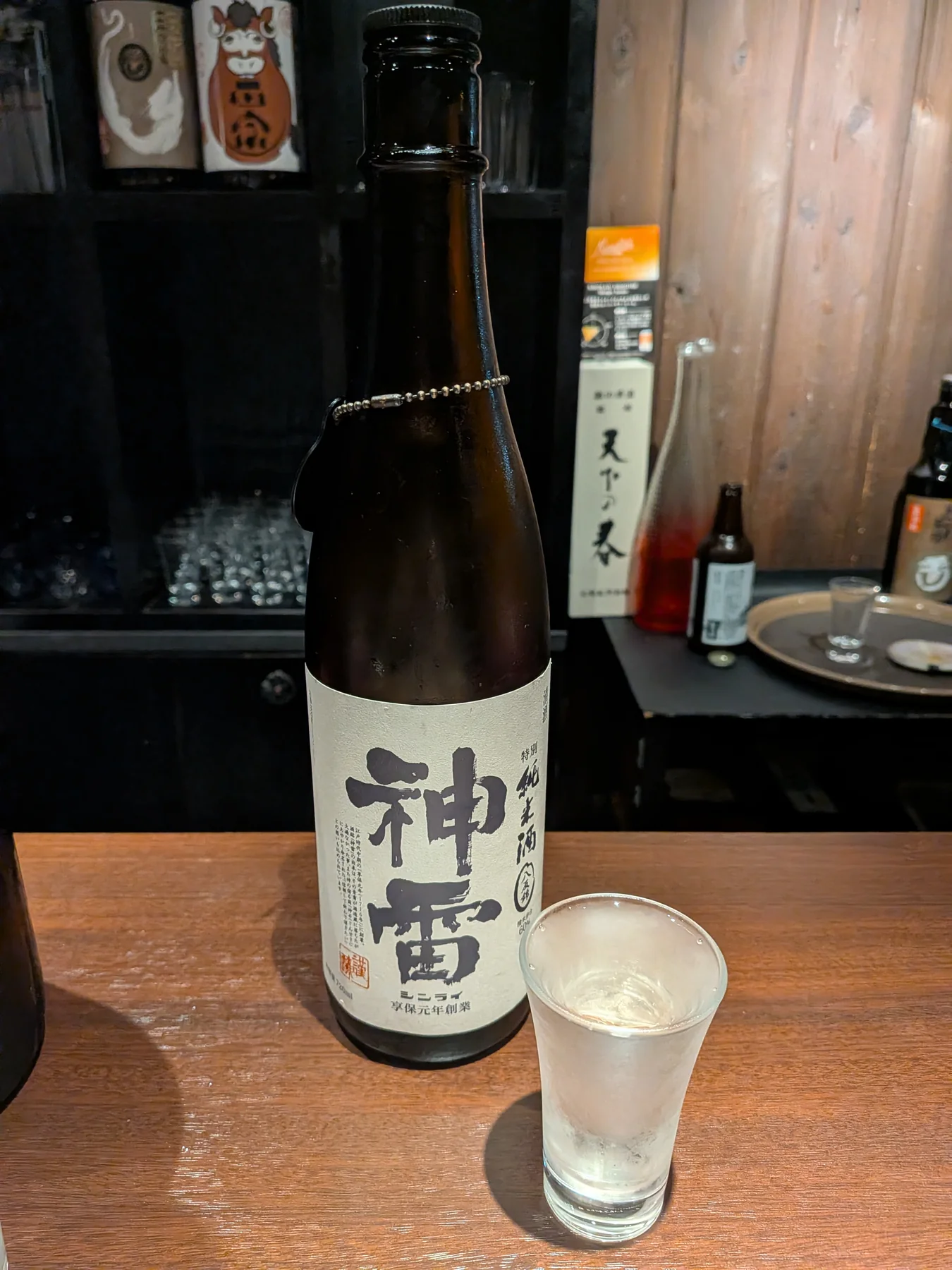
Shinrai White Label Junmai, poured for one of the flight’s four rounds.
The room
Kuri’s Ginza location has the feel of an established sake bar — plenty of regulars, a counter that reads a table’s taste in real time, and a room built for many small pours rather than one big bottle. It rewards a slower pace, and it’s easy to imagine coming back just to see what that day’s flight would be. First-time visitors who want a quieter room might find one of Kuri’s sister locations an easier entry point before the main Ginza counter.
Browse all sake by category, or compare bottles on the Taste Map.
Estimated US alternative
Field notes — tasted once in Tokyo
AI-estimated match
Based on published product information and our provisional TasteScore model. We have not yet tasted the matched bottle.
- Original sake:
- tasted by Sake Coordinates
- US match:
- AI-estimated from published product information
We do not currently track Fuku Komachi Kijoshu Nama as available in the US, but Hanahato "Kijoshu" 8 Years Aged currently ranks nearest in our provisional TasteScore model — sharing Fuku Komachi's rich sweetness and aromatic kijoshu character, though eight years of aging give it a fuller body, deeper mature depth, and a longer finish than Fuku Komachi's fresh nama style.
The original field note paired Fuku Komachi Kijoshu Nama with sakura shrimp potato salad.
This recommendation is provisional and may change after direct tasting.
Migration backfill 2026-07-25 — this match predates the verified/estimated tiered model and has not itself been re-reviewed; it is recorded as ai_estimated pending its own match-recommendation review. See docs/match-verification-decoupling-20260725.md.
Affiliate links — we may earn a small commission at no extra cost to you.