2026-07-08
Miyashita Naru, Shibuya: Three Sake and a Kimoto Worth Chasing Down
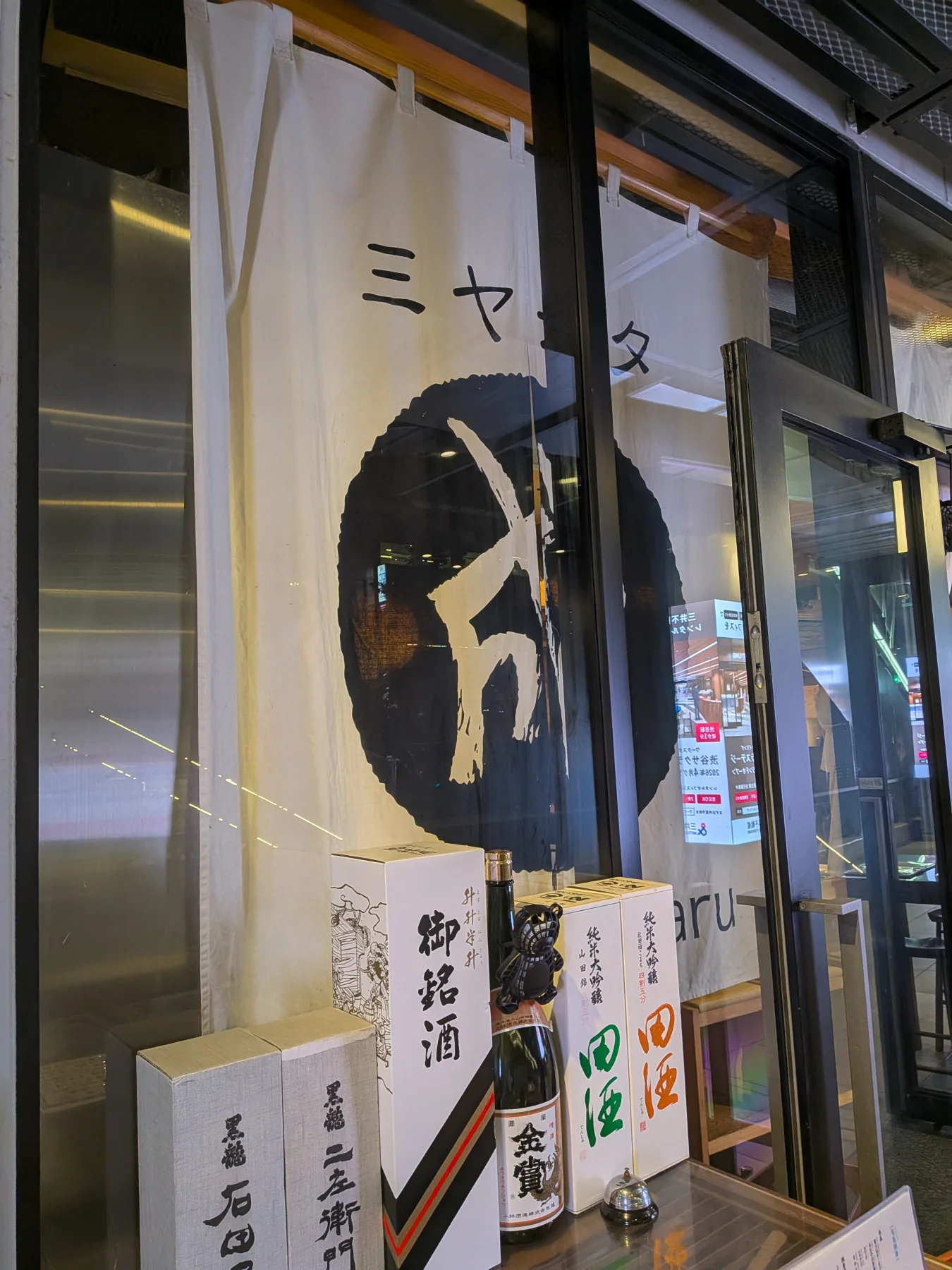
Miyashita Naru sits on the third floor of MIYASHITA PARK in Shibuya, above the shops and the skate bowl, with a counter wide enough that solo drinkers don’t feel like an afterthought. On a visit back on June 14, it was easy to see why: plenty of pairs, a few solo regulars, and more than one table of overseas guests working through the menu one small plate at a time.
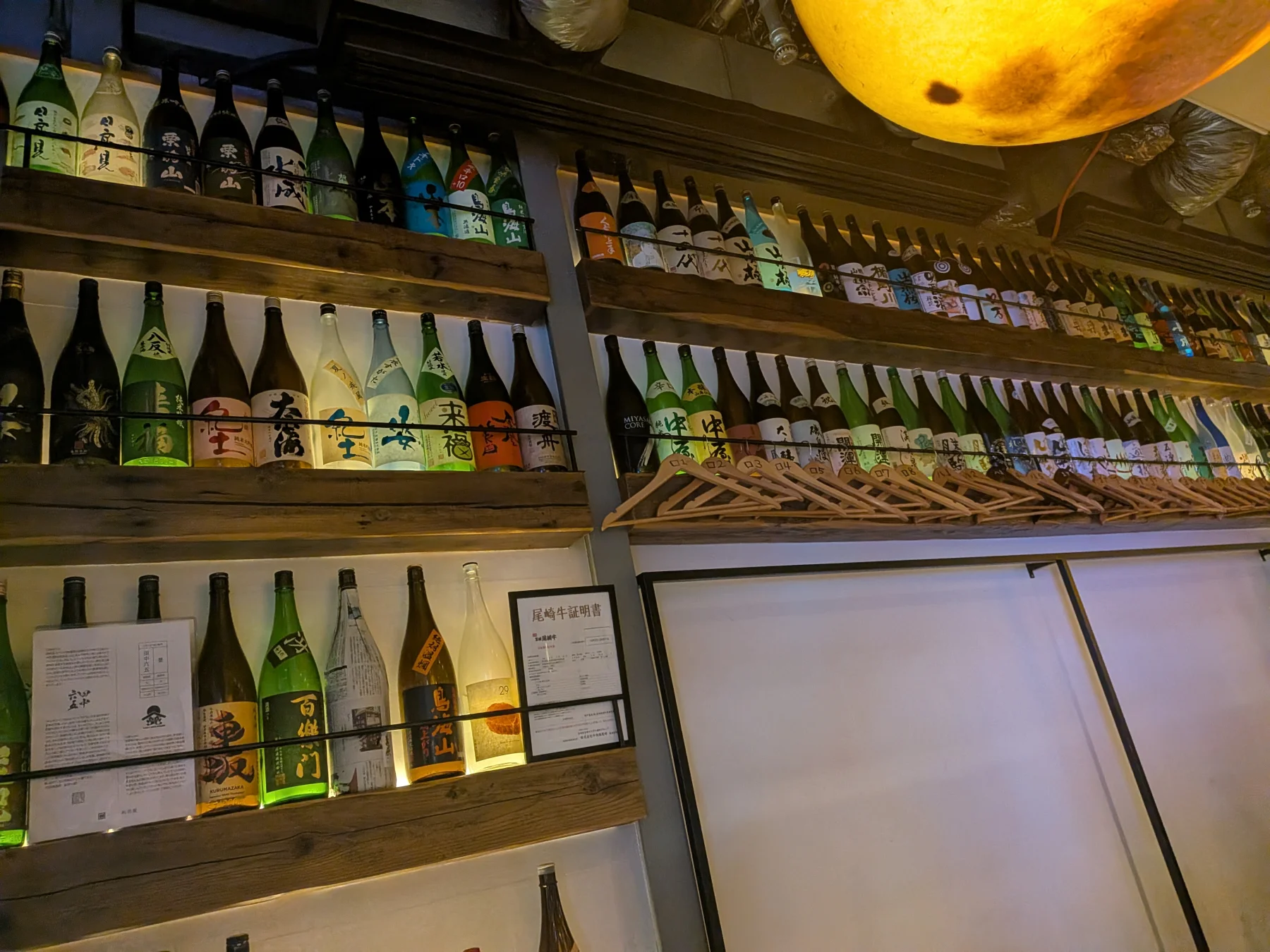
A shelf of sake near the counter, useful context for the room rather than a tasting note on one bottle.
What I drank
Three bottles came out over the course of the meal, in this order:
- Masumi “KEG DRAFT 12” — poured straight from a tap system, chilled, as the opener.
- Kurikomayama Dry Tokubetsu Junmai (summer release) — a dry, clean glass alongside the seared bonito.
- Yuho “Yuho no Midori” Kimoto Junmai Nama — the last pour of the night, and the one that stuck.
None of these three are exported to the US yet, which is part of what makes a night like this worth writing up — the whole point of tasting locally is finding things a taste map alone can’t show you.
What I ate with it
The food leaned creative rather than classic izakaya: shirasu daikon oroshi to start, pork shio-koji tonteki, seared bonito with a sharp herb-and-scallion topping, wasabi-grilled chicken neck (seseri), and fresh spring rolls with torotaku.
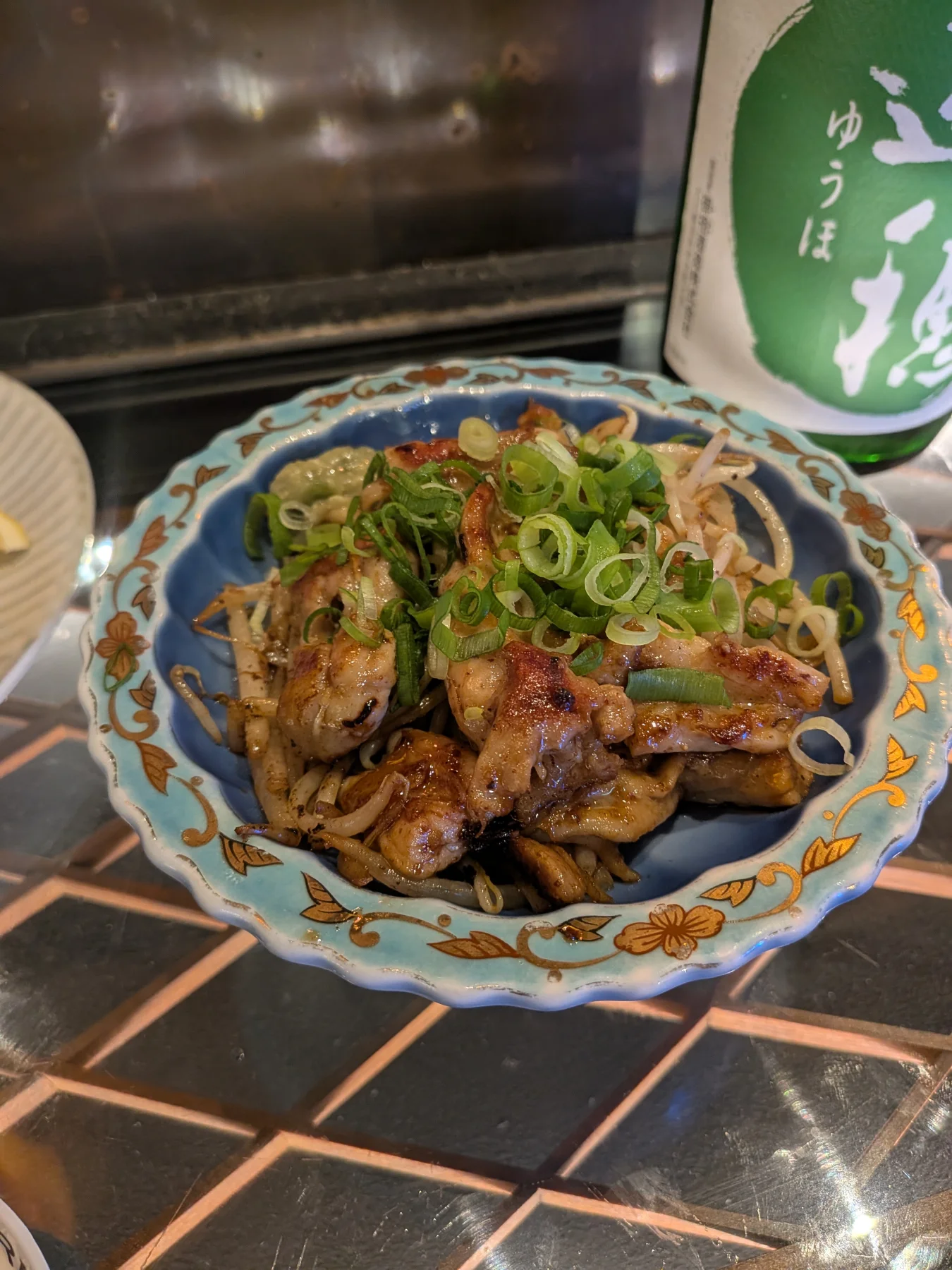
One of the dishes from the night. This is a food cut, not the direct Yuho pairing photo.
Why the pairing worked
Masumi’s KEG DRAFT 12 opened the night with a light, faintly effervescent freshness — closer to a craft beer pour than a bottle, and noticeably sweeter than Masumi’s usual house style. It sat well next to the shirasu and the light char of the tonteki, doing the job an opening sake should: clean, easy, and out of the way of what’s coming next.
Kurikomayama’s dry summer junmai took over once the seared bonito arrived. It’s a dry, no-frills glass built for food — dry enough to let the bonito’s herbs and scallion lead, with enough underlying rice flavor that it never felt thin.
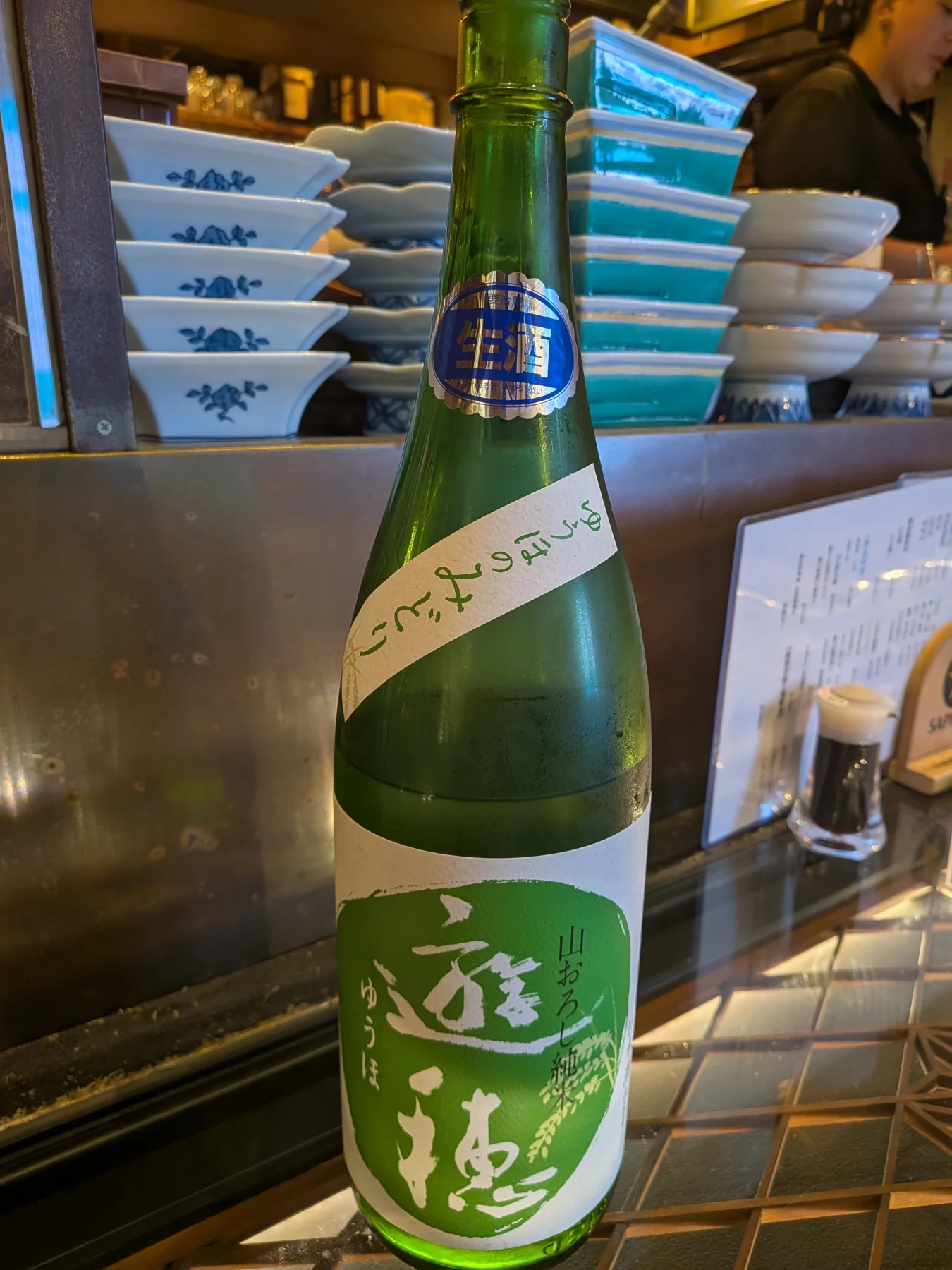
But the sake that earned its own note was Yuho “Yuho no Midori,” a kimoto-method junmai nama from Ishikawa. Kimoto tends to bring more acidity and a deeper, almost savory rice character than sake made with a faster, modern yeast starter, and this bottle leaned into that: bright acid up front, real body, and a rice-driven umami that held its own against soy sauce and wasabi rather than backing away from them. Paired with the wasabi-grilled chicken, the soy glaze and the sake’s acidity met in a way that made the pairing feel obvious in hindsight — sharp, savory, a little warming from the wasabi, and the sake cutting through all of it instead of getting lost. It was, without much competition, the best pairing of the night. For the process distinction behind that label, see kimoto vs. yamahai.
The catch — and the closest thing you can actually buy
Yuho isn’t imported to the US. If a bottle like this is what got you curious, the practical next step is finding something with a similar shape on the taste map rather than waiting for an import that may never happen.
Compare other bottles on the Taste Map, or browse all sake by category.
For a broader comparison of grilled chicken, beef, char, and sauce, use the steak and grilled-meat pairing guide.
Human-reviewed US alternative
Field notes — tasted once in Tokyo
Human-reviewed match
We do not currently track Yuho Yuho no Midori Kimoto Junmai Nama as available in the US, but Tsuchida "Kimoto" was selected through human review of our eligible US candidate set — matching the original's body, acidity, sweetness, and finish closely on the same kimoto foundation, with a slightly more aromatic and umami-forward profile than the original.
The original field note paired Yuho Yuho no Midori Kimoto Junmai Nama with wasabi-grilled chicken skewers (seseri).
This match was reviewed against a traceable human-reviewed TasteScore profile. The matched bottle has not yet been directly tasted by Sake Coordinates.
Affiliate links — we may earn a small commission at no extra cost to you.