2026-07-16
Nose to Tail, Kagurazaka: Aged Beef Tongue with High-Acid Sake
I got a seat through a private dinner organized by a friend’s group. I would not have known how to book the restaurant on my own. It’s a yakiniku restaurant in Kagurazaka built around aged beef. The night moved between raw and grilled cuts, one pour after another, with the two owners working the room and talking through each course themselves.
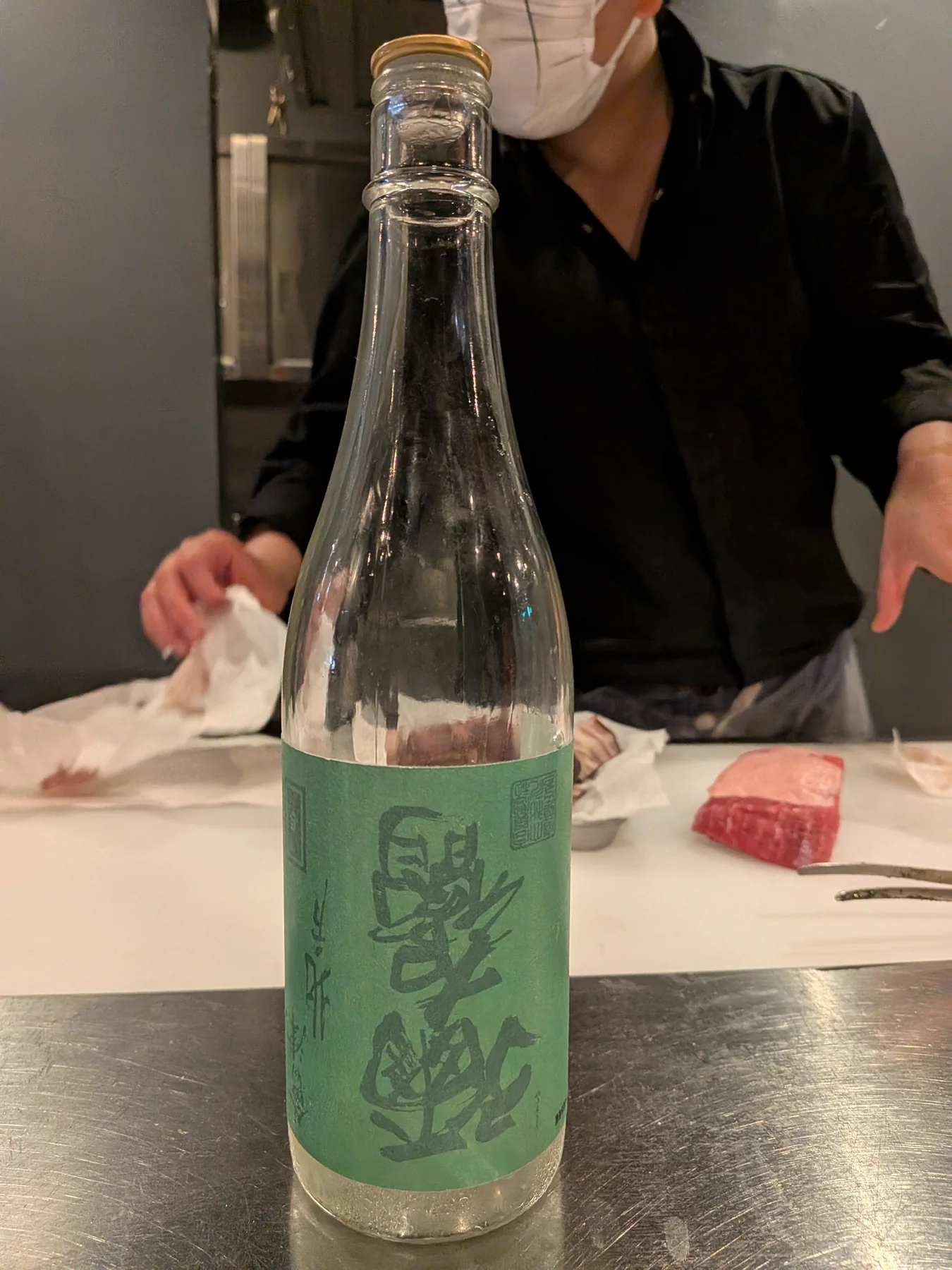
Uekiya’s special-order Sakasa Yaemon Nama alongside the aged beef tongue it was served with.
The pours before the main event
Things opened with Yamashiroya Rusui Sparkling, a bottling made specifically for Nose to Tail, against harami meat sashimi. The bubbles and acid cut through the raw meat’s fat fast, but the meat’s own sweetness stayed intact — I liked it enough to order a second pour before the next course even arrived.
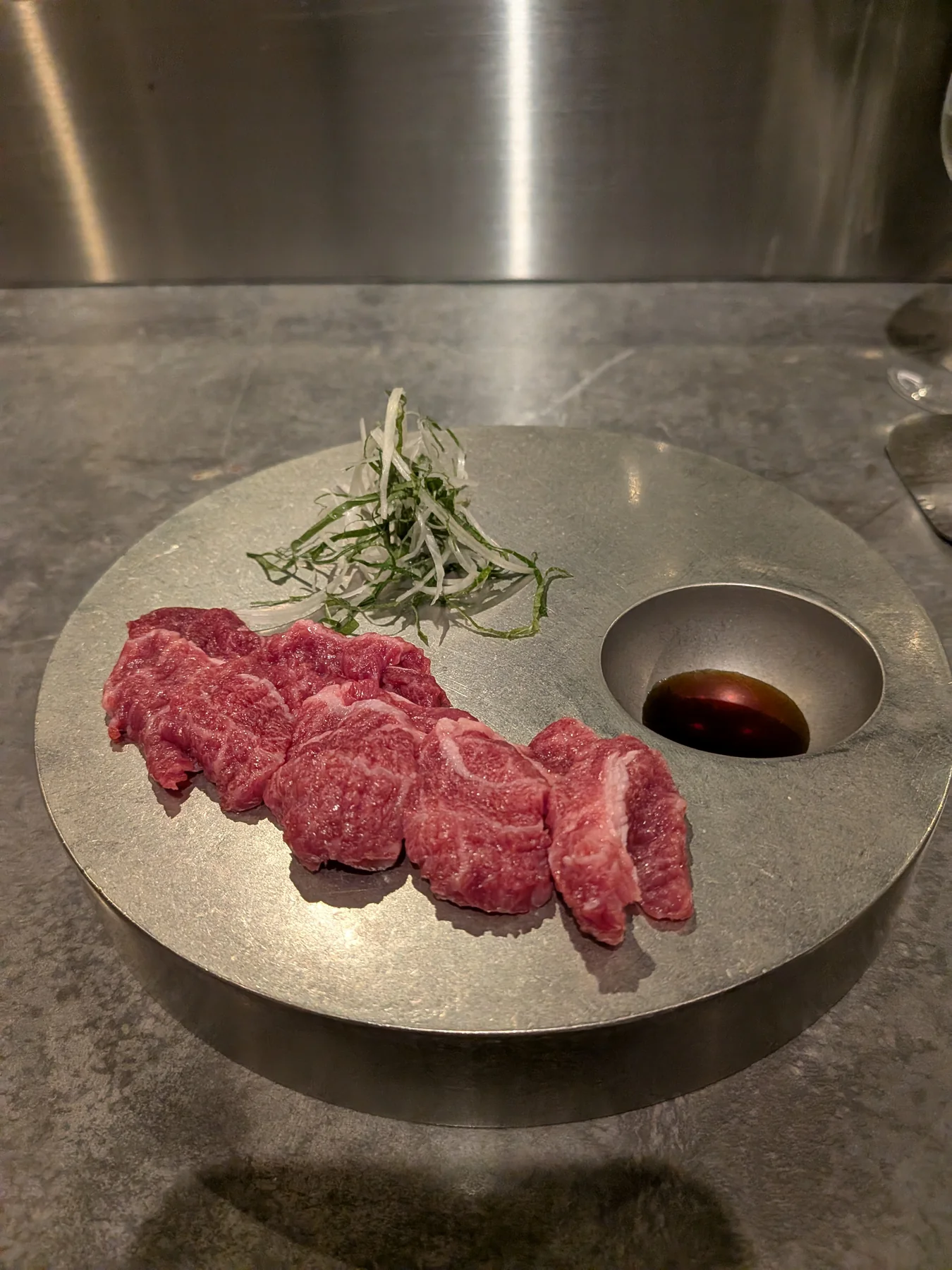
Harami meat sashimi early in the course.
Aramasa No.6 A-type came next with a mixed plate of meat appetizers: lighter and cleaner than the sparkling, doing less work but keeping pace with the food. Later, a Yamagata Masamune Junmai Daiginjo from 2004 arrived with aged beef tendon and tofu in a thick meat sauce. Twenty-some years in the bottle had turned it nutty and dense with rice umami, heavy enough to stand up to a dish that would have flattened either of the earlier pours.
The tongue and the sake that cut through it
The best pairing of the night was aged beef tongue with Uekiya Exclusive Yamayo Mark Upside-Down Yauemon Nama, a batch the Uekiya sake shop special-ordered from Yamatogawa Shuzoten in Fukushima.
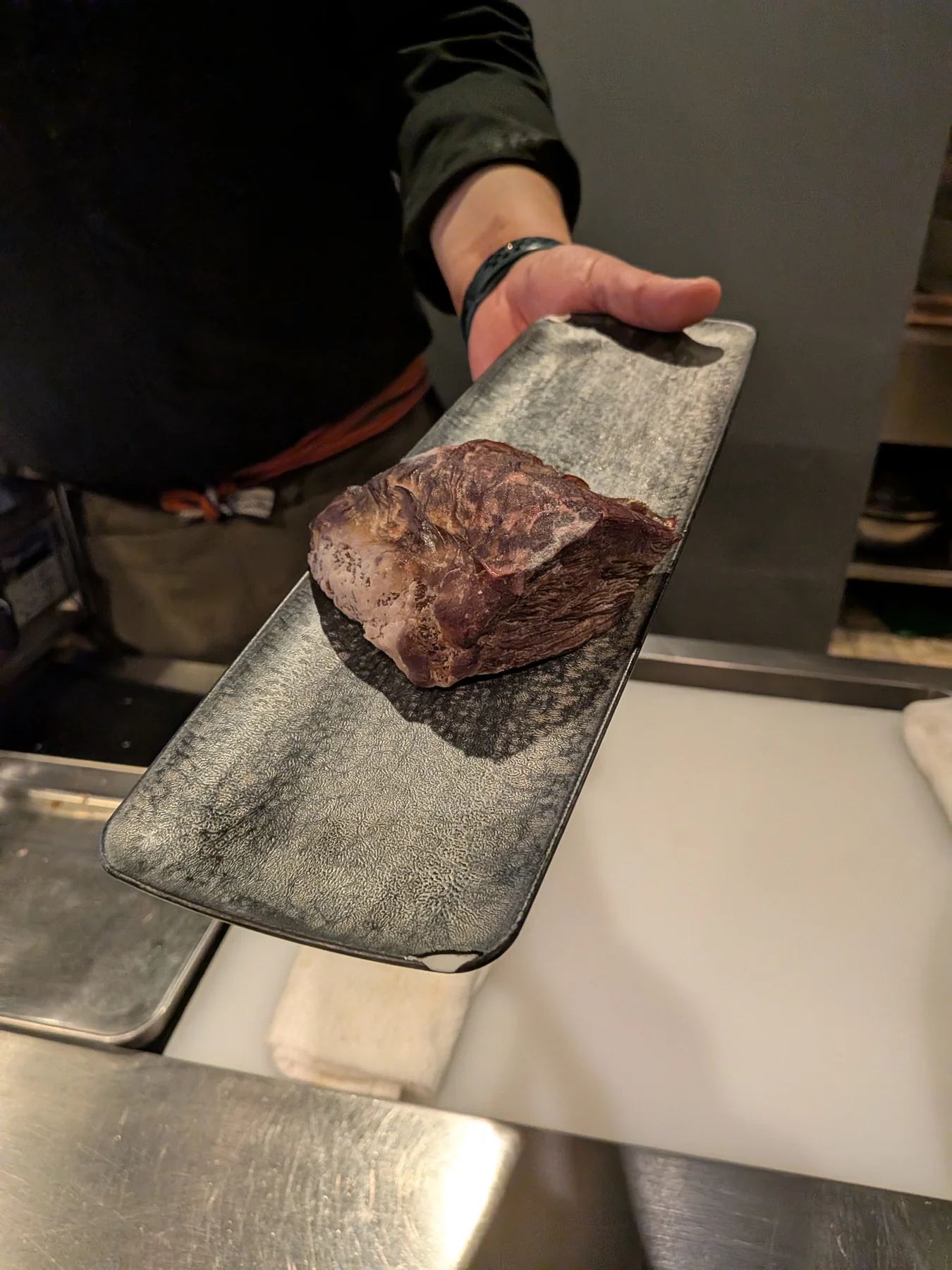
Aged beef tongue presented before slicing and plating.
On paper, -24.4 nihonshu-do suggests substantial sweetness, while an acidity of 7.0 is unusually high for sake. In the glass, the acid arrived first and kept the sweetness from feeling heavy, with a clean finish that didn’t linger. Against the tongue’s fat, that acid did the actual work — it cut through without stripping out the meat’s flavor, and it left me wanting another piece before the plate was cleared. That gap between the number and the glass is exactly why the sweet-vs-dry guide treats SMV as one clue rather than the whole answer.
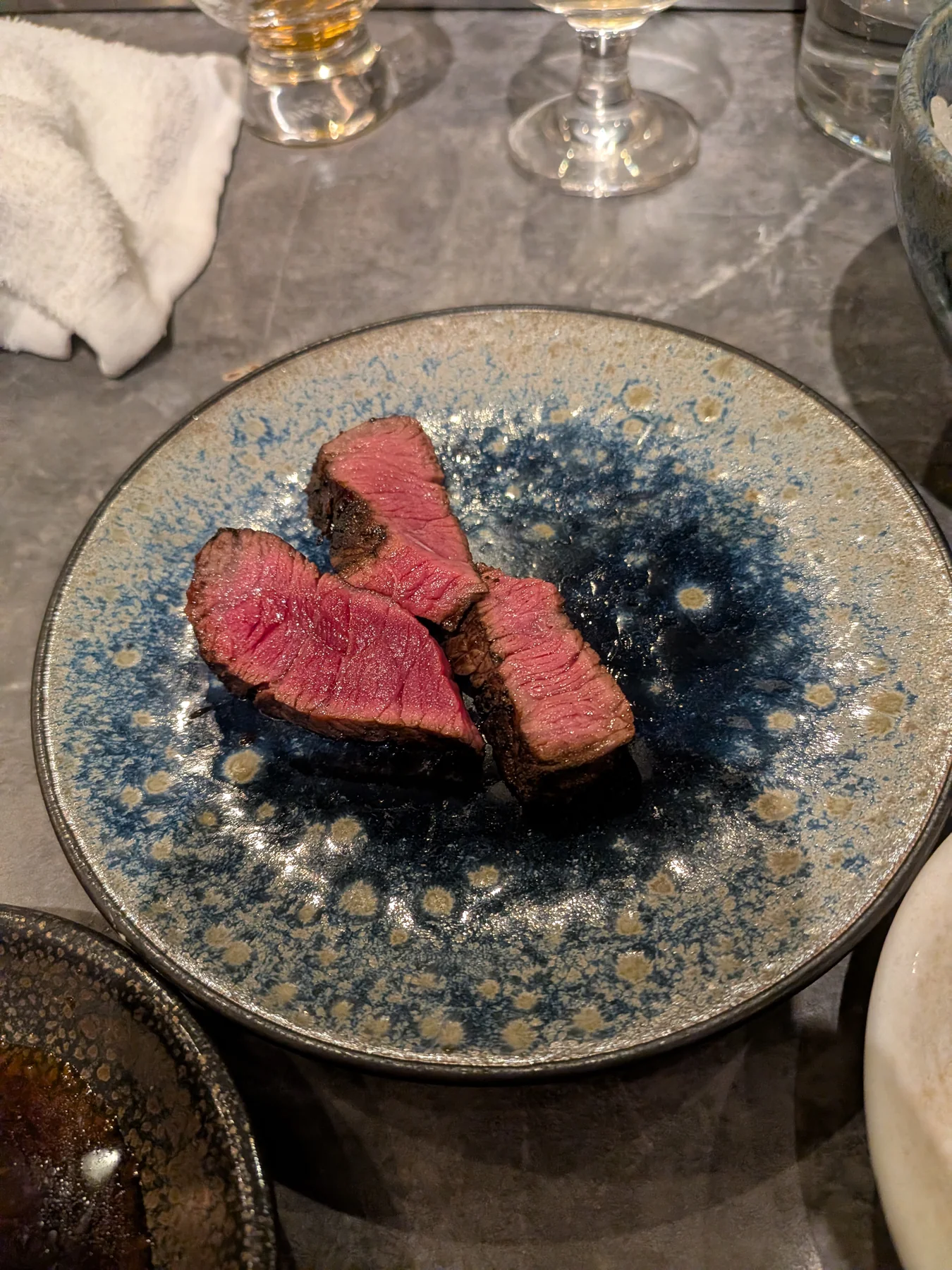
Plated aged beef tongue with a sake glass in the same table context. This is a sake-and-glass food photo, not a direct pairing shot.
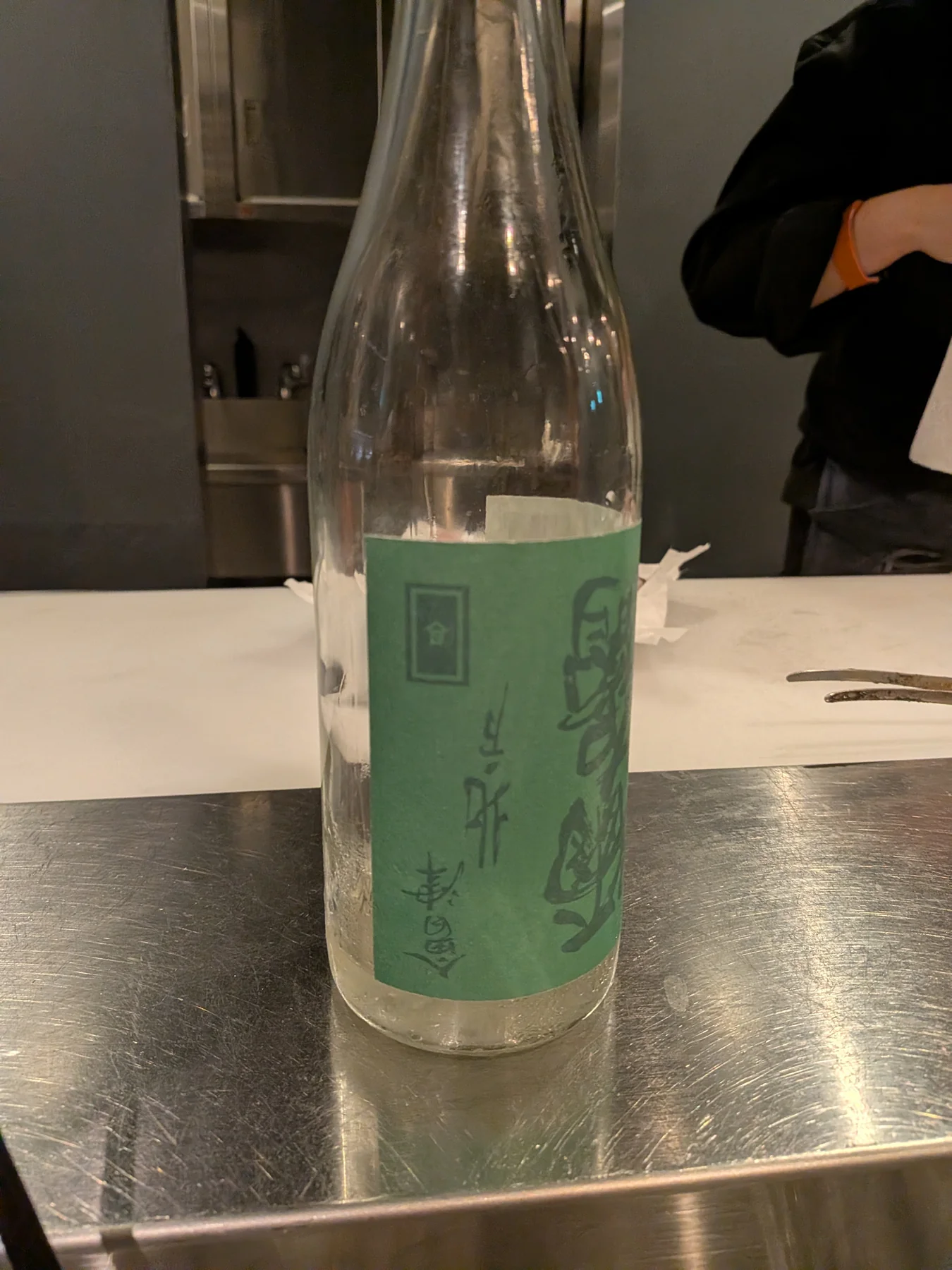
The front label of the green-bottled Sakasa Yaemon Nama served with the beef tongue.
Rice, offal, and one strange glass of peach
Two Ubusuna bottles from Kumamoto ran alongside a bowl of rice grown for Ubusuna itself, plated plain next to the beef. Neither Ubusuna pairing matched the tongue and the Yaemon for intensity. The better idea was the rice itself: the same grain that goes into the bottle, served as dinner rice next to the meat it was poured for.
After the offal course, someone poured Hououbiden Ripe Peach — a sake-based peach liqueur, not sake itself — into a glass of drinking yogurt. It tasted like dessert, not like anything else on the table, and it’s the one pour from the night I’d have trouble placing on a Taste Map.
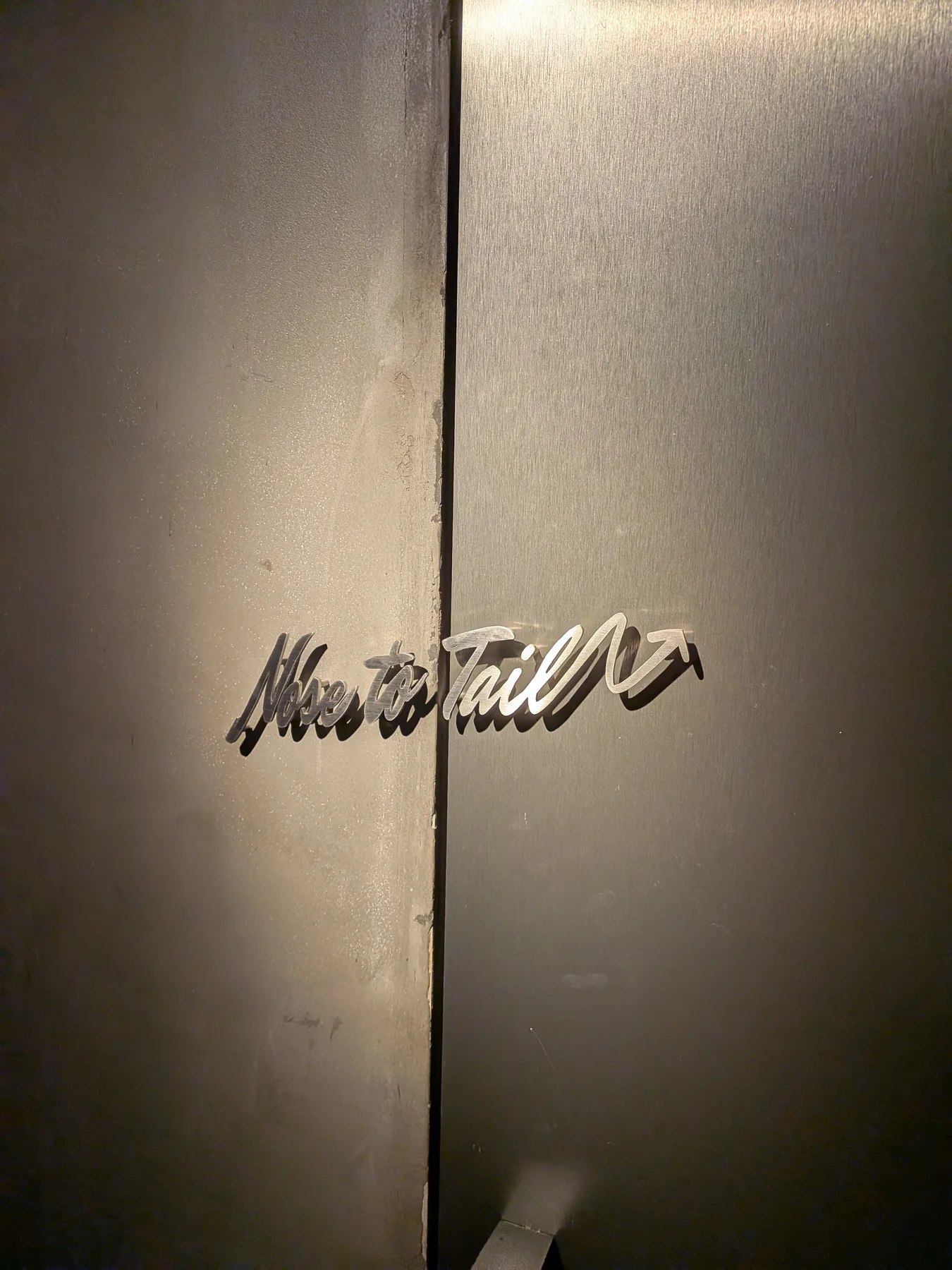
The Nose to Tail sign in Kagurazaka.
By the time we left, I was too full to move quickly. If the chance to go back with the same group comes up again, I’m taking it.
For a broader way to compare lean cuts, fatty beef, char, sauce, and aging, use the steak and grilled-meat pairing guide.