2026-08-03
Aomoriya, Ikebukuro: Four Aomori Sake with Regional Dishes
On July 21, 2026, I went to Aomoriya in Ikebukuro for regional Aomori dishes and four local sake. The entrance carries a nebuta-festival-style display that sets the tone before you sit down, but the room itself is an easy, unpretentious izakaya — comfortable for solo drinking. The meal moved from a hassun platter to miso, smoked fish, sake lees, scallops, pork, and leeks, giving each pour a different job at the table.
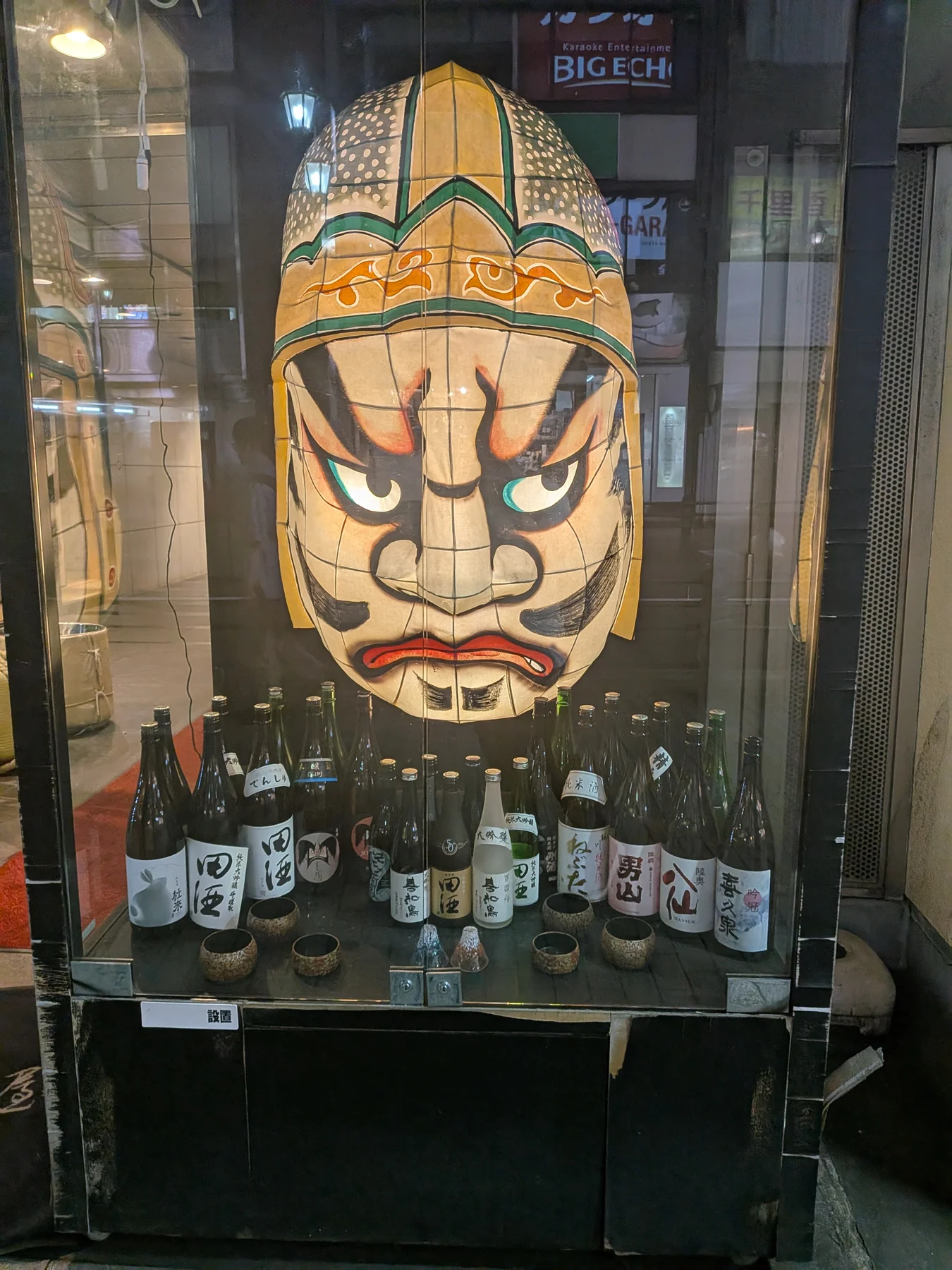
The nebuta-style entrance display at Aomoriya, alongside a sake refrigerator near the door.
The order of the meal
Dinner opened with a clear soup starter, followed by a hassun platter — a mixed plate that included vegetables marinated nanbanzuke-style with nanban miso. The meal also included hotate miso kaiyaki (scallops cooked in their shell with miso) and pork-wrapped Aomori leeks. Four Aomori sake were poured across the meal, each chilled.
First pour: Zan, and the best match of the visit
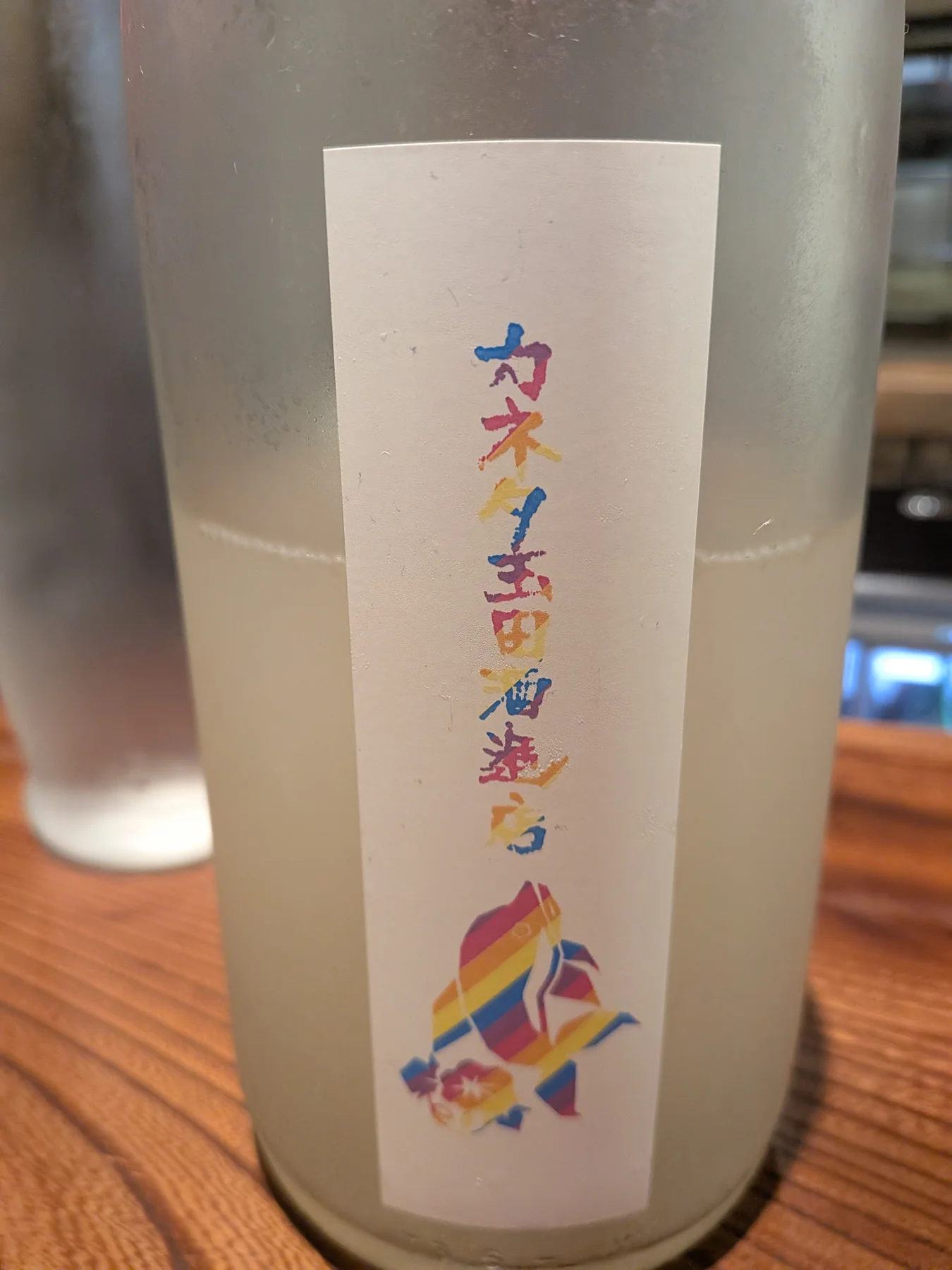
Zan “Iruka Label” Junmai Ginjo, the first pour of the visit.
Zan “Iruka Label” Junmai Ginjo came first. The label is light and playful, but the sake itself leaned rice-forward and substantial — a gap between the packaging and the glass. No sparkle was noticeable at the pour, which may simply mean time had passed since the bottle was opened; that’s a possibility, not a confirmed fact from this visit.
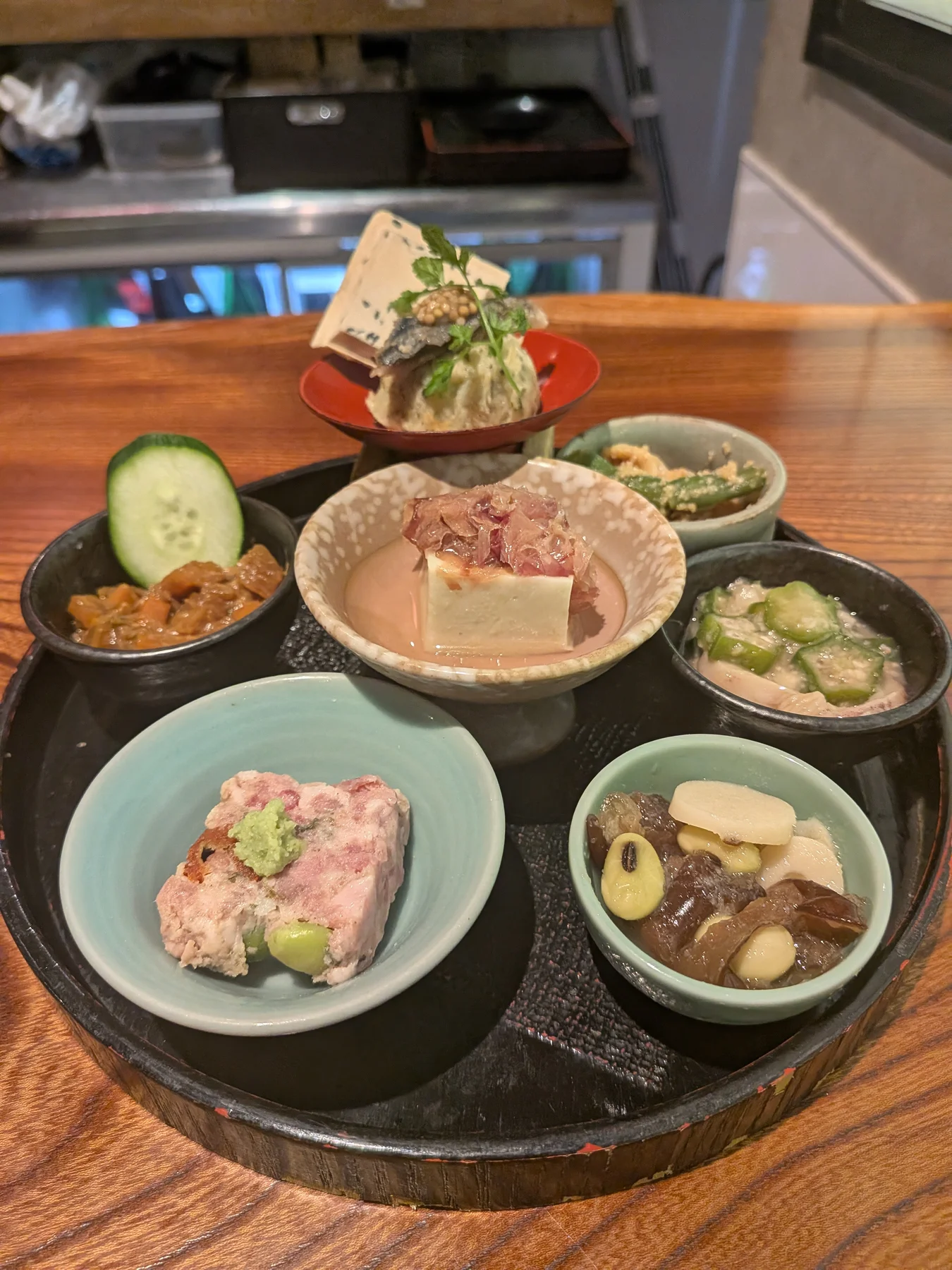
The hassun platter, including the nanbanzuke-style vegetables Zan was paired with. The bottle itself is not in this frame.
Zan was served alongside the hassun platter’s nanban-miso vegetables, and that combination became the best match of this visit. The miso seasoning was rich and pronounced, and the sake’s rice umami held its ground against it rather than fading — closer to the way a bowl of rice supports a strongly seasoned side dish than a typical delicate pairing. It was the best match of this visit, not a claim about Zan or nanban-miso vegetables beyond this table.
Second pour: N Junmai and smoked-mackerel potato salad
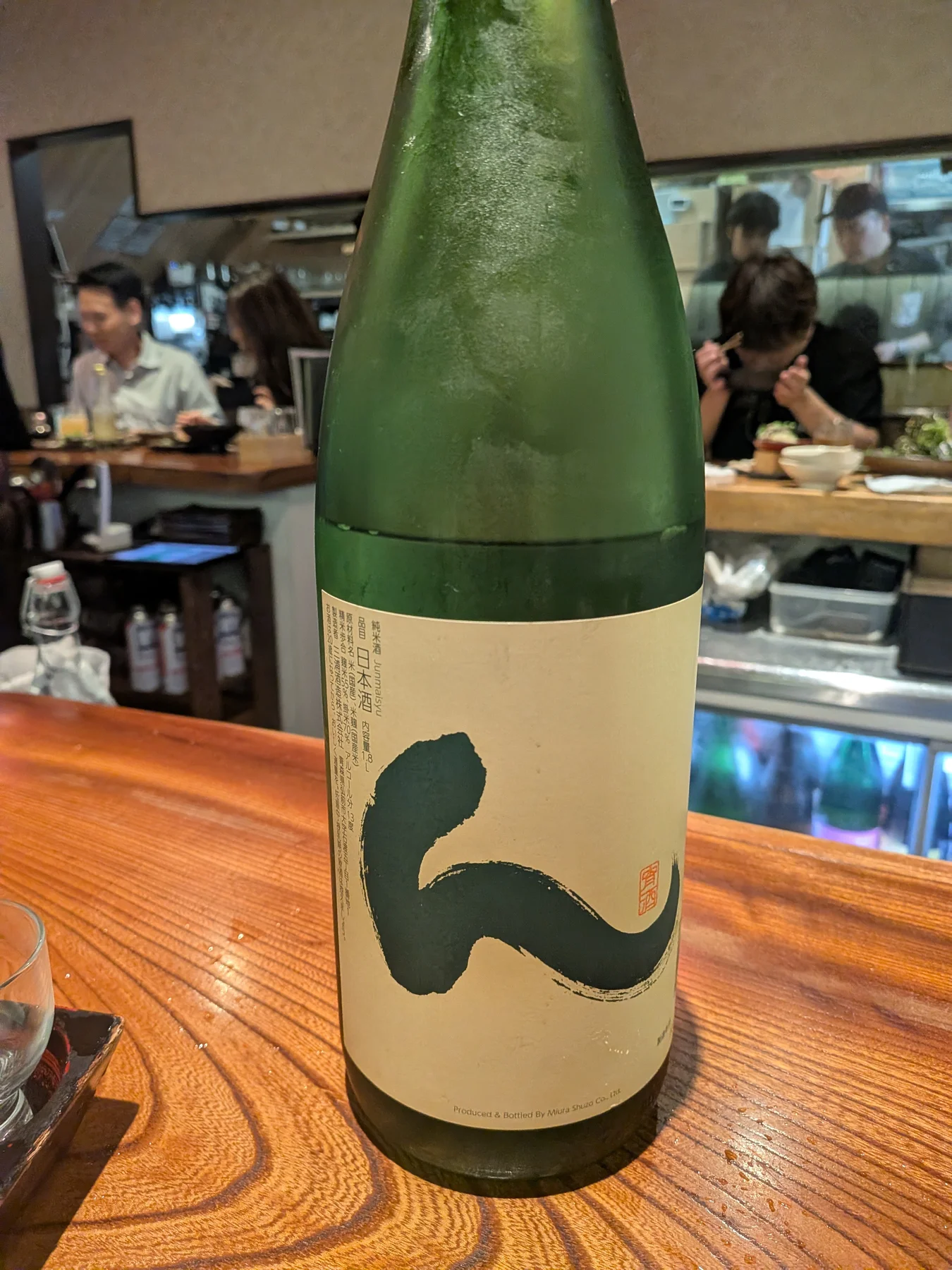
N Junmai, the second pour of the visit.
N Junmai came next, alongside a potato salad mixed with smoked mackerel. The first impression was a soft, gentle sweetness, followed by a clean cut and then a wave of umami that lingered into the finish. Against the potato salad’s own sweetness and the mackerel’s smoky depth, that sequence — sweetness first, savory after — tracked closely with the dish rather than working against it.
Third pour: Shirakami Yamahai Junmai and sake-lees pâté
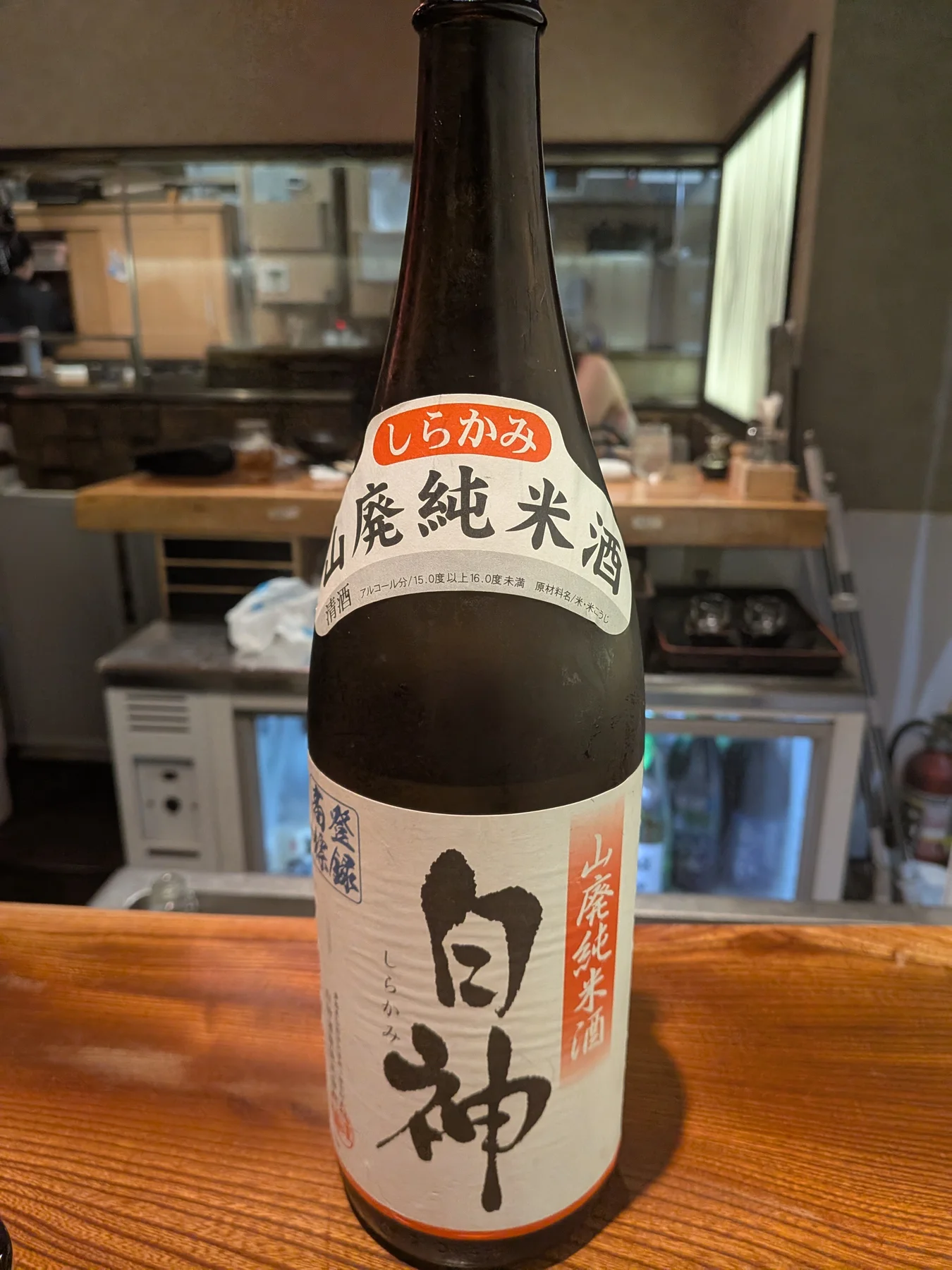
Shirakami Yamahai Junmai, poured alongside the sake-lees pâté.
Shirakami Yamahai Junmai brought forward umami with acidity doing the finishing work — cutting the palate clean after each sip rather than lingering into heaviness. It was served with a sake-lees pâté made with dried tomato and edamame, a dense, fermented dish with real fat and acidity of its own. The sake’s acid organized all of that: the pâté’s richness, its tang, and its oil stayed distinct instead of blurring together. The smoked-mackerel potato salad was a strong second pairing for this pour, though the pâté was the better match of the two.
Fourth pour: Torai Tokubetsu Junmai, scallops, and pork-wrapped leeks
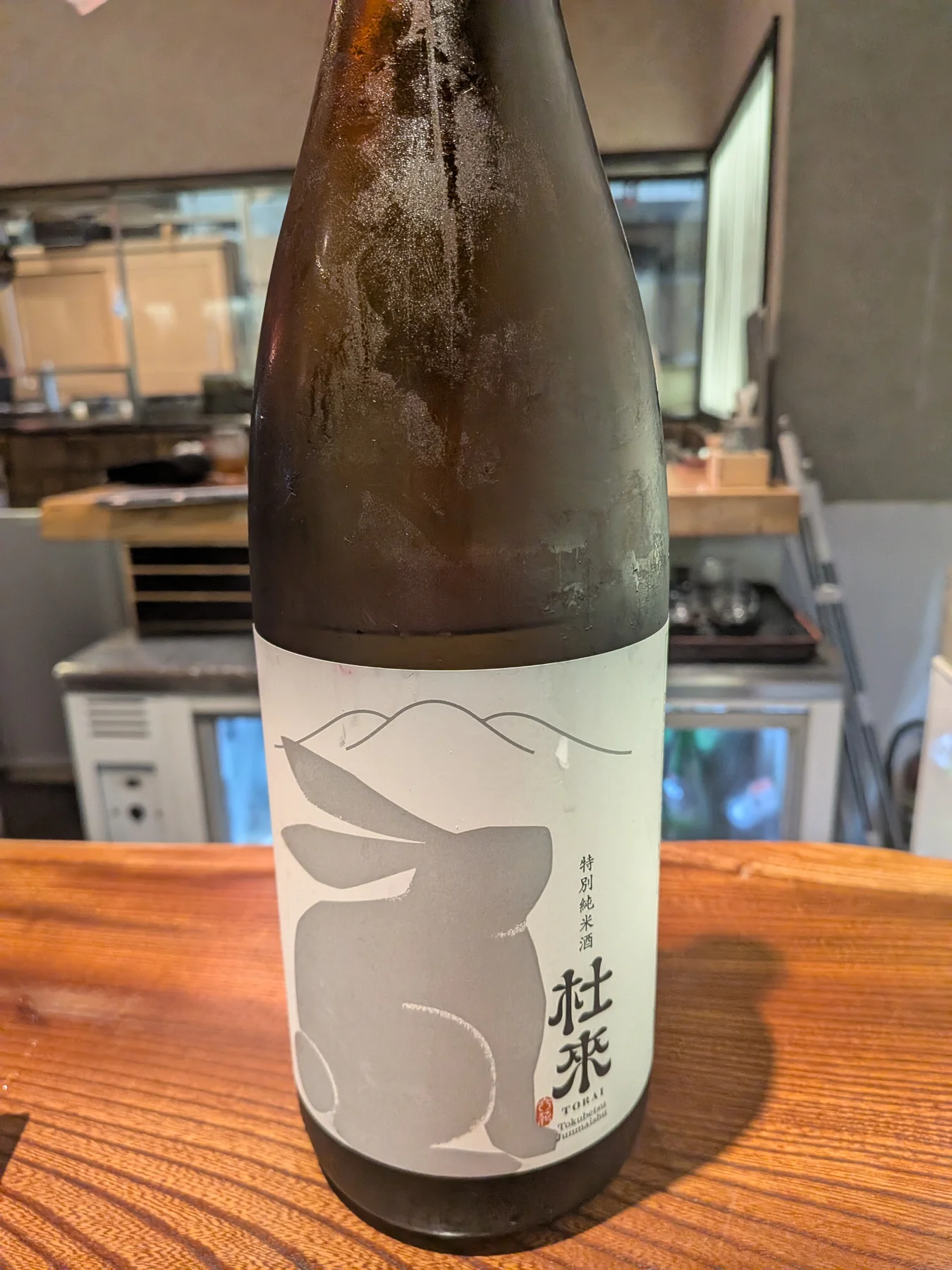
Torai Tokubetsu Junmai, the closing pour of the visit.
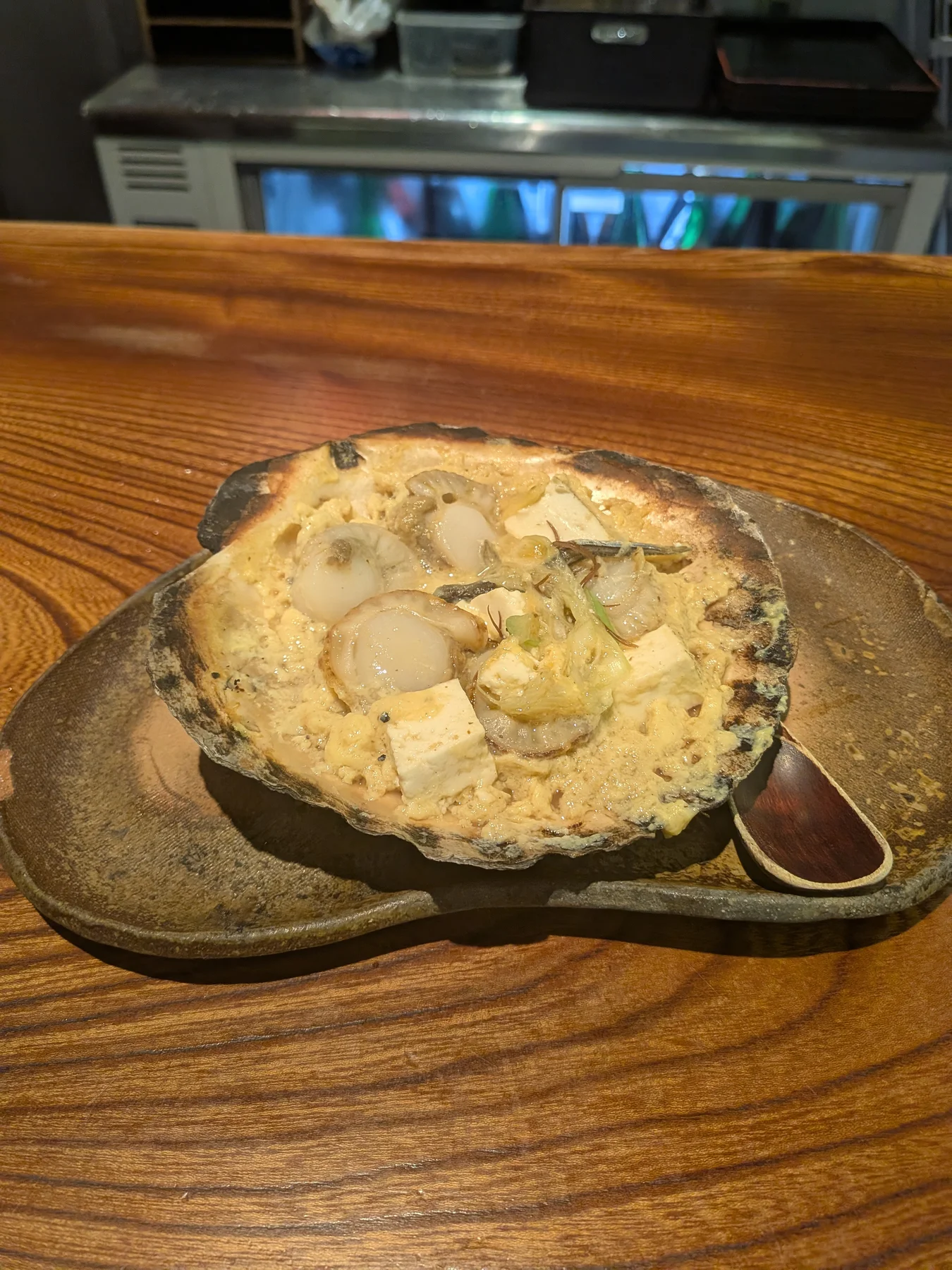
Hotate miso kaiyaki — scallops cooked in their shell with miso — one of the dishes served alongside Torai.
Torai Tokubetsu Junmai closed the flight with balanced umami and a clean finish. Among the dishes served with Torai, the pork-wrapped Aomori leeks stood out more than the hotate miso kaiyaki.
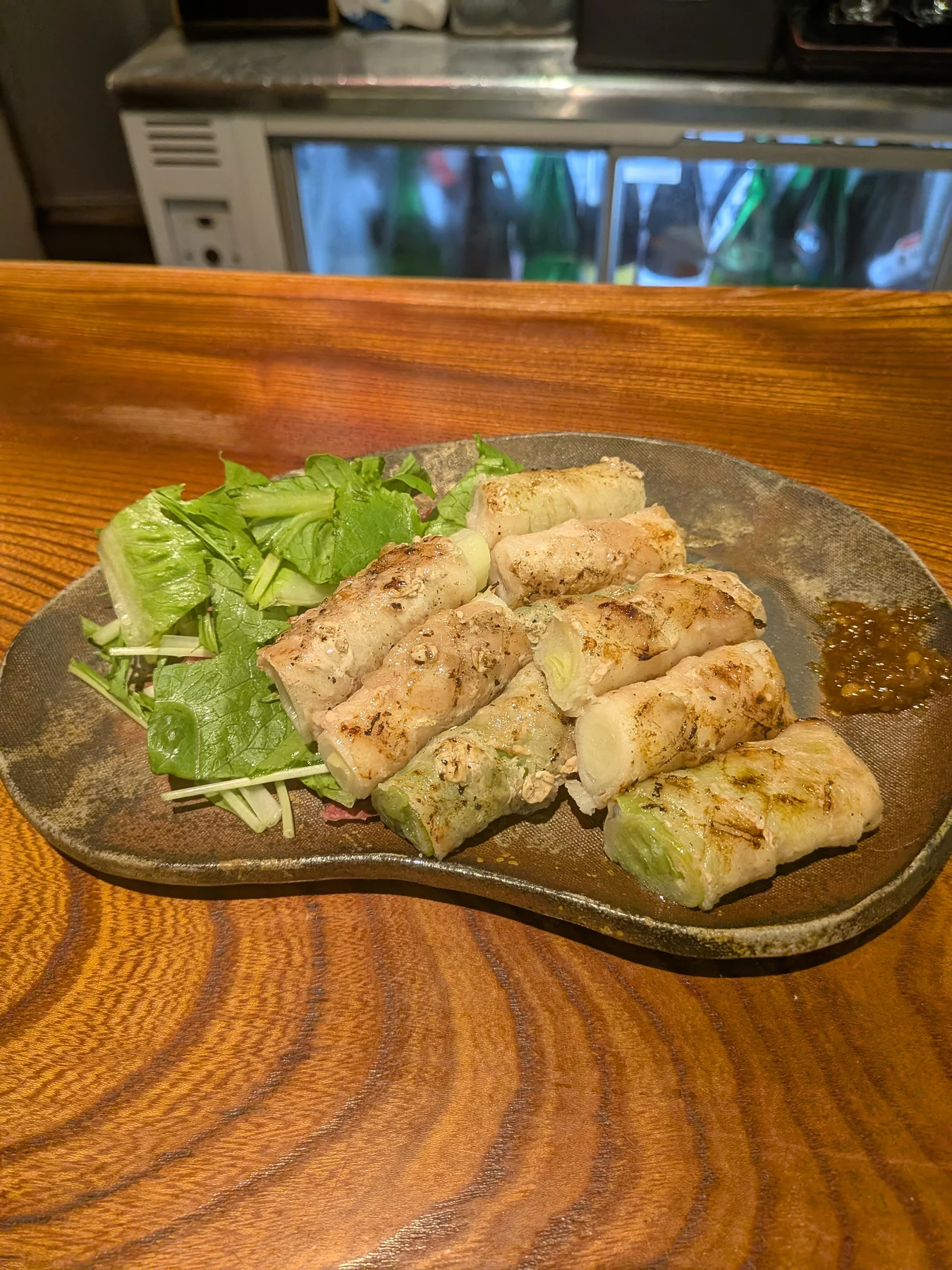
Aomori-grown leeks wrapped in pork, the dish that paired best with Torai.
The leeks’ sweetness against the pork’s fat gave the sake’s umami and finish something specific to respond to, and that combination stood out more than the miso scallops had.
Comparison
Across the four pours, each sake ended up doing a different job rather than competing for the same role:
- Zan: rice umami supporting rich nanban-miso seasoning
- N Junmai: gentle sweetness followed by a clean, savory finish
- Shirakami Yamahai Junmai: acidity organizing dense, fermented flavors and fat
- Torai Tokubetsu Junmai: balanced umami and finish alongside pork and sweet leek
This isn’t a ranking. Zan earned the best match of the visit against one specific dish, but the other three pours weren’t lesser versions of it — each met a different course on its own terms, and none of the four would have worked as a substitute for another.
What stayed with me
Across this meal, miso, smoked fish, sake lees, scallops, and pork kept bringing the sake back to rice flavor, acidity, umami, and finish. The four pours were not interchangeable; each made a different part of the meal easier to notice.
For a broader way to choose bottles around miso, mushrooms, meat, and other savory dishes, use the umami-rich sake guide. If the ordering format itself is the unfamiliar part, see how to order sake at a Japanese izakaya.
Browse all sake by category, or compare bottles on the Taste Map.