2026-11-27
Ichiriki, Hamamatsucho: Fried Egg, Yakitori and Sake Pairings
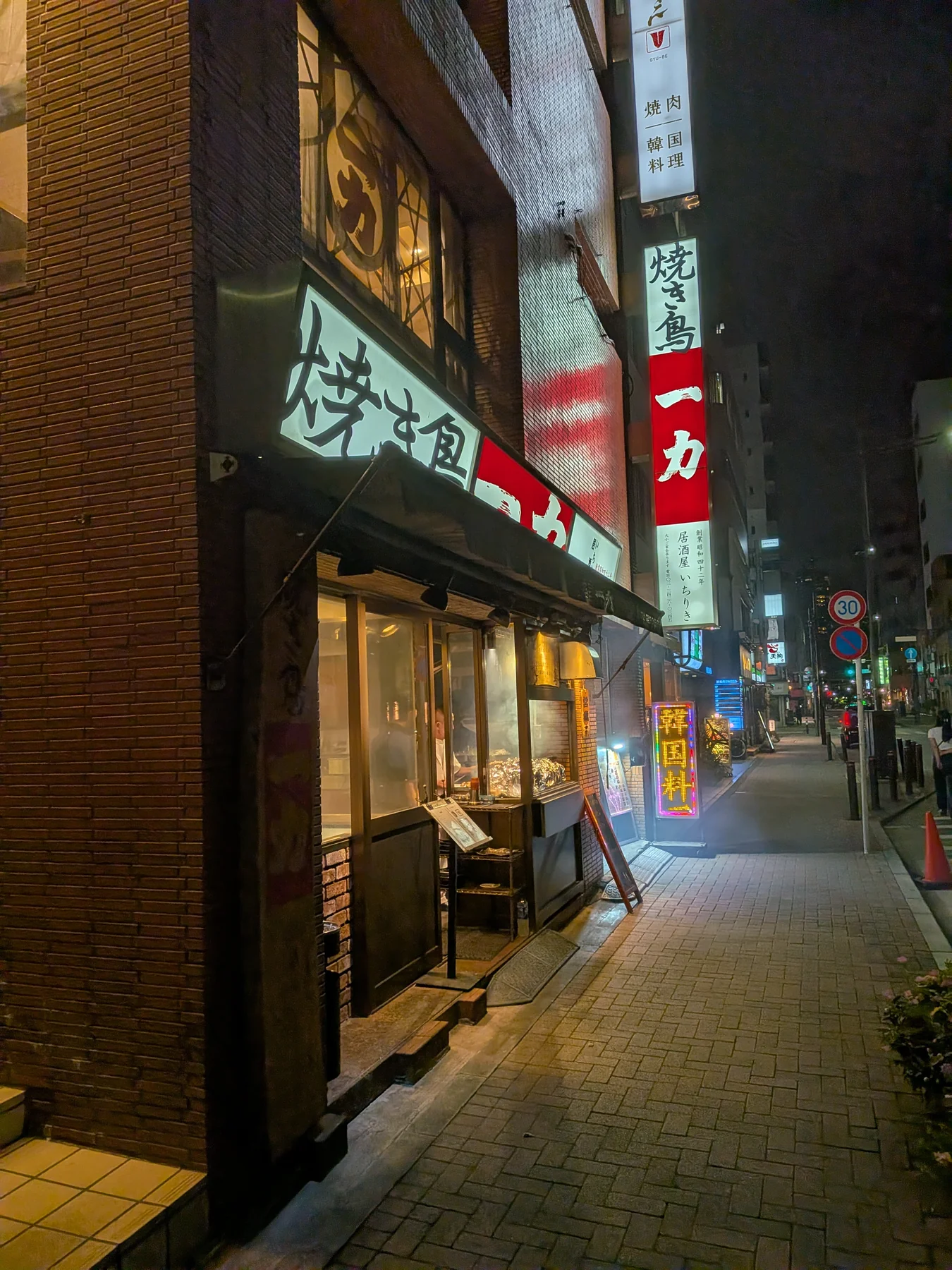
On August 14, 2026, I stopped at Ichiriki in Hamamatsucho for a meal on my own. I had noticed smoke rising from the yakitori grill at the front of the restaurant before, and it was part of what drew me in. The room was comparatively quiet during the Obon holiday period. I came for the food, but the sake selection gave me another reason to pay attention.
I ordered a selection of yakitori, including bonjiri (chicken tail), along with a seafood carpaccio and the restaurant’s tamago no karaage, an unusual fried egg dish with a soft center. I tried two kinds of sake that evening: Shichida Junmai Muroka and Yukinobosha Yamahai Junmai. Both offered a different answer to the richness of the food.
Tamago no karaage: browned edges and a soft center
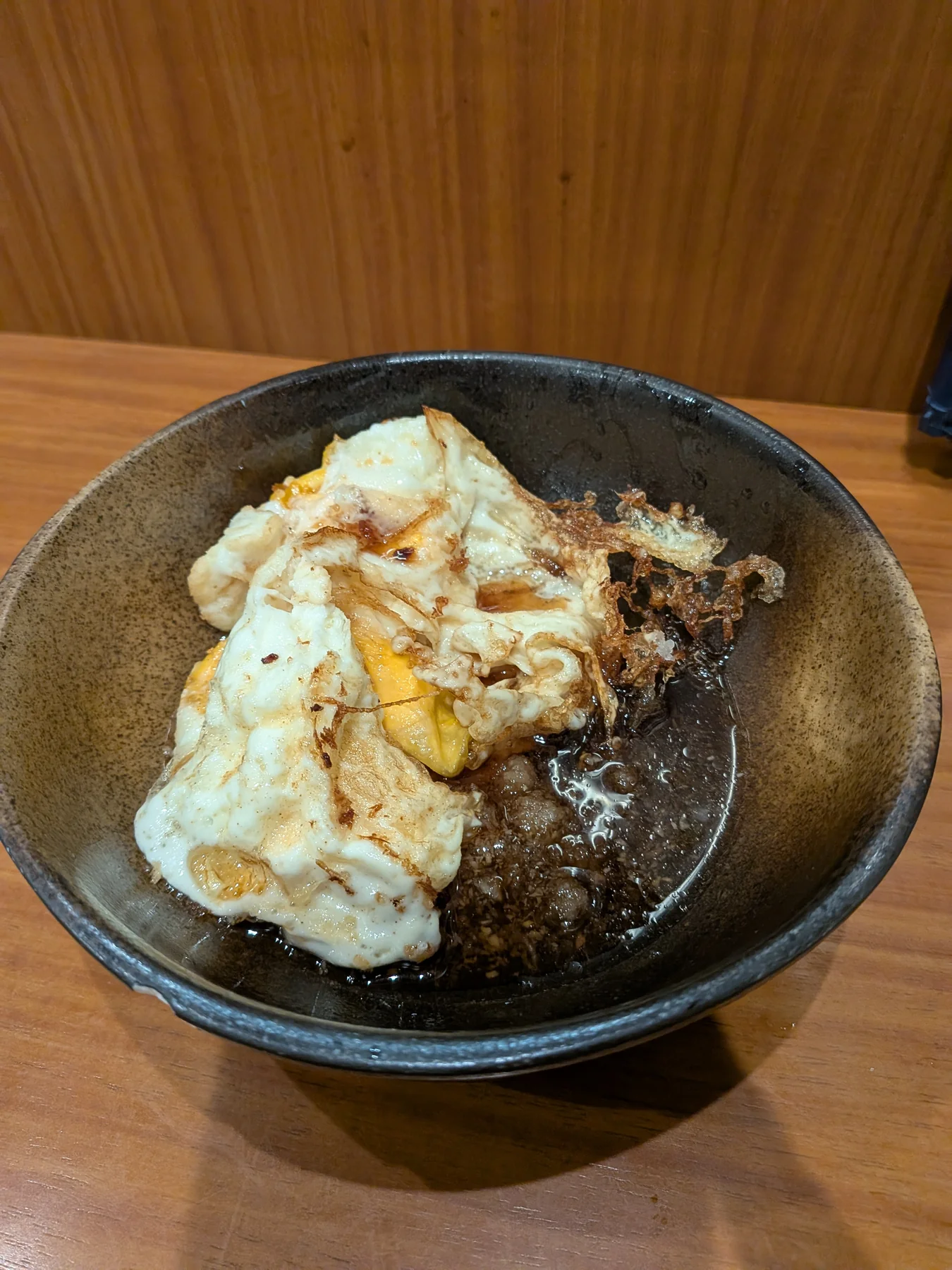
Ichiriki’s tamago no karaage. The photo shows the egg on its own; the sake bottles were photographed separately.
The egg dish was the most surprising part of the meal for me. My visit notes describe it as starting with a raw egg, fried so that the edges browned while the center stayed half-set. In the photos, folds of white with delicate browned edges surround a soft yellow yolk. I remember the sweetness and richness of that soft center. The seafood carpaccio was generous, but it left less of an impression than the egg.
Yukinobosha Yamahai Junmai had noticeable acidity and rice umami, with a fresh impression alongside those savory notes. Its clean finish helped reset my palate after the richness of the egg. In my notes, I gave it acidity 4 and finish 4, with body 2, on a five-point scale.
That contrast — a rich, softly set egg against a sake with noticeable acidity but relatively light body — made Yukinobosha with tamago no karaage my favorite pairing of this visit. It is an observation from this one meal, not a claim that this sake will always work the same way with every fried egg dish.
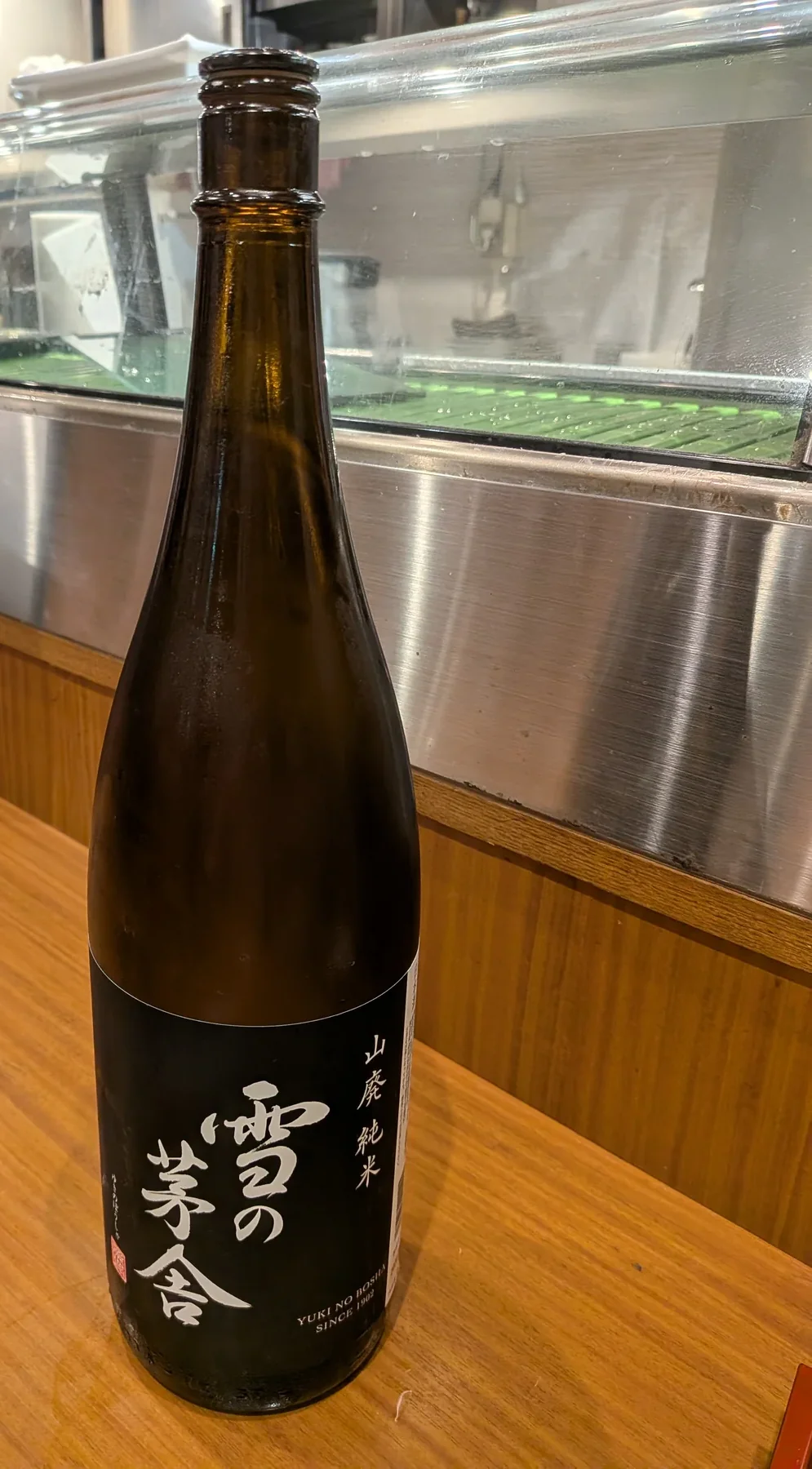
Yukinobosha Yamahai Junmai, the sake I paired with the egg dish.
Shichida and the fat of bonjiri
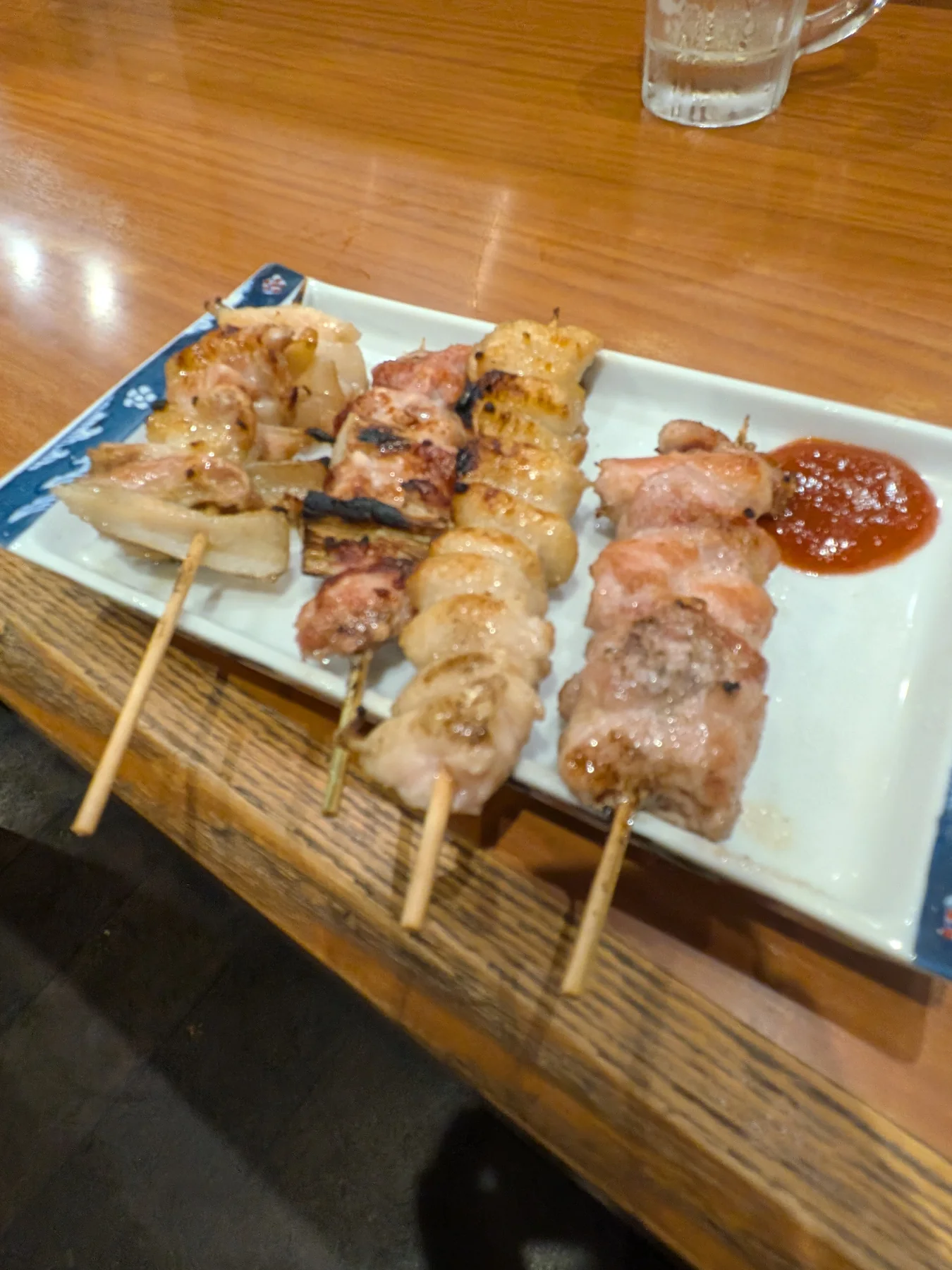
A plate of yakitori. My notes singled out the fatty bonjiri as the pairing for Shichida.
The yakitori took the meal in another direction. I particularly liked Shichida Junmai Muroka with bonjiri, a fatty cut of chicken. Shichida had firm rice umami and a little fruit-like sweetness, but its finish was crisp rather than lingering.
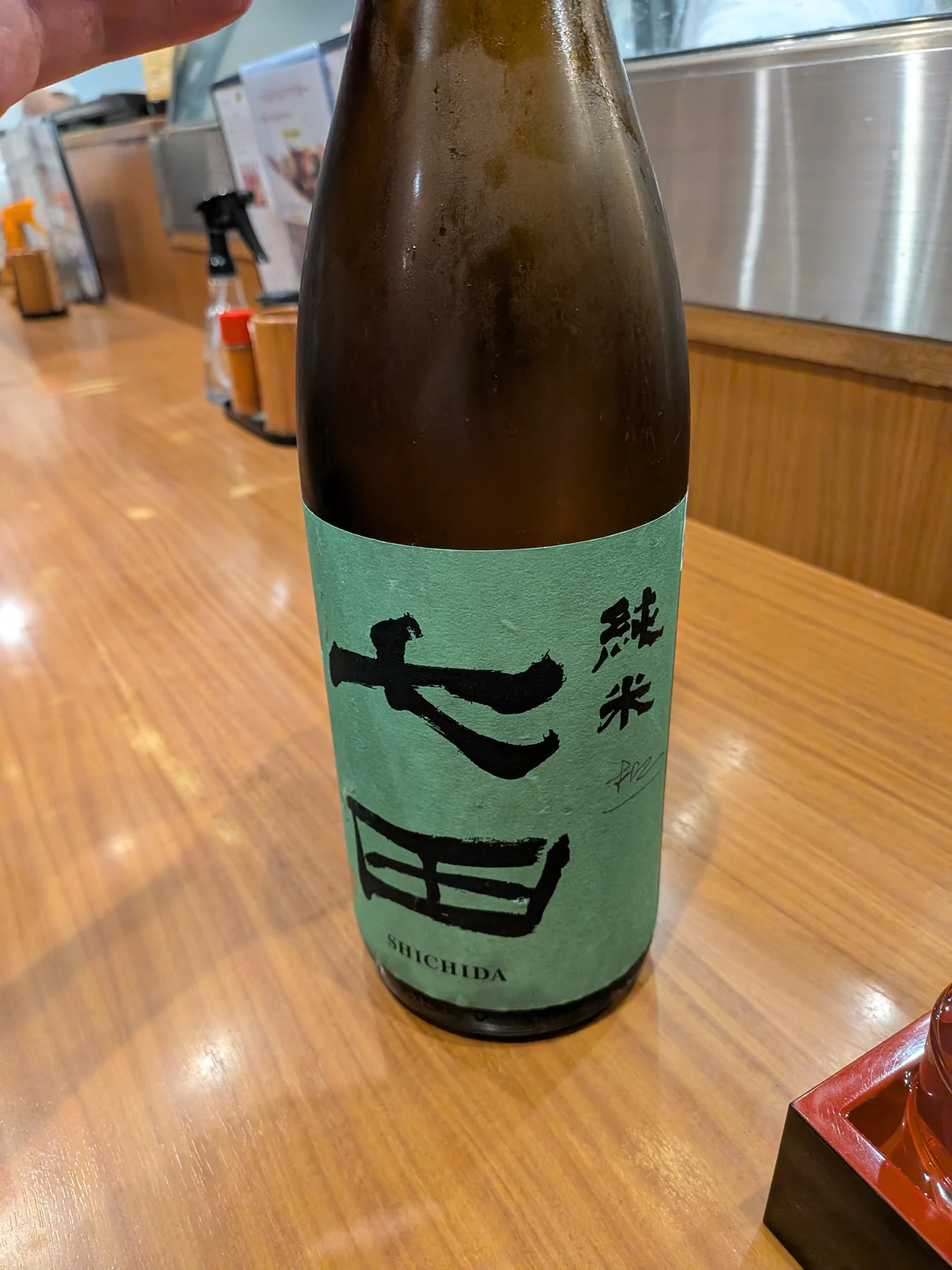
Shichida Junmai Muroka. The bottle was photographed separately from the skewers.
I recorded umami 4 and finish 4 for Shichida, with a more even balance across sweetness, aroma, body and acidity. That made it feel different from Yukinobosha’s more noticeable acidity. The richness of the bonjiri and the sake’s clean finish worked especially well together for me.
Neither pairing was a controlled side-by-side comparison, and I do not have a record of the exact temperature or the complete order of the pours.
The two tasting profiles
The scores below come from my notes for this visit. Each axis uses a five-point scale in the order sweetness / aroma / body / acidity / umami / finish.
- Shichida Junmai Muroka: 3 / 3 / 3 / 3 / 4 / 4
- Yukinobosha Yamahai Junmai: 3 / 3 / 2 / 4 / 3 / 4
They describe my experience of these pours, not fixed measurements or specifications for every bottle sold under the same name.
What stayed with me
I had gone into Ichiriki thinking about yakitori, not planning a formal sake tasting. The meal left me with two distinct pairings: Shichida’s rice umami and clean finish alongside fatty chicken, and Yukinobosha’s acidity alongside the unusual, half-set fried egg. That was enough to make the sake selection worth remembering.
The visit was in August 2026. The photos show the food and bottles from that evening; they do not establish the restaurant’s current menu or sake availability, and no image shows the egg dish and Yukinobosha bottle in the same frame.
For another firsthand pairing with meat in Tokyo, read Omata in Ikebukuro. See how to order sake at an izakaya or compare different taste profiles on the Taste Map.