2026-11-22
Omata, Ikebukuro: Four Sake with Beef and Grilled Mackerel
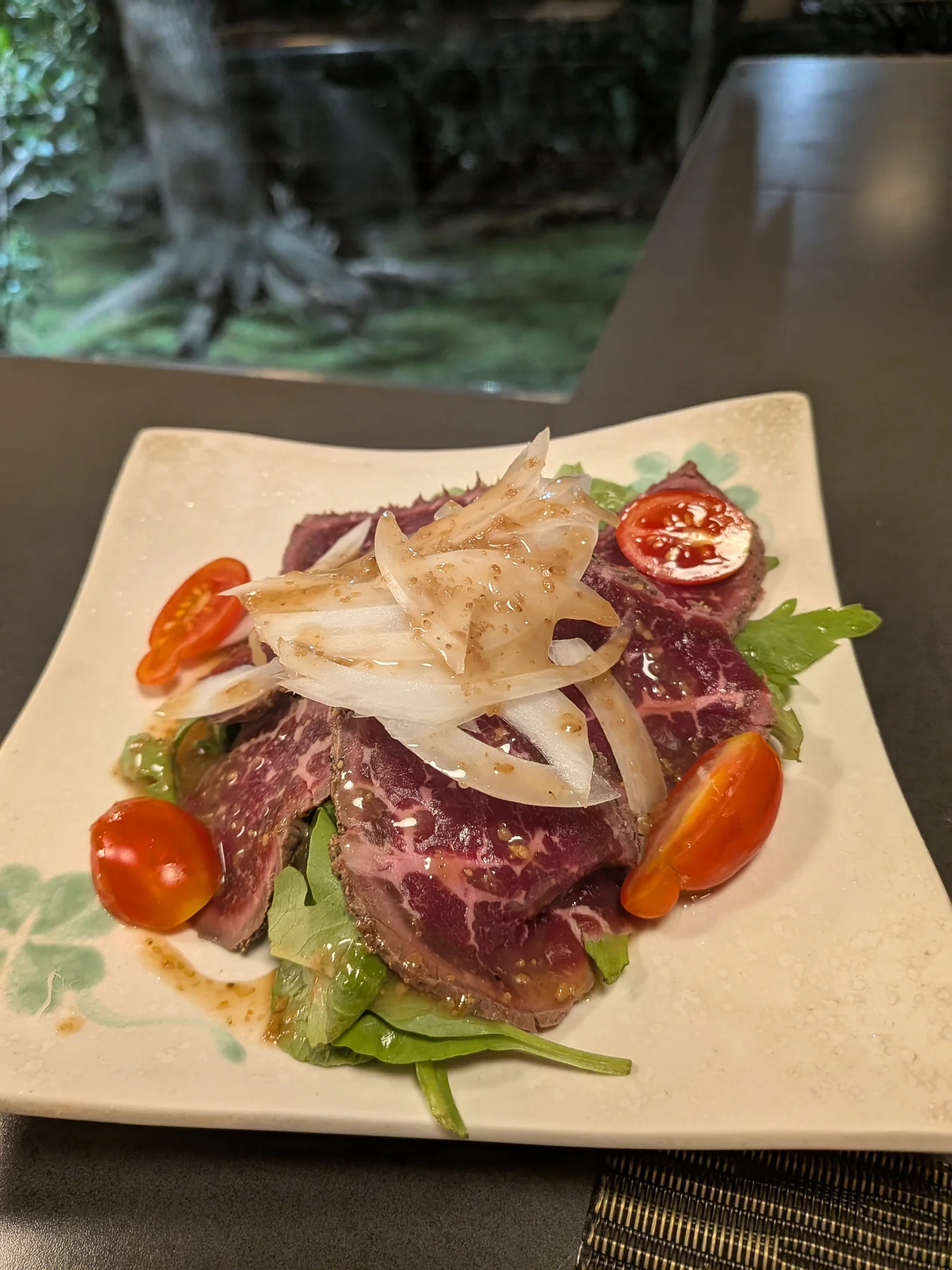
On July 15, 2026, I went back to Omata in Ikebukuro, a place I return to for its food and the ease of stopping in on my own. I noticed the owner’s quick, attentive service. I ordered seared beef, negitoro on nori, lightly pickled water eggplant, and salt-grilled mackerel. The owner and I also spoke briefly about the mackerel, which he recommended.
I drank four sake, all served chilled: TENBI, Kariho, ZAKU, and Takachiyo. Their roles at the table turned out to be quite different. The combination I kept returning to in my notes was TENBI with the seared beef.
TENBI and the seared beef
The beef’s savory flavor met TENBI Junmai Ginjo Shiroten’s sweetness, clear acidity, and rice umami. Those elements felt balanced rather than competing. The acidity remained noticeable alongside the beef, while the finish stayed clean.
In my six-axis tasting notes, I rated TENBI’s acidity 4, umami 4, and body 2 on a five-point scale. Those numbers help explain why the sake worked for me here: it had enough acidity and savory character to meet the beef without feeling equally heavy. This was my best pairing of the visit, not a claim that TENBI is the right choice for every beef dish.
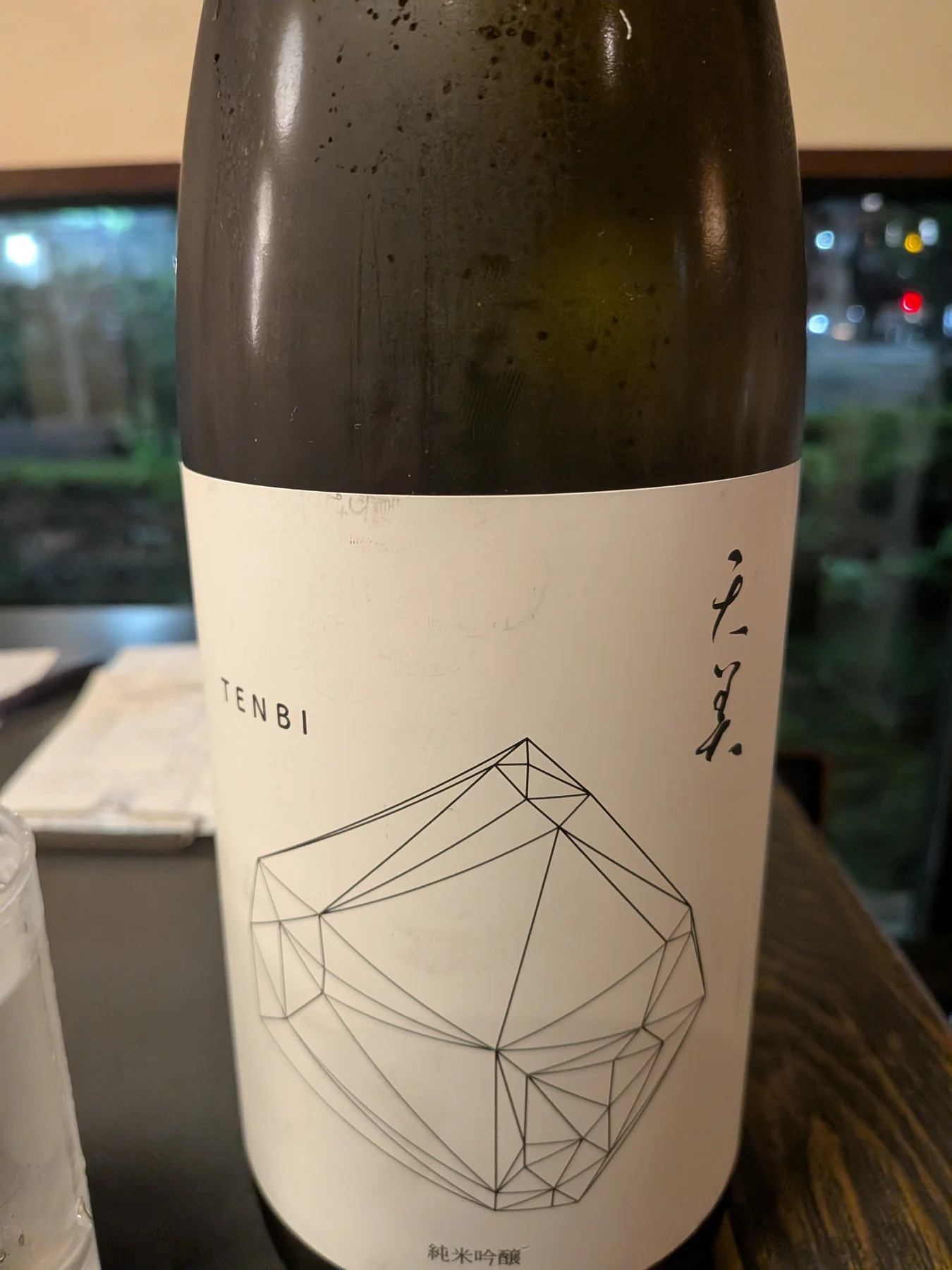
TENBI Junmai Ginjo Shiroten, photographed separately from the beef.
Kariho: a much drier way to meet the mackerel
The Kariho Yamahai Junmai Nama Genshu bottle carried a +24 marking. Its taste was just as direct: distinctly dry, powerful, and full-bodied. I recorded sweetness 1 and body 5, with umami at 4.
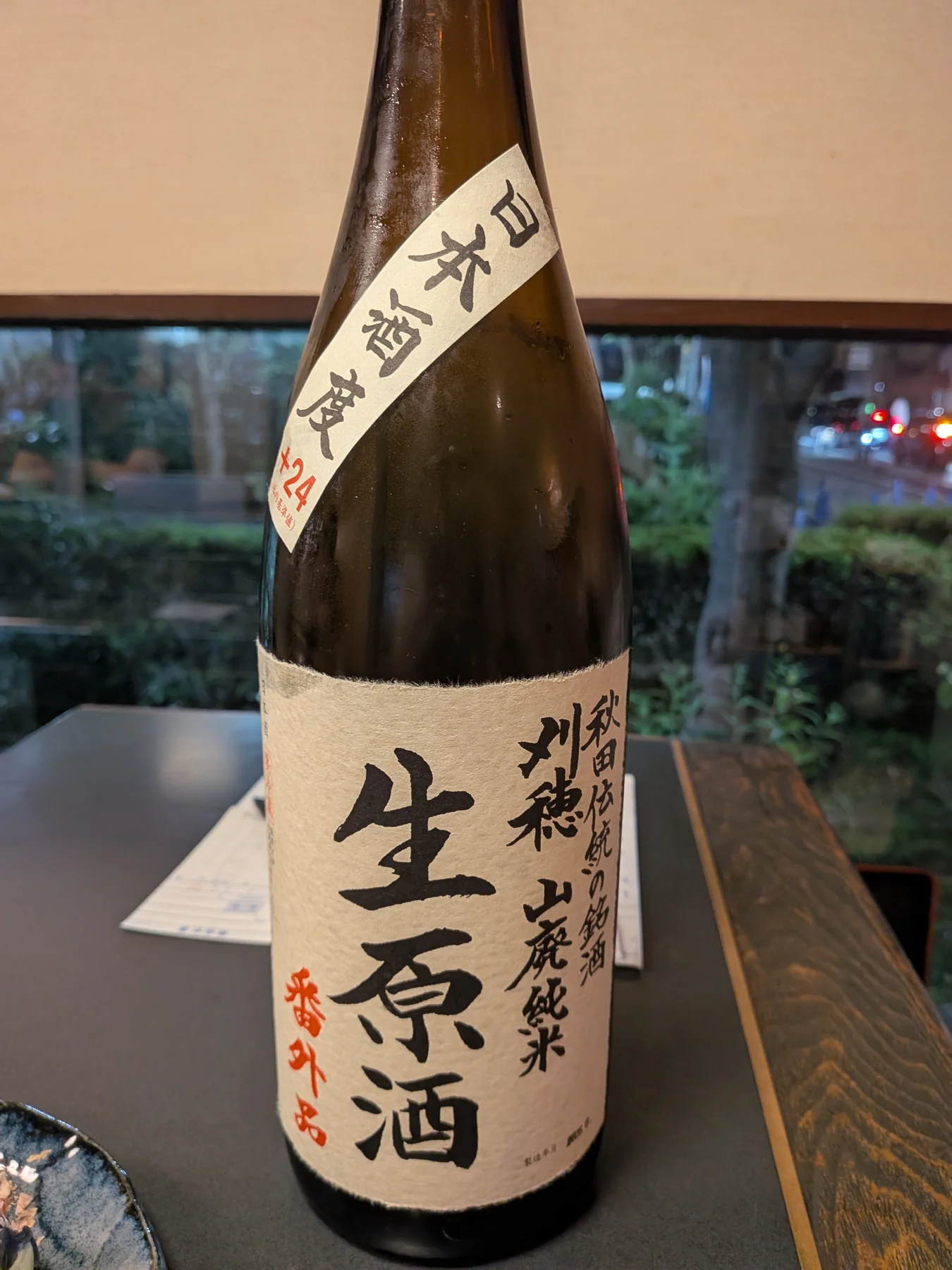
Kariho’s bottle, with the +24 marking visible on the neck label.
That force made sense beside the salt-grilled mackerel. The fish brought salt and richness; the sake had enough presence to stand beside both. I also noted a good match with the lightly pickled water eggplant. This was a drier, more forceful pairing than TENBI with beef, though I did not run a controlled comparison.
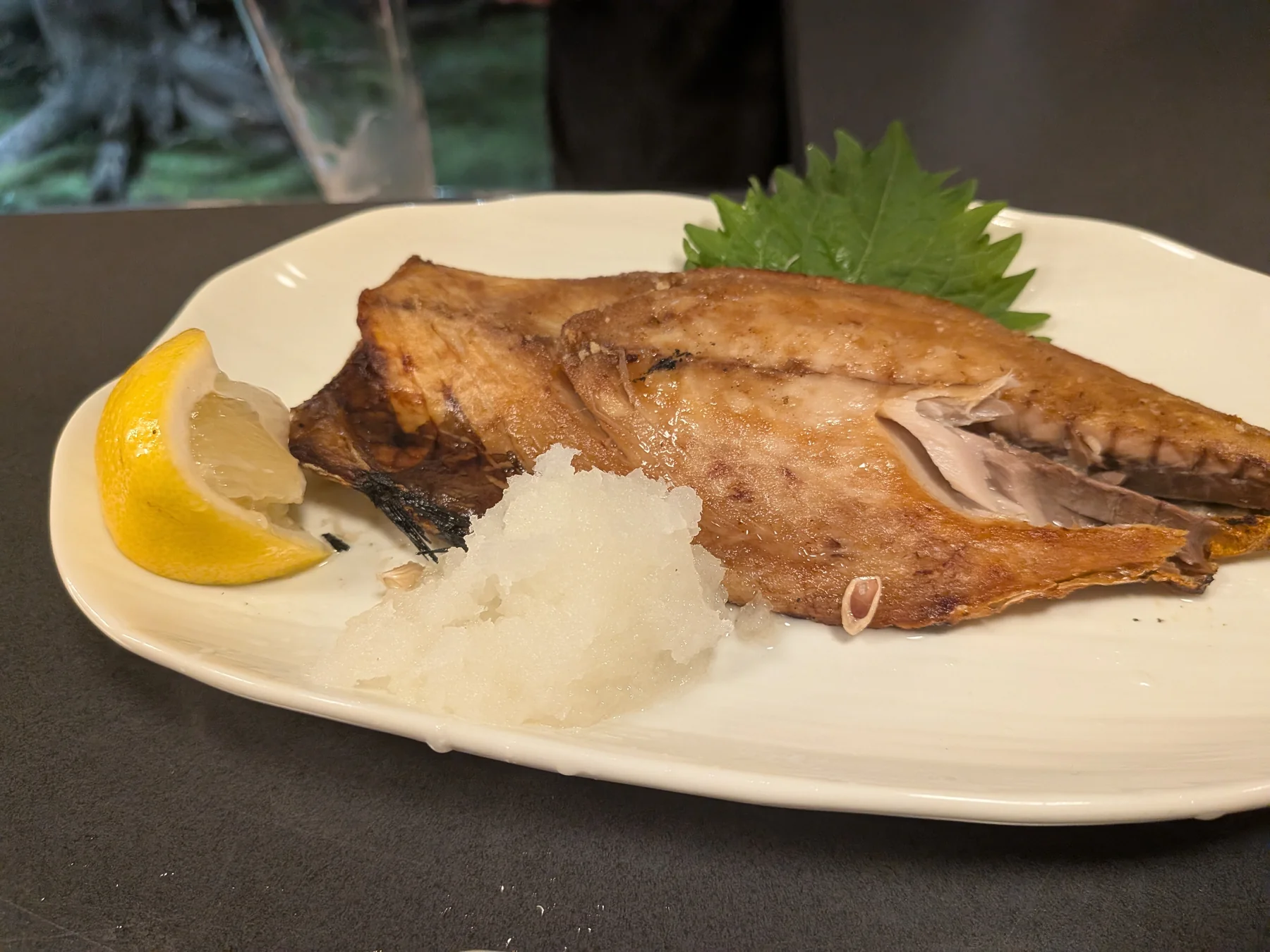
Salt-grilled mackerel. I had already started eating before taking the photo; no sake bottle appears in this frame.
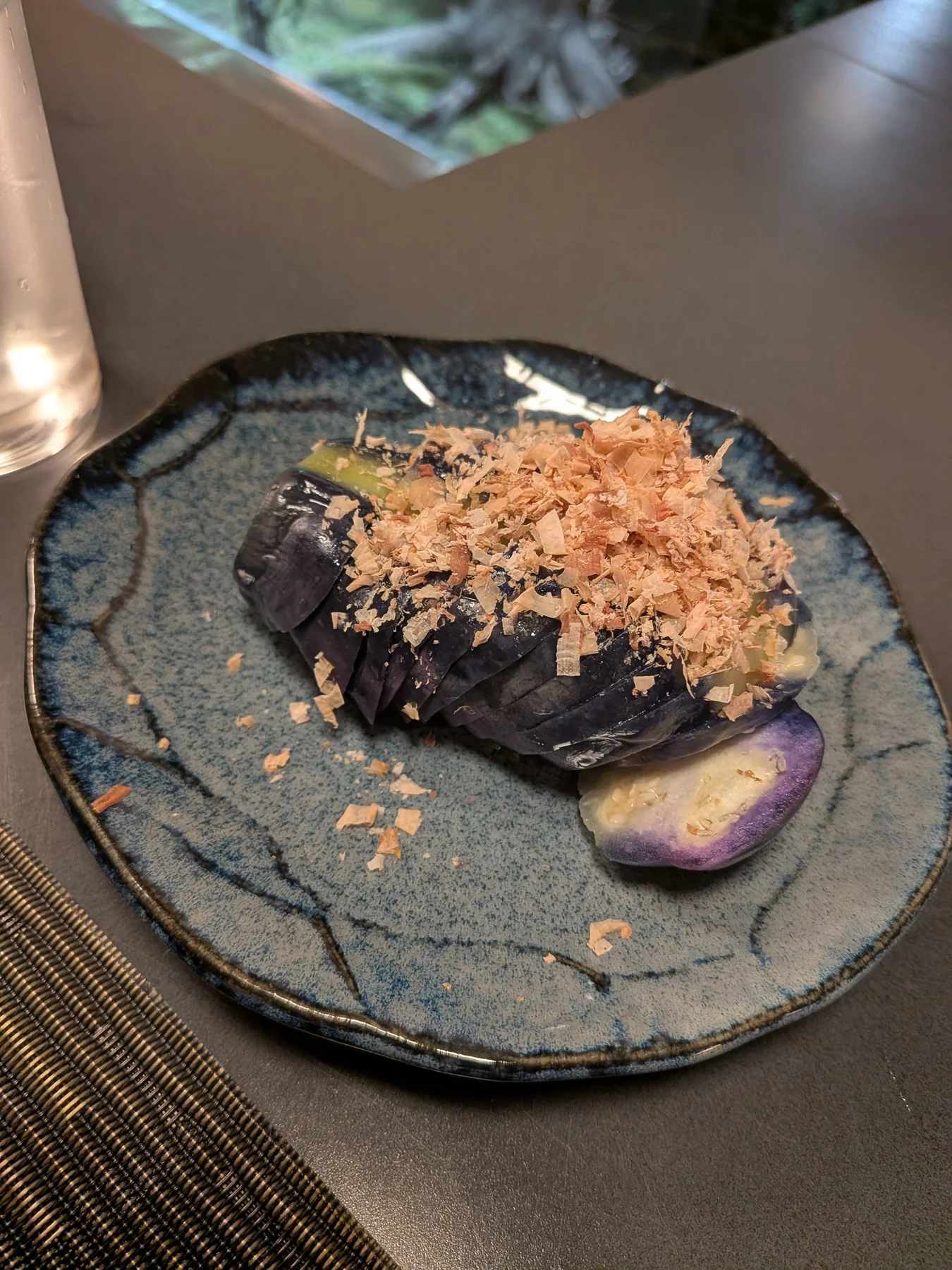
Lightly pickled water eggplant, also ordered during the July 15 visit. The dish was identified by the person who ate it; it is photographed without a sake bottle.
ZAKU after Kariho: the effect of contrast
One part of the drinking order is clear in my notes: ZAKU Waetsu Junmai Ginjo came immediately after Kariho. After such a markedly dry sake, I noticed ZAKU’s sweetness much more strongly.
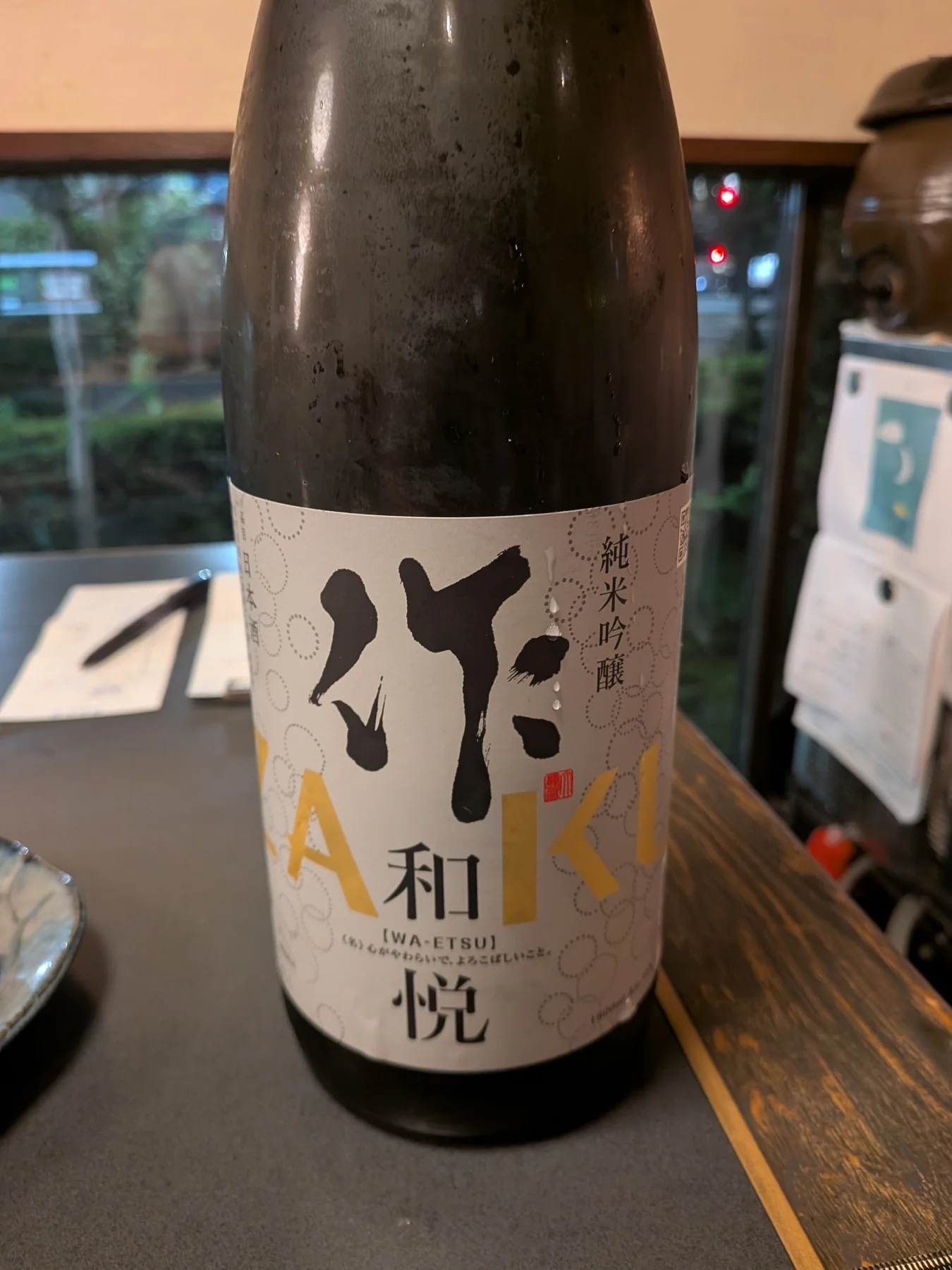
ZAKU Waetsu, the sake I tasted immediately after Kariho.
ZAKU’s recorded sweetness was 4 and its body was 2. I liked the soft sweetness and umami, but at this meal I was more interested in drinking it on its own than finding a particular dish to match it. The point is also about context: tasting ZAKU after Kariho may have made its sweetness seem more pronounced. I would not treat this one impression as a fixed comparison between the two bottles.
Takachiyo: rice umami with the same fish
Takachiyo BLUE brought another approach to the mackerel. I noticed the texture associated with origarami and a clear rice-driven umami character. In the notes, umami scored 4 while body scored 2. It felt savory without the same weight that I had recorded for Kariho.
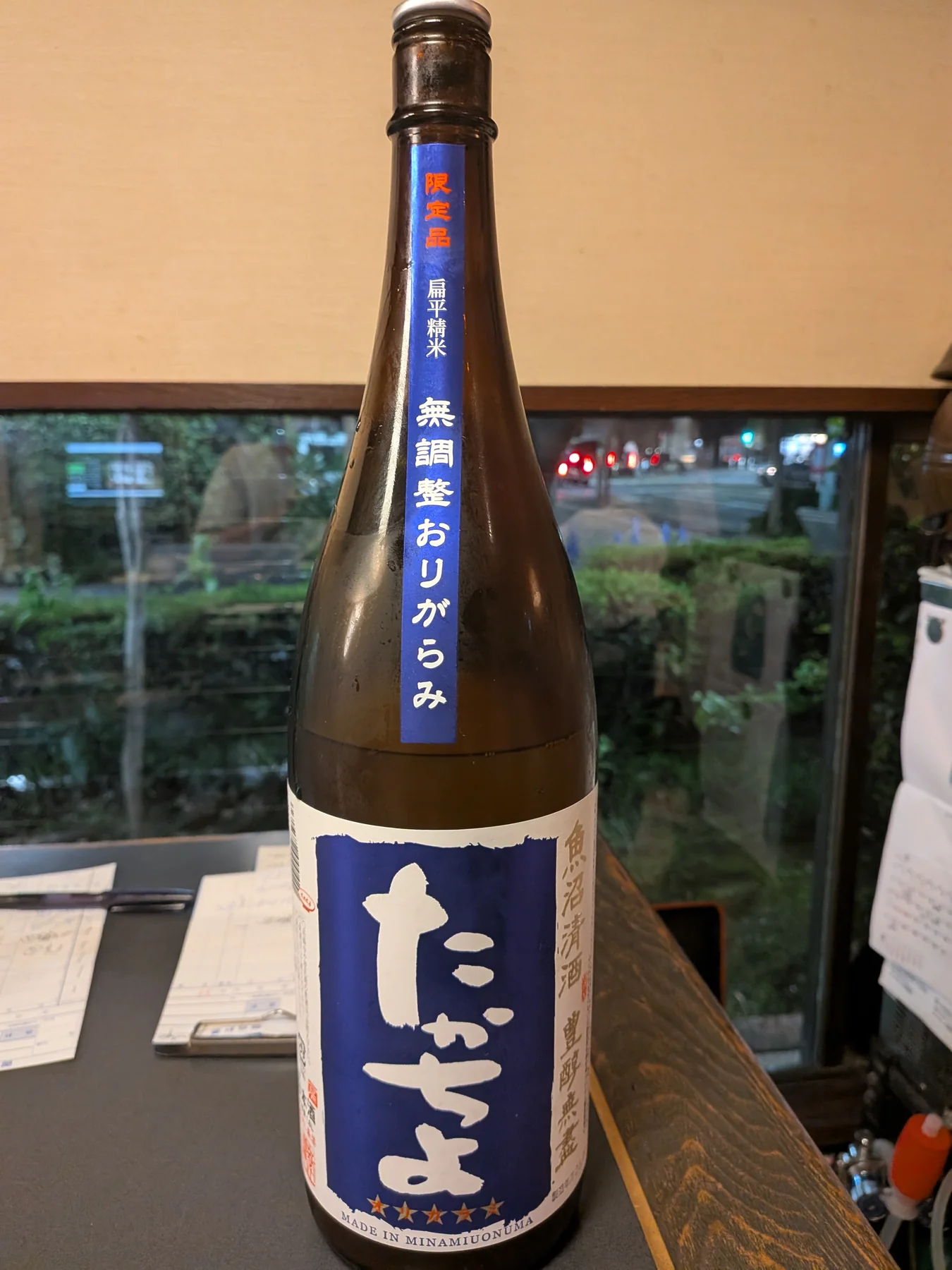
Takachiyo BLUE, which I also enjoyed with the salt-grilled mackerel.
Both Kariho and Takachiyo worked with the mackerel that evening, but for different reasons: Kariho through emphatic dryness and weight, Takachiyo through its rice umami and softer body. That difference was more useful to me than choosing a single winner for the fish.
The six-axis record from that evening
These are my impressions from this meal, on a five-point scale. They are not measurements of the sake or claims about how every bottle will taste.
The axes below are always in the same order: sweetness / aroma / body / acidity / umami / finish.
- TENBI Shiroten: 3 / 4 / 2 / 4 / 4 / 4
- Kariho Bangaihin +24: 1 / 2 / 5 / 3 / 4 / 3
- ZAKU Waetsu: 4 / 4 / 2 / 2 / 4 / 2
- Takachiyo BLUE: 3 / 3 / 2 / 3 / 4 / 3
What stayed with me
The meal was not a blind tasting, and I did not record an exact serving temperature or the complete order of all four pours. The bottles and dishes were photographed separately, so the photos document what I had rather than a simultaneous bottle-and-food pairing. They also cannot establish what the restaurant stocks today.
What I remember is how the food changed which side of each sake mattered. TENBI’s acidity and sweetness connected with the beef; Kariho held its own with salt and fat; ZAKU’s sweetness became more apparent after Kariho; and Takachiyo brought rice umami to the mackerel. All four were interesting, but their different jobs at the table made this visit worth documenting.
For another firsthand pairing from the same neighborhood, read Sakana-ya’s two visits with dashi-based nikudofu. For an approach to choosing sake as dishes change, see how to order sake at an izakaya.
Explore all sake or compare six-axis profiles on the Taste Map.