2026-10-14
Sakana-ya, Ikebukuro: Two Sake Visits with Dashi-Based Nikudofu
I went to Sakana-ya in Ikebukuro twice in June 2026, on June 1 and June 22. What brought the two visits together was a dish the restaurant calls nikudofu: tofu and pork in a light Japanese broth. This wasn’t the familiar sweet-soy braise I might usually expect from the name. Large pieces of tofu, bean sprouts, and pork made it feel closer to a gentle hot pot. Across those two evenings, very different sake found a place beside it.
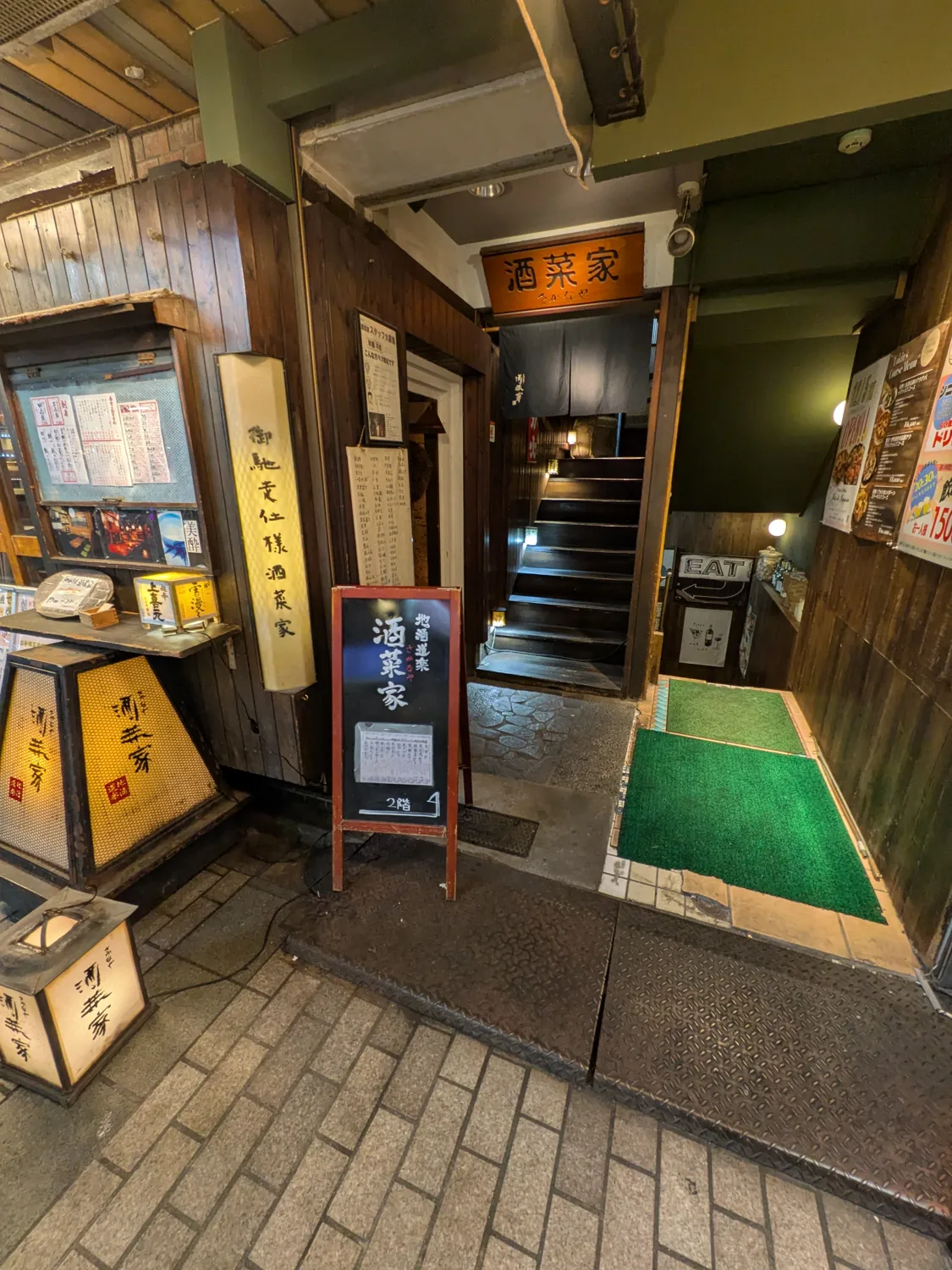
The entrance to Sakana-ya during the June 1 visit.
The dish that connected both nights
The broth was dashi-forward and comparatively light, with the tofu and pork bringing texture and savoriness rather than a thick, sugary glaze. That distinction matters when thinking about sake pairings. A strongly flavored drink might create a striking contrast, while another could follow the quiet umami of the broth. I ate the nikudofu on both visits, but I did not conduct a controlled side-by-side tasting. The photo below is from the June 22 visit; it documents the dish, not a bottle-and-dish pairing in one frame.
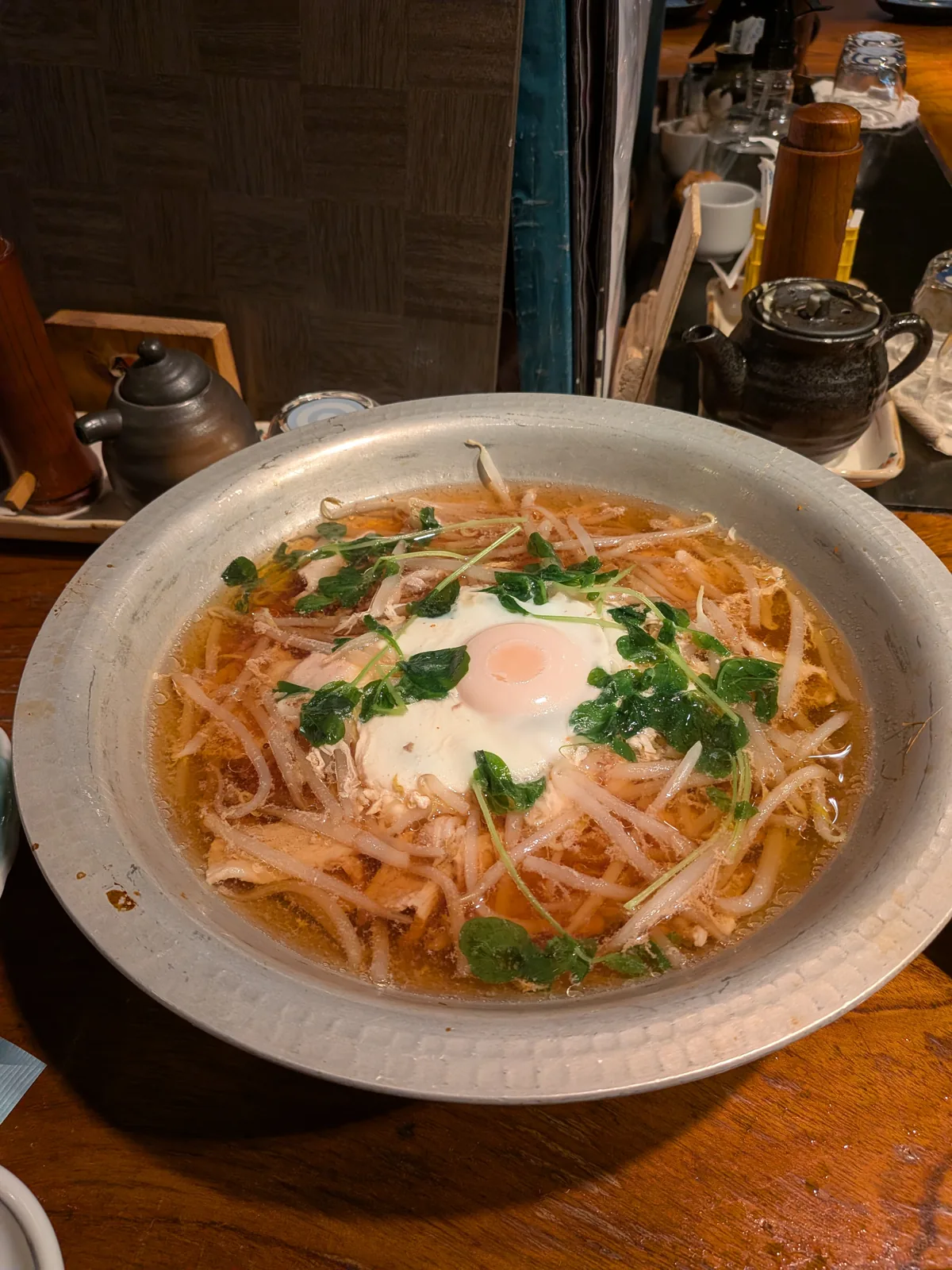
Sakana-ya’s dashi-based nikudofu, photographed on June 22, 2026.
June 1: Hanatomoe and a sharp, fermented contrast
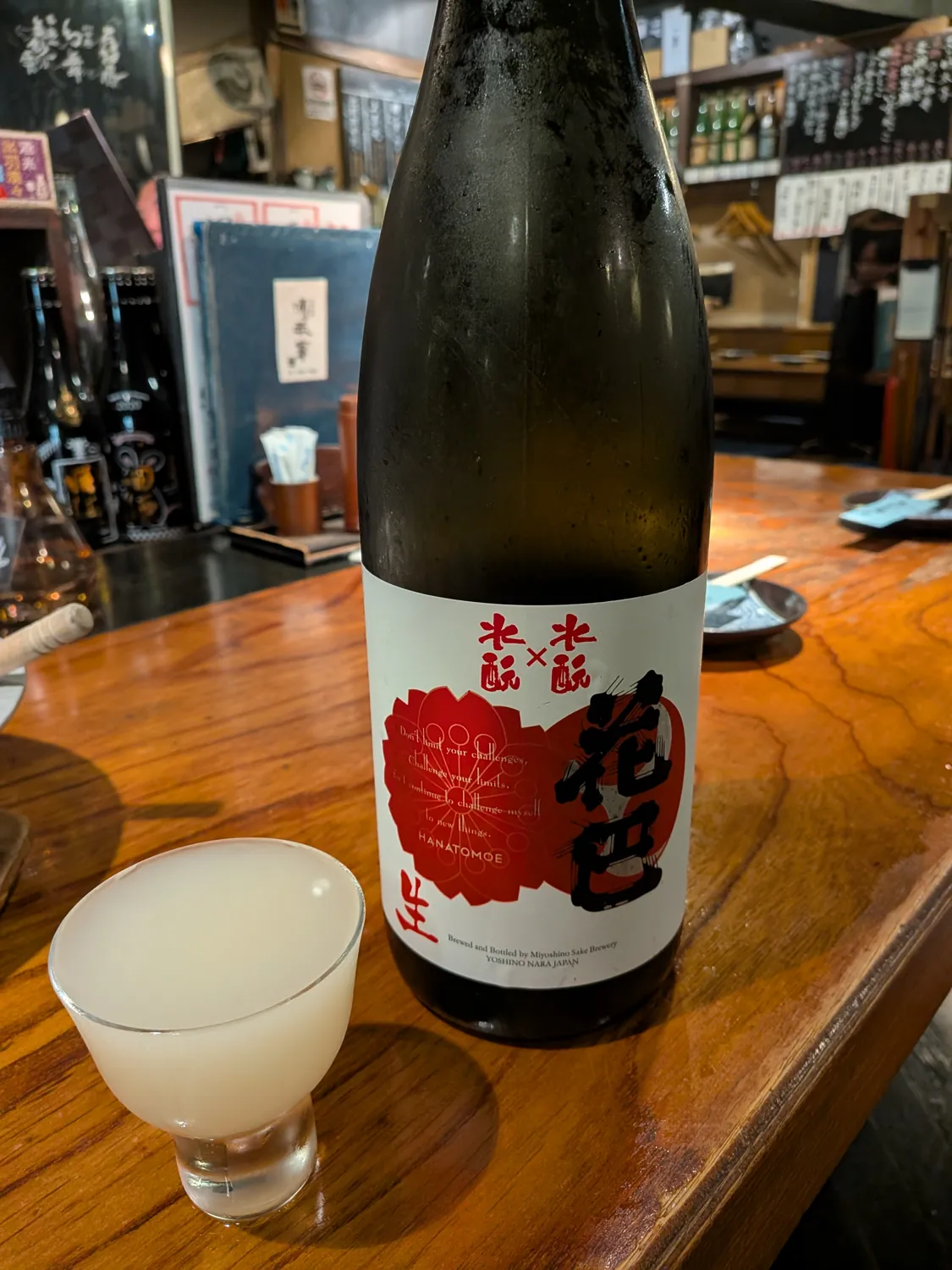
Hanatomoe Mizumoto × Mizumoto Nigori Nama, photographed during the June 1 visit.
Four sake appeared in my June 1 notes: Soumura Junmai Dewa no Sato, Hanatomoe Mizumoto × Mizumoto Nigori Nama, Tohoku Izumi Omachi Junmai, and Yuki no Bosha Yamahai Junmai. All were noted as chilled. The most forceful was Hanatomoe, which reminded me of yogurt-like acidity and had a pronounced fermented character and depth. Its recorded TasteScore was sweetness 4 / aroma 3 / body 3 / acidity 5 / umami 4 / finish 2.
I tried it with the light nikudofu. The sake’s acidity stood apart from the soft broth rather than simply blending into it. I also wondered whether its assertive fermentation notes might suit miso-rich food, but that was an idea for a future pairing, not something verified at this table.
Tohoku Izumi took a quieter route. It was cleaner and more restrained, fitting the gentle dashi without demanding attention. Yuki no Bosha Yamahai Junmai also felt surprisingly polished and natural with the tofu and pork. Those are June 1 visit observations; unlike Hanatomoe and Tohoku Izumi, Yuki no Bosha is not represented by a canonical Field Note for this visit.
June 22: Chojazakari with nikudofu
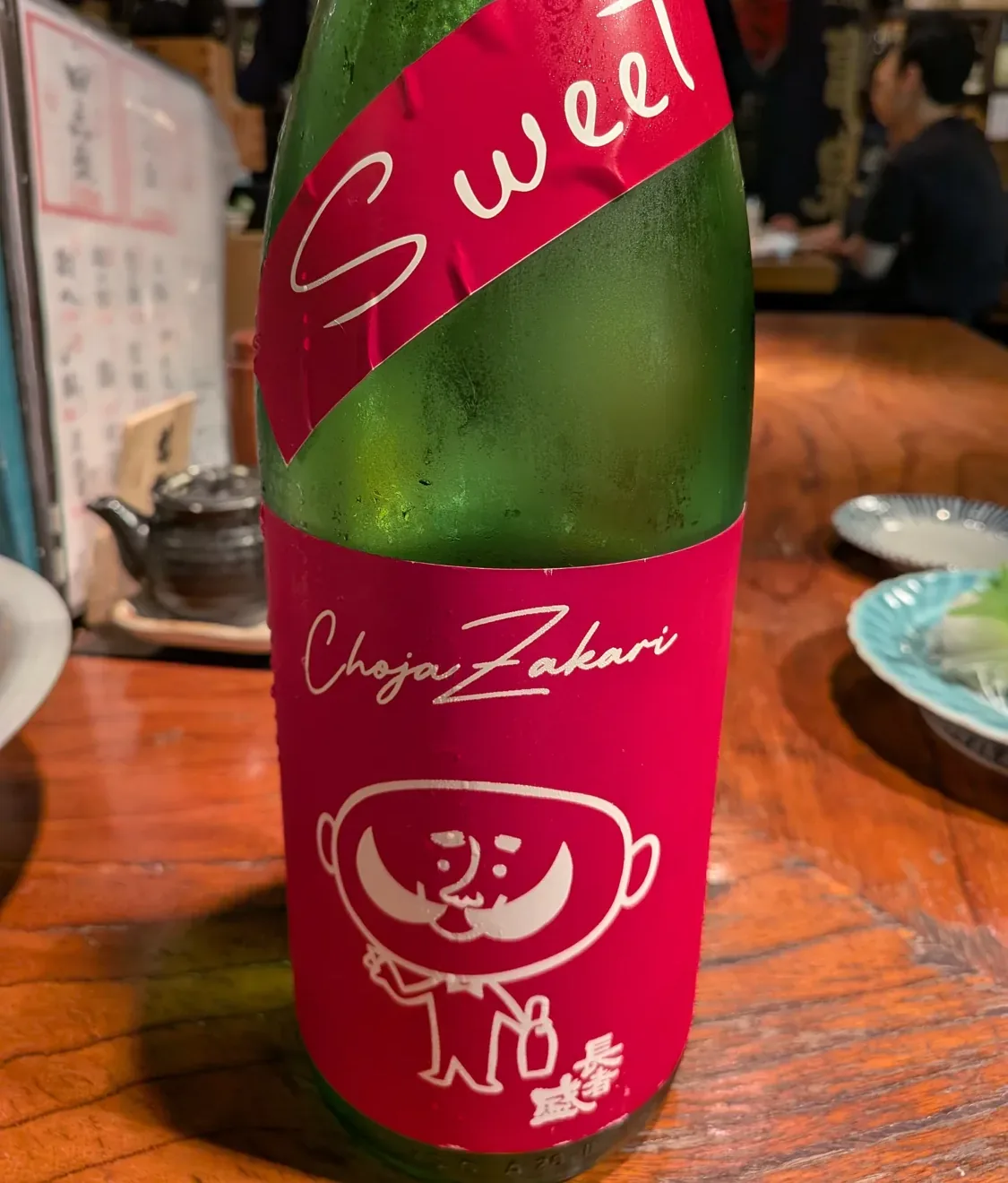
Chojazakari “Sweet Chosan,” the most memorable nikudofu pairing of the second visit.
On June 22 I returned for sashimi and nikudofu, drinking Shigaizumi Ichidan-jikomi Nama Genshu, Jozan Junmai Karakuchi Cho, Chojazakari Sweet Chosan, and Ikioi Masamune Spring Carp. All four were served chilled.
Sweet Chosan stood out beside the tofu and pork. It had a juicy combination of sweetness, acidity, and rice flavor, recorded as sweetness 4 / aroma 3 / body 4 / acidity 4 / umami 3 / finish 3. Where Hanatomoe had made an assertive, tart contrast on June 1, Sweet Chosan brought sweetness and acidity into the same register as the dashi and pork. It was my best match of the June 22 visit, not a universal verdict about nikudofu.
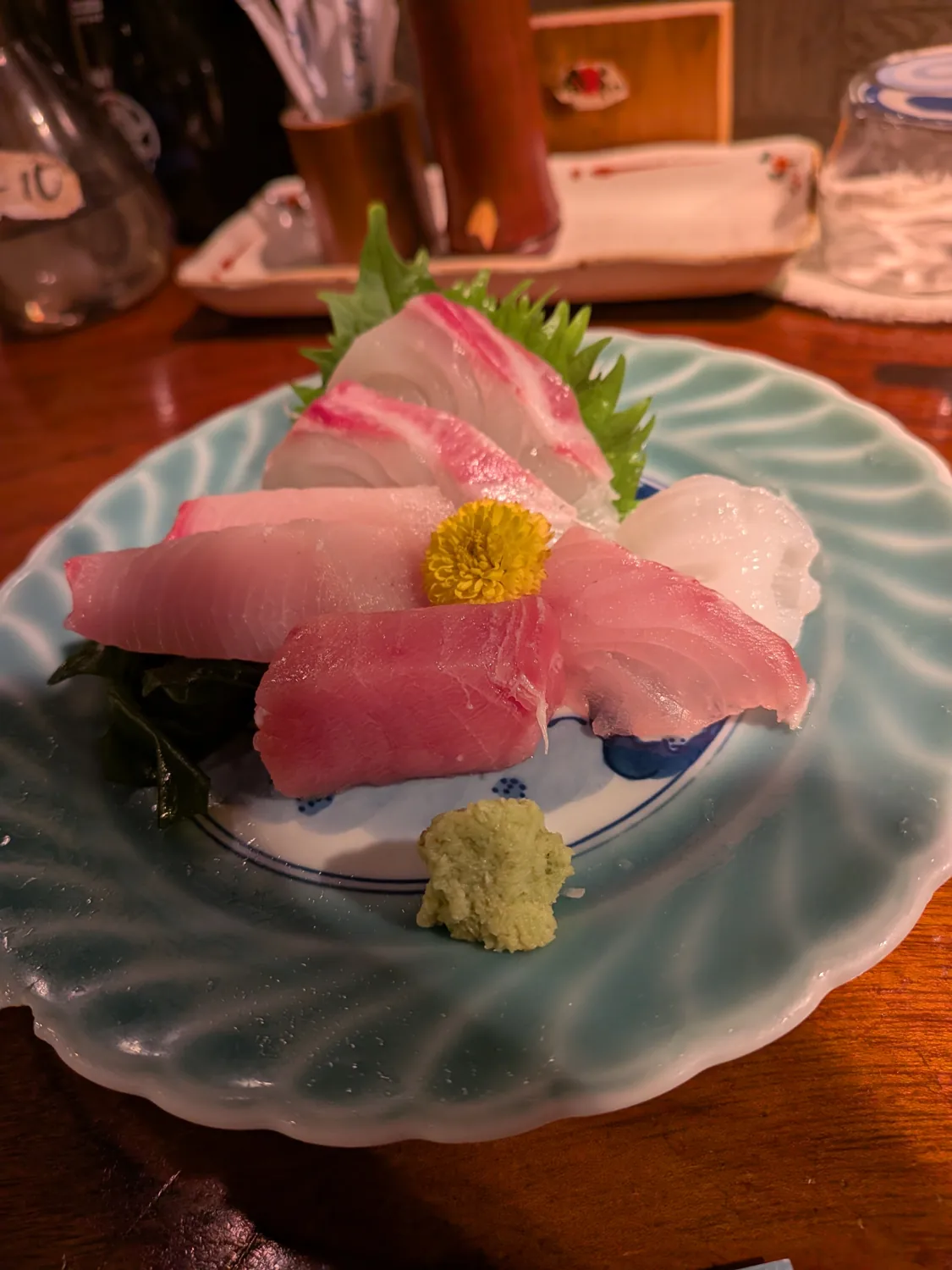
A plate of sashimi from June 22; this was a different pairing context from the nikudofu.
The fish offered another route through the evening. Shigaizumi felt light, with a green-apple-like acidity, while Jozan had a clean, dry finish that I particularly liked with white-fleshed sashimi. Spring Carp offered a softer, peach-like sweetness and umami and also accompanied the nikudofu. Those contrasts made the second visit feel broader than a single standout pairing.
What two visits taught me
The same dashi-based dish did not point to one correct kind of sake. Hanatomoe’s tart, fermented character cut across the broth; Sweet Chosan’s sweetness, acidity, and body connected more gently with its savory warmth. With such different pours, describing the nikudofu precisely was more useful than simply labeling it a “rich pork dish.”
These are tasting notes from two separate meals, not a blind comparative study. The observations, temperatures, and TasteScore values refer to those specific visits; they should not be read as fixed product specifications or current availability claims. I would return to try the nikudofu again with another sake that sits between those two profiles.
For other firsthand Ikebukuro pairings, read Hinataya’s menchi-katsu pairing and Ura-ya’s fish and miso notes. Explore sake for savory, umami-rich food or compare six-axis profiles on the Taste Map.