2026-07-14
Hinataya, Ikebukuro: Four Pours and a Menchi-katsu Pairing Worth Repeating
Hinataya sits on Ikebukuro’s west side, the kind of neighborhood izakaya that rewards repeat visits — reliable food, a regulars-heavy room, and a sake list that goes a little further off the beaten path than the menu’s comfort-food reputation would suggest. Pours come in 90ml glasses, small enough to work through several bottles in one sitting. On a visit back on June 3, that added up to four.
What I drank
Kokoro Tamazakae 70 Junmai Nama Genshu opened the night: a rich, dry Shiga junmai nama genshu with firm acidity.
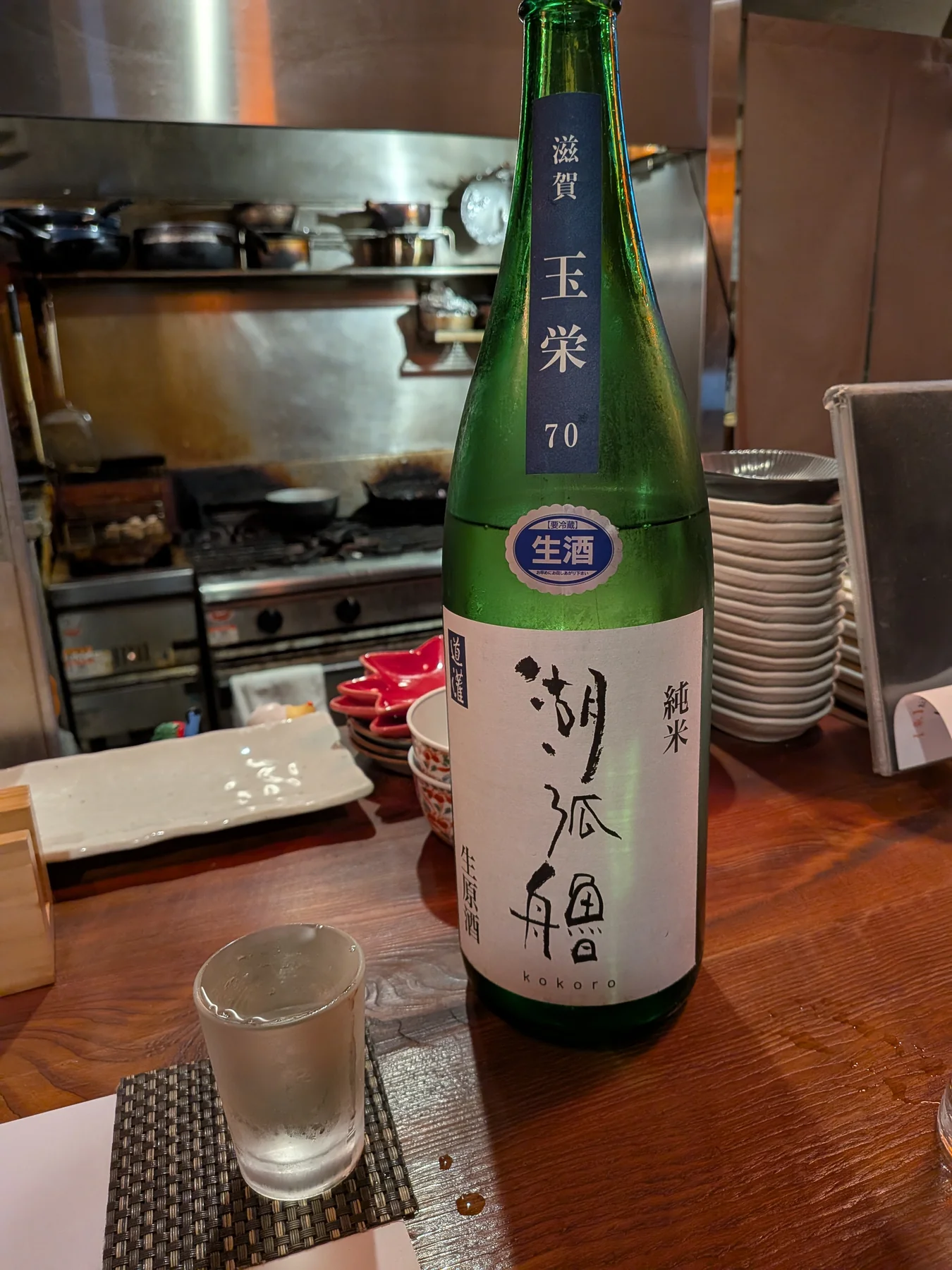
Kokoro Tamazakae 70 Junmai Nama Genshu, the night’s opening pour and best pairing.
Akishika Yamada Nishiki 70 Junmai Muroka Nama Genshu came next — heavier and more rice-driven, a savory, structured style that leans toward experienced sake drinkers and richer, soy-seasoned food rather than lighter dishes. Chochin Namanama Jukusei 5055 Junmai Ginjo followed a similar direction: full-bodied and umami-driven, though it showed a touch of roughness that comes with a bottle open a while, and worked best with soy-based, heavier dishes rather than anything delicate.
Why the pairing worked
The best match of the night was Kokoro with a plate of menchi-katsu. The sake’s firm acidity cut straight through the fried food’s richness, the kind of pairing where the sake does real work rather than just sitting alongside the plate. For a broader way to compare acidity with the weight of the filling and the shape of the aftertaste, use the fried-food pairing guide.
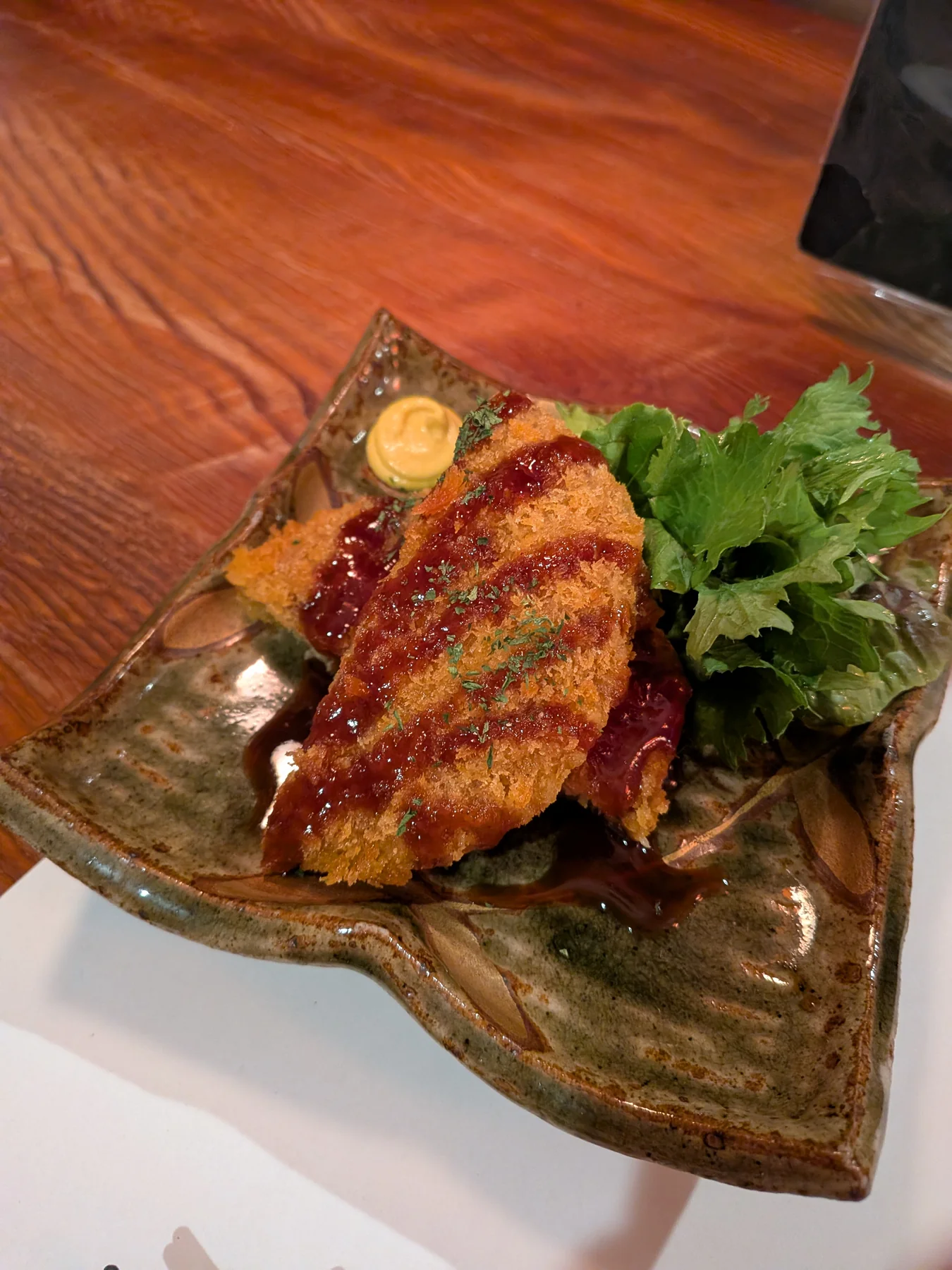
Menchi-katsu, the dish behind the night’s best pairing. This is a food photo only — the Kokoro bottle is not in the frame.
Pork shabu with fried eggplant rounded out the food side of the table.
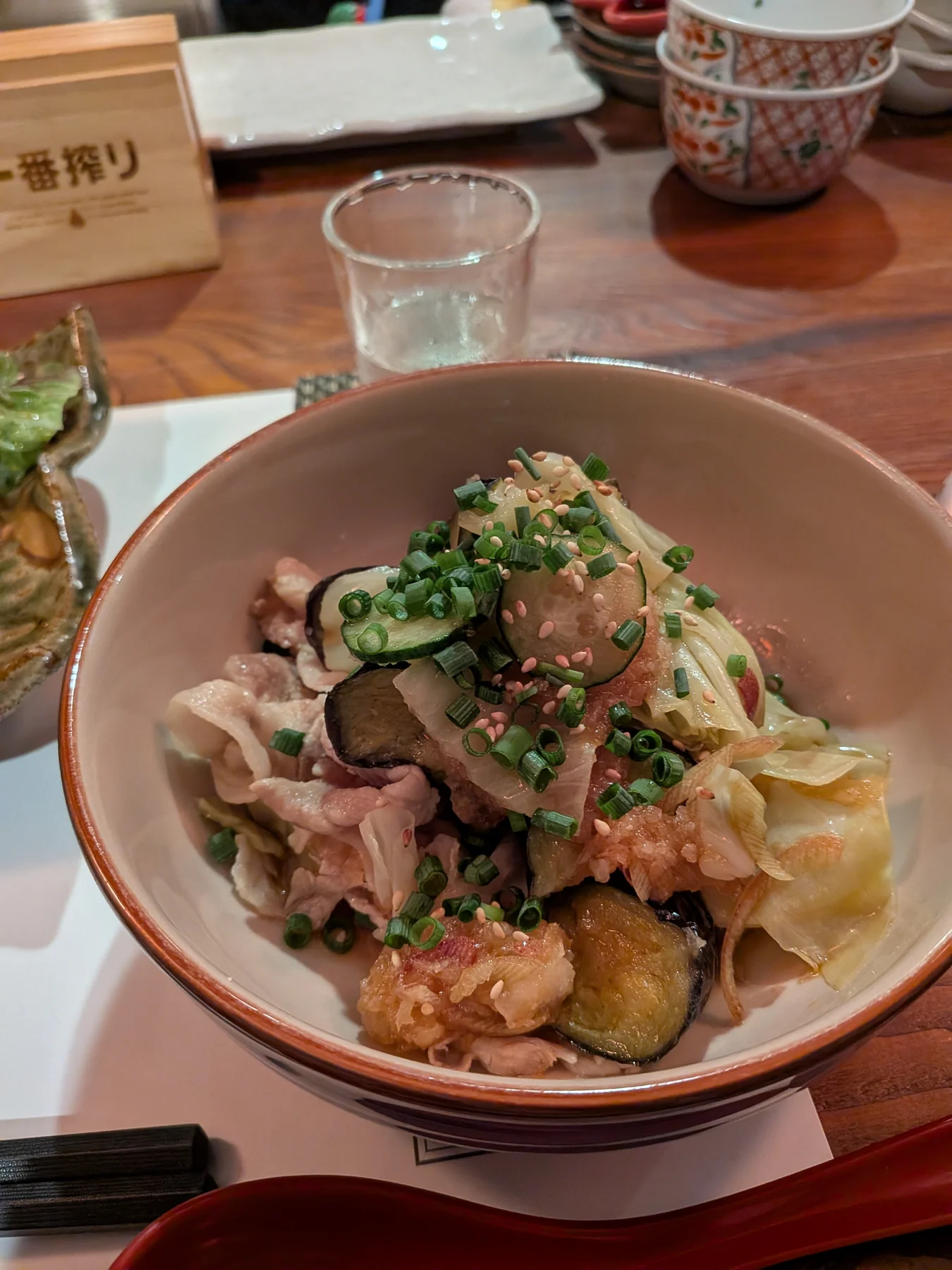
Pork shabu with fried eggplant, one of the night’s supporting dishes.
Kakurei Fumizekka Koiaiiro Yamadanishiki Nama Genshu closed the flight, served alongside the pork shabu and a plate of tori-wasa (chilled, wasabi-dressed chicken). It’s a rich but clean-finishing nama genshu with Yamadanishiki umami — slightly sweeter than the other three pours, but still finishing sharply rather than lingering.
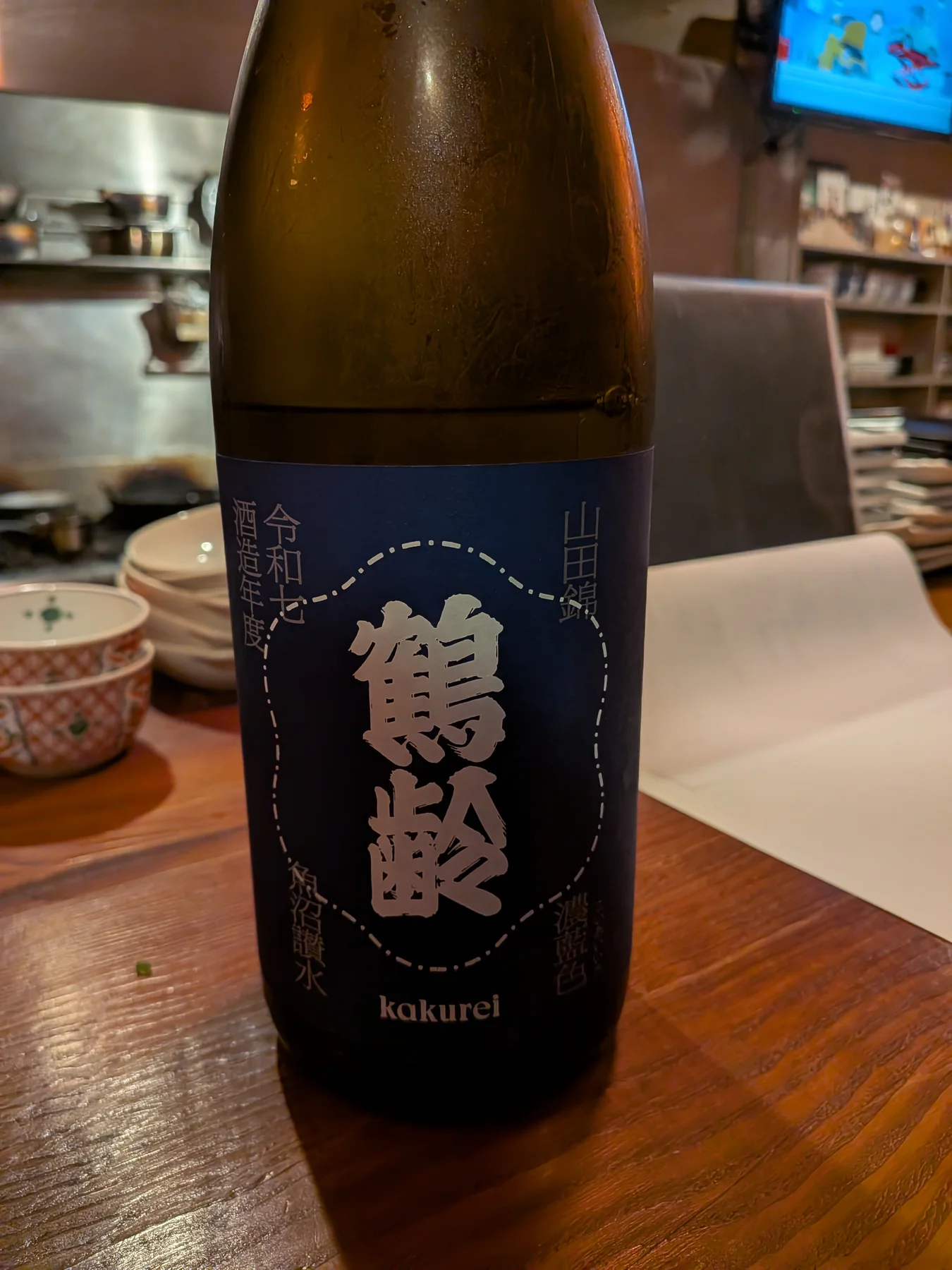
Kakurei Fumizekka Koiaiiro Yamadanishiki Nama Genshu, the night’s closing pour.
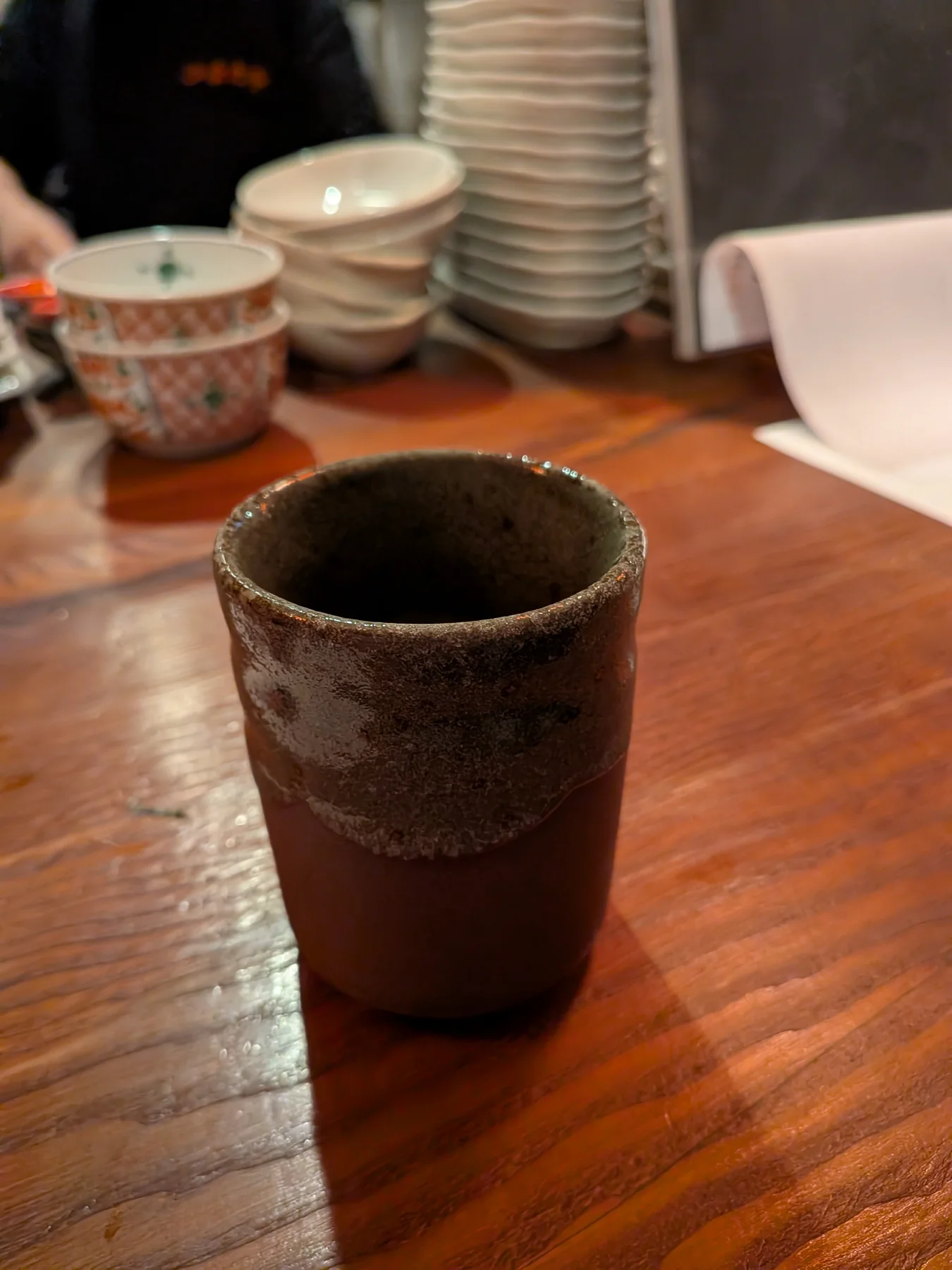
A 90ml pour at Hinataya — small enough to work through several bottles in one sitting.
The room
Hinataya is a comfortable, regulars-heavy room built around reliable food, but the sake list has more range than a first glance suggests — alongside familiar names sit bottles that reward drinkers looking for something a little more geeky. The 90ml pour size makes it easy to move through several styles in one visit without committing to a full glass of any one.
Several pours in this visit were nama or nama genshu. If that label language is unfamiliar, start with what nama sake means and what it does not guarantee. For choosing pours as the dishes change, use the izakaya ordering guide.
For another firsthand Ikebukuro pairing, Sakana-ya across two June visits compares how very different sake worked with a light, dashi-based pork-and-tofu dish.
Browse all sake by category, or compare bottles on the Taste Map.