2026-07-13
Sake and Bistro Cooking in Monzen-nakacho: A Kimoto Meets Mussels
Sake and Bistro Karasu, in Monzen-nakacho, runs on a premise that’s rarer than it should be: Italian-leaning bistro cooking, paired course by course with sake instead of wine. The counter is lively, the room fills with regulars and first-timers alike, and the person pouring treats each dish as a cue for the next glass. On a visit back on June 17, that pairing logic carried the whole night.
What I drank
The night opened with Shikizaki Suzukaze Itaru Junmai Muroka Nama Genshu, a light, low-ABV Omachi summer sake with bright acidity, poured alongside the appetizer set. A small taste of a companion’s Bunkajin Summer Junmai Ginjo followed — fuller and more assertive than its light label suggested.
Fukucho Kaifudo Seafood Junmai came next, built for exactly what it sounds like: a lemony, high-acid, low-ABV junmai designed around seafood.
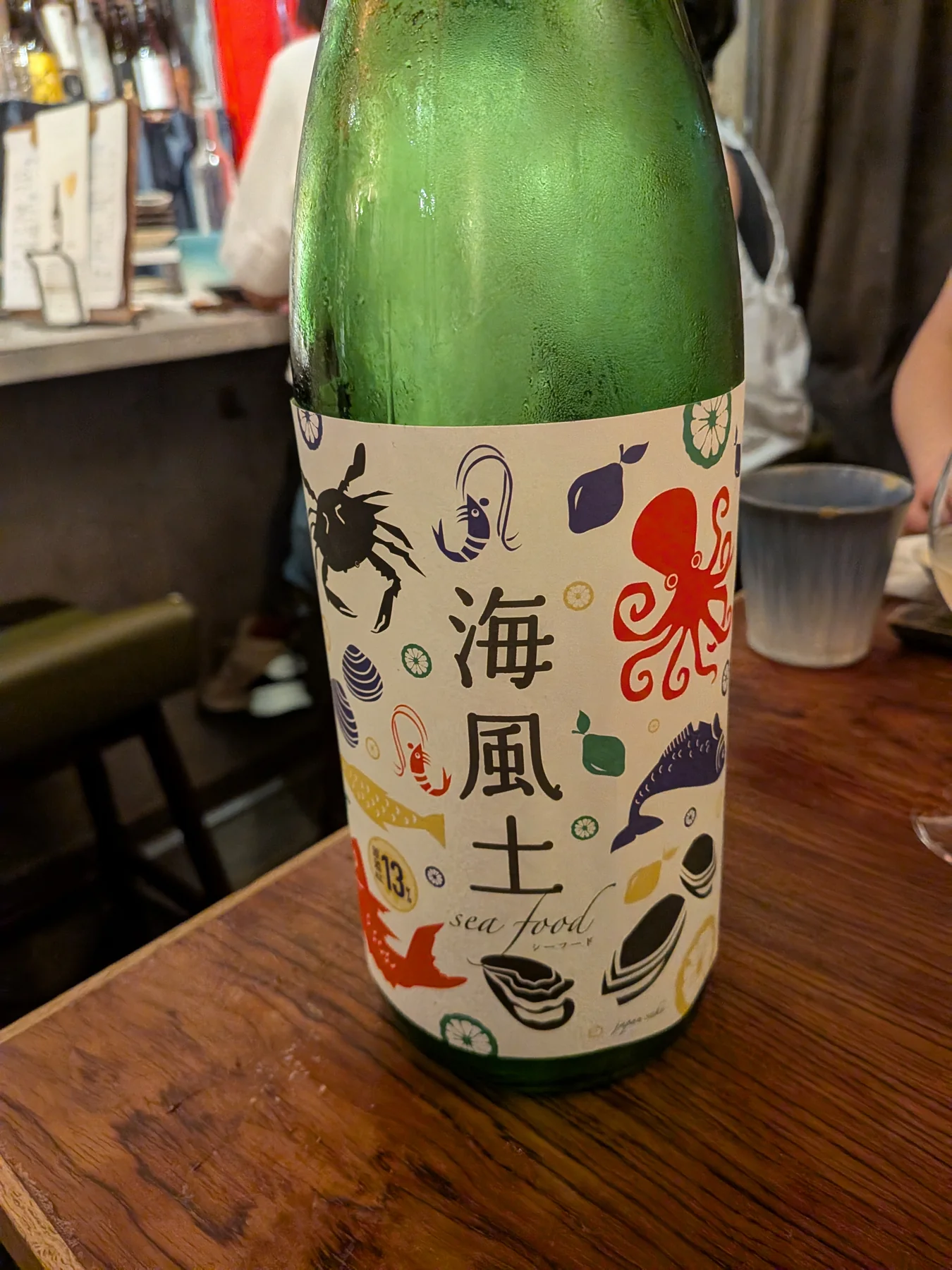
Fukucho Kaifudo Seafood Junmai, paired with a seafood carpaccio.
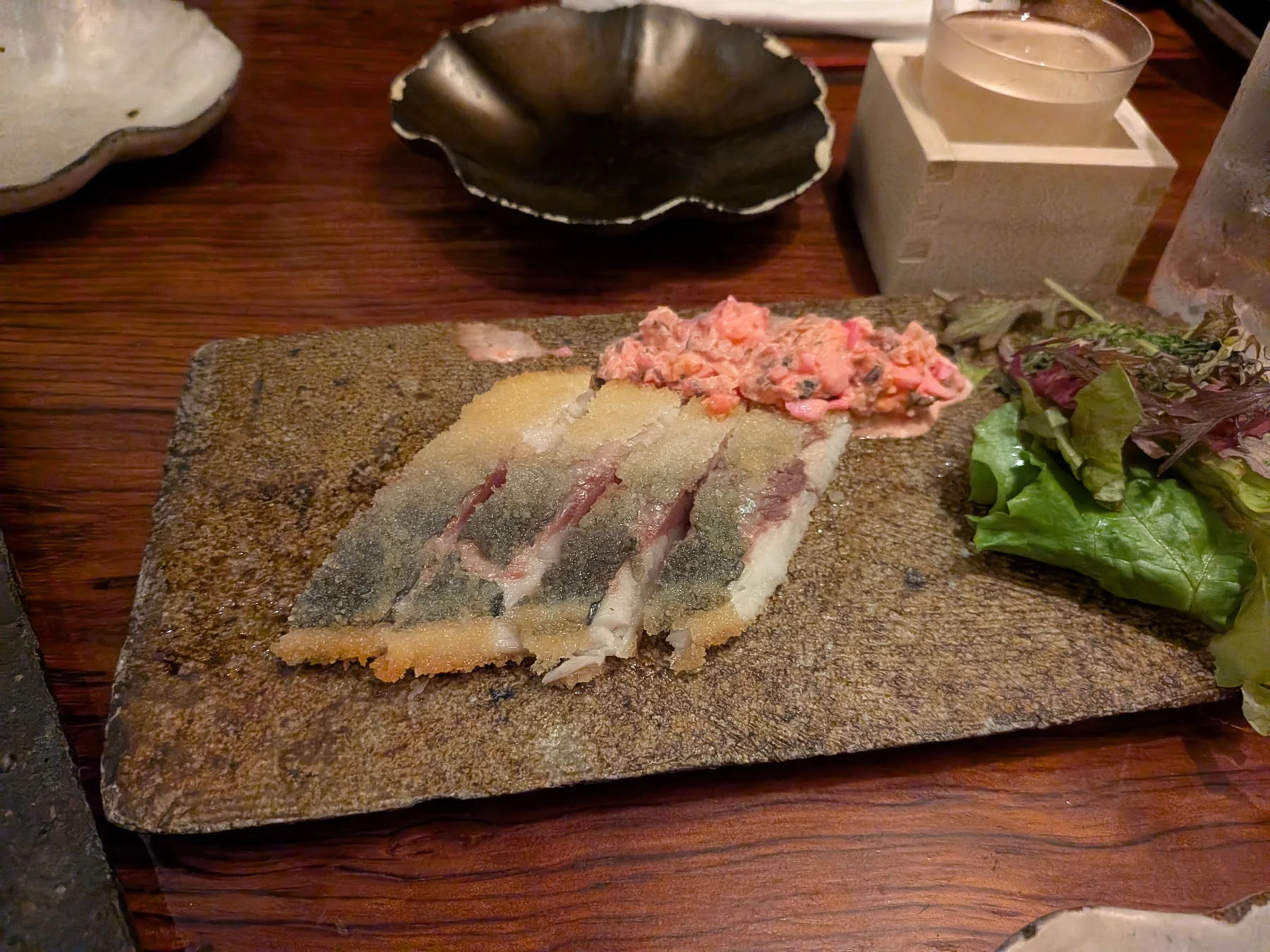
The carpaccio Fukucho Kaifudo was served alongside.
Why the pairing worked
The best match of the night was Kometsuki Suisha Kimoto Junmai Yamadanishiki 2007BY, a deeply aged kimoto with rice-driven umami and firm acidity, served with a plate of mussels and clams steamed in white wine. The aged sake’s savory structure ran parallel to the dish’s own broth and shellfish umami — the kind of pairing that reads more like a wine pairing than a typical sake-and-food match.
The BY label identifies a brewing year, not an exact pressing date or a guaranteed number of years in one storage condition. Our guide to aged sake and koshu explains how to read that distinction.
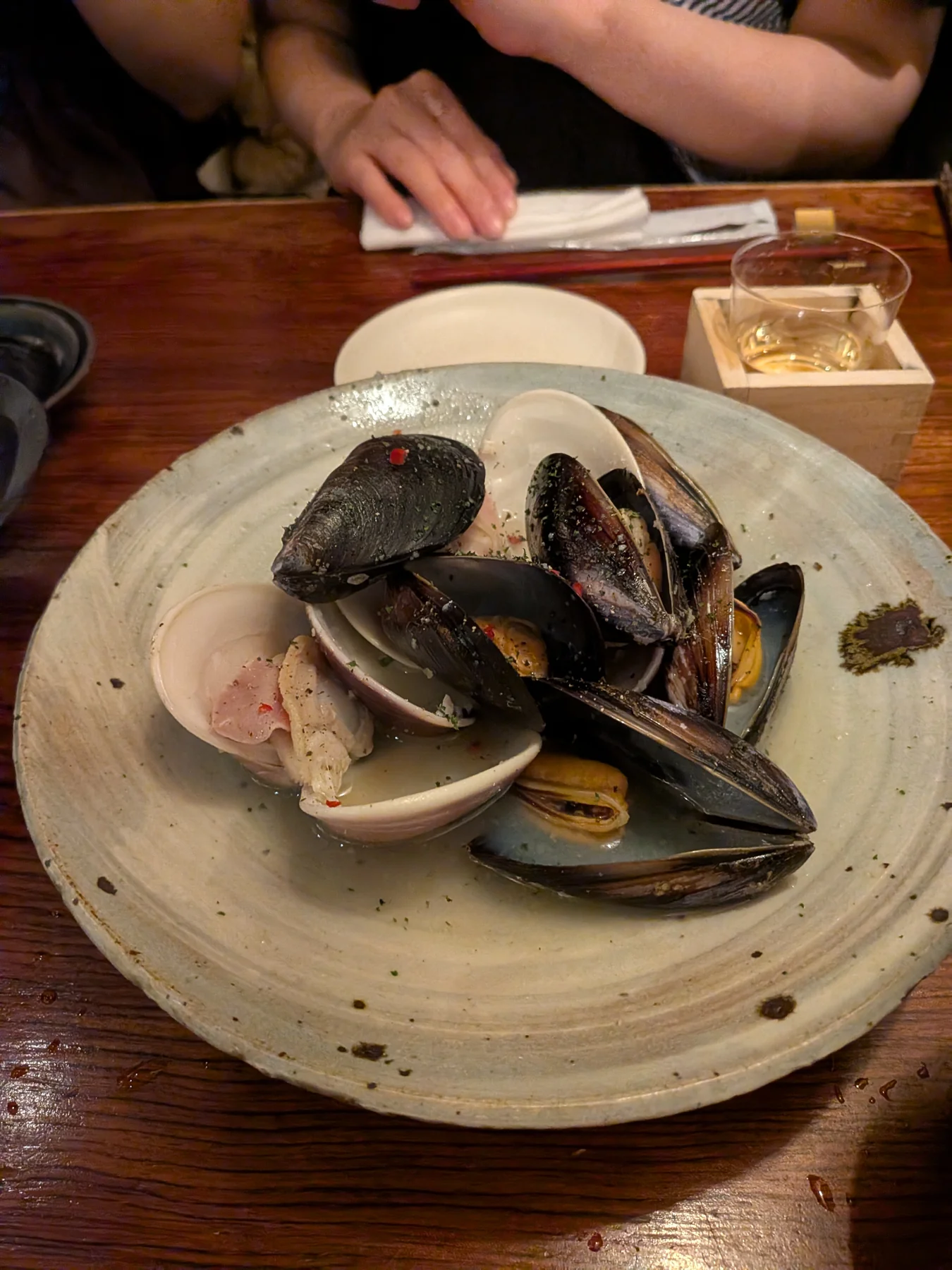
Mussels and clams steamed in white wine — the night’s best pairing. This is a food photo only; the Kometsuki Suisha bottle is not in the frame.
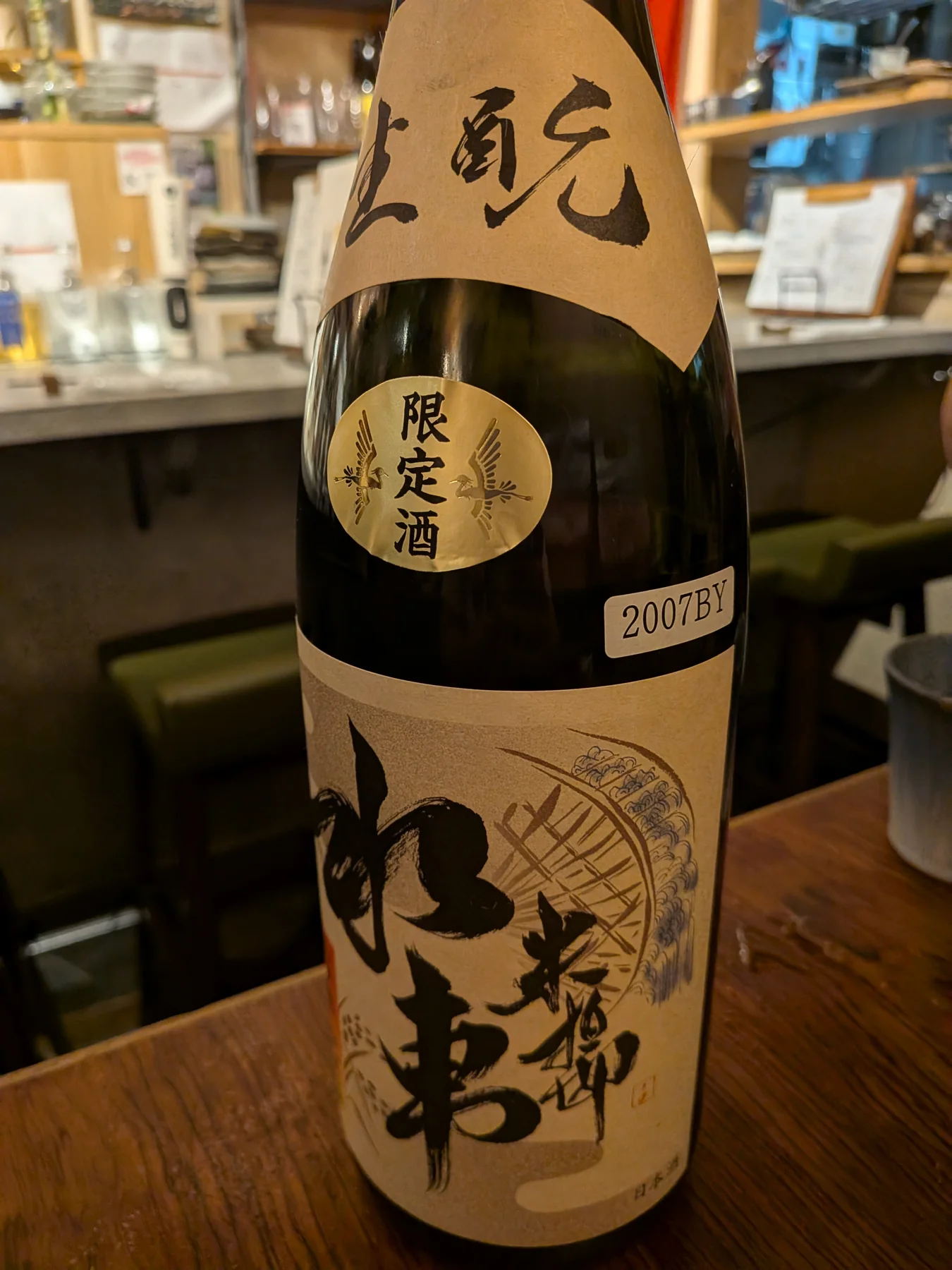
Kometsuki Suisha Kimoto Junmai Yamadanishiki 2007BY, the night’s standout pour.
Kakurei Sojun Unohana-iro closed out the food pairings, served with a rare-fried aji and a plate of seasonal vegetable fritters. Its gentle white-peach fruit and clean, crisp finish carried the fried food without adding more weight to the plate.
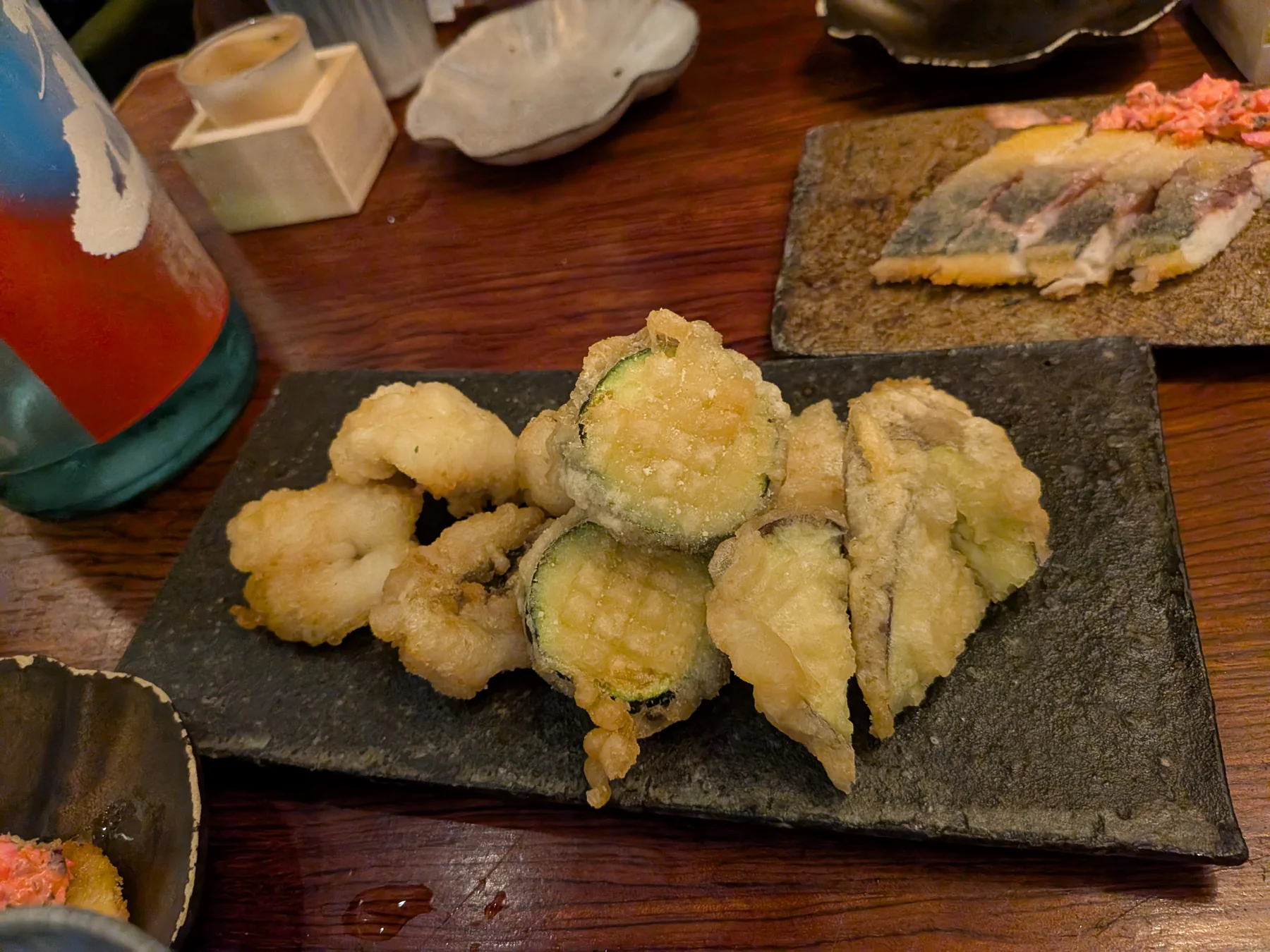
Rare-fried aji and seasonal vegetable fritters, paired with Kakurei Sojun Unohana-iro.
The room
Karasu’s counter has the energy of a neighborhood bistro rather than a quiet sake bar — conversation with the person pouring is part of the format, and the sake list leans toward bottles chosen for what’s on the plate rather than for name recognition. It’s an easy room to learn something in, one pairing at a time.
For another way to choose sake around seafood, read how fish, fat, and seasoning change a sushi pairing. To compare this bistro format with other sake-led rooms across the city, see the Tokyo sake bars guide.
Browse all sake by category, or compare bottles on the Taste Map.