Tokyo field guide · checked August 16, 2026
Tokyo Sake Bars: 6 Places to Taste Nihonshu by Palate
Tokyo has specialist counters, self-service tasting rooms, bottle shops with standing bars, and sake-focused restaurants. The useful question is not “Which bar has the most famous bottles?” It is “What kind of tasting will help me learn what I actually like?”
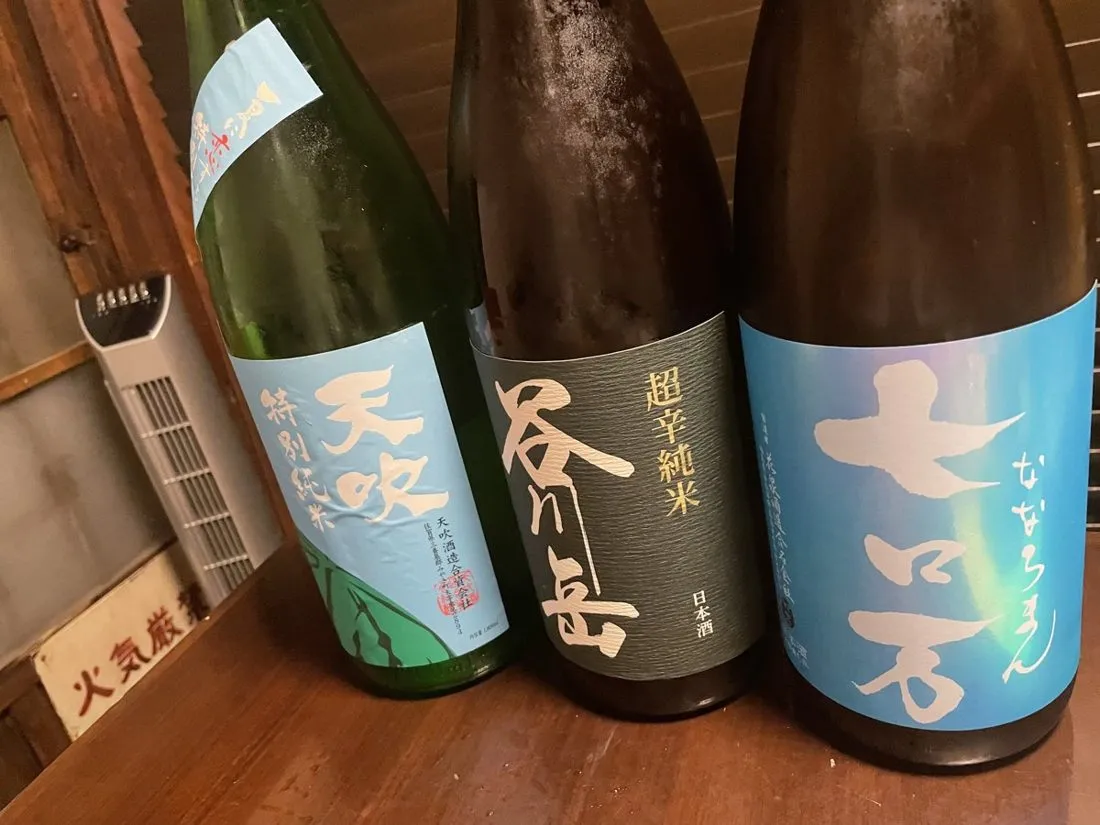
The short answer
Choose the bar by the tasting job you need
Start at the JSS Information Center if you want to learn. Choose Meishu Center or SAKE MARKET if you want breadth. Pick IMADEYA GINZA or MIRAI SAKE STORE if you want staff help plus bottle shopping. Use MOTO TOKYO if food pairing is the main lesson.
None of these is ranked “best.” They solve different problems, and their lineups change. The six were included only after checking a current official operator or venue page.
Quick chooser
Where should you go tonight?
| Your goal | Start here | How to use it |
|---|---|---|
| I want to learn the basics | JSS Information Center | Start with a guided three-way comparison. |
| I want lots of labels without a full dinner | Meishu Center | Use three small pours as a controlled comparison. |
| I want Shibuya + a bottle to take home | MIRAI SAKE STORE | Taste first, then buy what actually fits your palate. |
| I want English support in Ginza | IMADEYA GINZA | Ask staff to build a two- or three-style contrast. |
| I want a casual group tasting | SAKE MARKET Shinjuku | Choose a tasting theme before opening the fridge. |
| I want sake to make sense with food | MOTO TOKYO | Let the dish and serving temperature lead. |
Six current stops
Tokyo sake bars and tasting counters, by experience
01 · Nishi-Shimbashi
Japan Sake and Shochu Information Center
A tasting bar inside the Japan Sake and Shochu Makers Association's information center. It is the easiest place in this guide to compare categories while also learning what the words on the bottle mean.
Why it is useful
- • Around 50 sake, shochu, and awamori items rotate through the tasting bar.
- • Small pours start from ¥100, with three-item tasting sets for comparison.
- • English tablets and educational displays make it unusually beginner-friendly.
Palate-first move
Do not start by asking for a famous label. Ask for three contrasting pours — for example aromatic, savory, and aged — and notice which direction you actually prefer.
02 · Ochanomizu / Yushima
Meishu Center Ochanomizu
A casual specialist shop and tasting counter with more than 100 bottles on the shelves. It works well when you want range without committing to a long dinner.
Why it is useful
- • More than 100 sake are available to sample from across Japan.
- • Glasses start from ¥200, and choosing three gives a small tasting-set discount.
- • Bottles can also be purchased if you find a style you want to revisit.
Palate-first move
Use the three-pour format as a mini experiment. Keep one variable similar — such as body — and change another, such as aroma or sweetness, instead of choosing three labels at random.
03 · Shibuya
MIRAI SAKE STORE & SAKE BAR
A sake store and bar in central Shibuya where you can try several options and then buy a bottle to take away. The current location opened after the shop moved from Shibuya PARCO in October 2025.
Why it is useful
- • The official English site is built for international visitors as well as local customers.
- • You can taste before deciding which bottle to buy as a souvenir or for later.
- • The Udagawacho location is easy to combine with a Shibuya evening.
Palate-first move
Tell the staff what you usually drink — dry white wine, richer Chardonnay, beer, whisky — but then translate that into aroma, sweetness, body, acidity, umami, or finish rather than asking for a one-to-one equivalent.
04 · Ginza
IMADEYA GINZA
A specialist retailer inside GINZA SIX with a standing kaku-uchi counter. It combines guided tasting, multilingual service, and the option to buy bottles in one compact stop.
Why it is useful
- • The tasting counter normally offers more than 20 Japanese and international drinks, including sake.
- • English support and an English menu are explicitly available.
- • Two- and three-drink comparison tastings can be requested without a reservation.
Palate-first move
Ask the staff to build a contrast around one question: aromatic vs restrained, light vs full, or crisp vs long-finishing. That gives you a more useful memory than tasting three unrelated premium bottles.
05 · Shinjuku-Sanchome
SAKE MARKET Shinjuku
A time-based, self-service tasting venue where you pick bottles directly from the refrigerator. It is deliberately less formal than a specialist counter and is useful when you want to explore broadly with friends.
Why it is useful
- • Around 100 drinks are available, centered on sake alongside other Japanese alcohol.
- • The menu includes English descriptions for overseas visitors.
- • Food can be brought in or ordered by delivery, which makes the session easy to customize.
Palate-first move
The large selection can become noise. Pick a theme before you start — low-sweetness aromatic sake, warm-friendly savory sake, or three different acidity levels — and stop when your palate gets tired.
Source: SAKE MARKET official site
06 · Tokyo Station / Yaesu
MOTO TOKYO
A sake-focused restaurant in Tokyo Midtown Yaesu with a casual standing area at the front and a more formal kappo area deeper inside. It is the strongest stop here when you want to see sake behave as part of a meal.
Why it is useful
- • The venue lists around 80 sake across its two spaces.
- • The standing area is designed for casual pours and does not take reservations.
- • Standard standing-bar menus support foreign languages through QR access.
Palate-first move
Ask for a pour to match the dish you are actually eating, then notice how food changes body, acidity, umami, and finish. If a sake is offered at a different temperature, treat that as part of the tasting rather than a service detail.
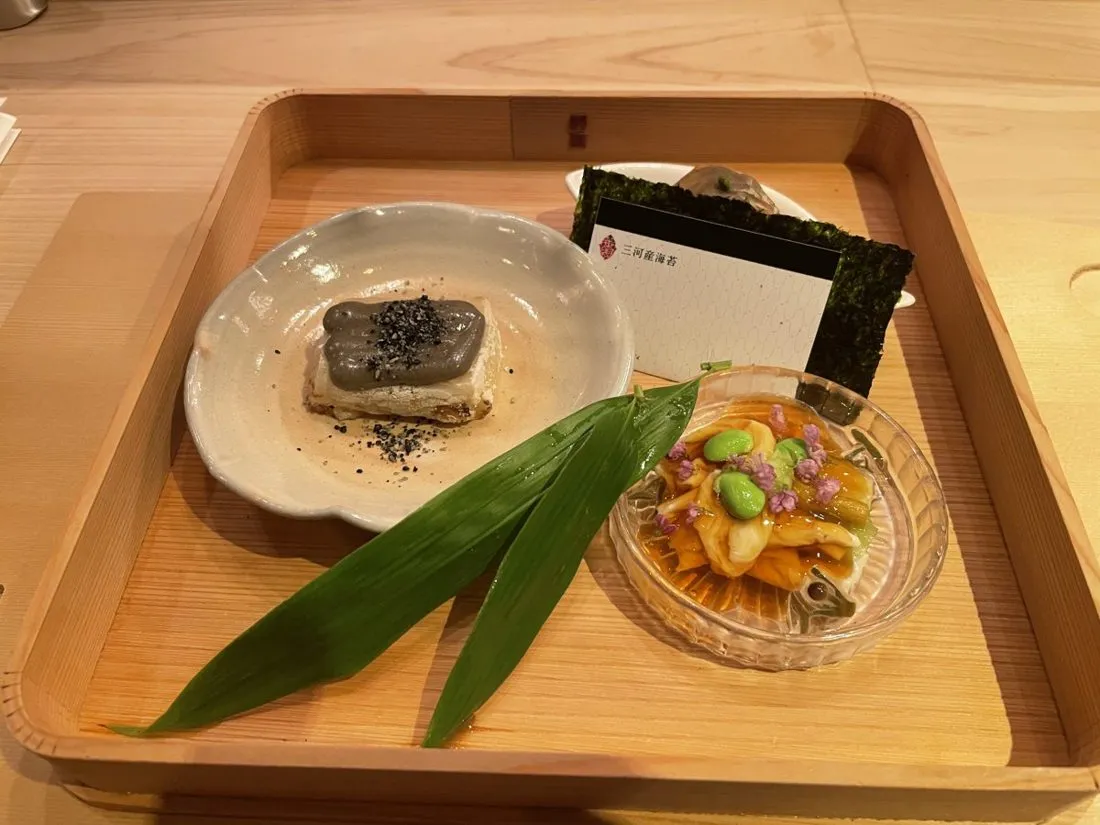
What to say at the counter
Ask for coordinates, not prestige
You do not need to know brewery names, polishing ratios, or regional stereotypes. Give the bartender two sensory clues and let them choose the bottle. These four prompts work in most specialist settings.
Aromatic, not very sweet
“Could I try something aromatic but not especially sweet?”
Aroma ↑ · Sweetness low–mid
Crisp and clean
“Could I try something with fresh acidity and a clean finish?”
Acidity ↑ · Finish clear
Savory with food
“Could I try something with more umami and body for this dish?”
Umami ↑ · Body mid–high
Warm-sake direction
“Do you have a sake you especially recommend warm?”
Bottle-specific temperature guidance
For more ordering language, see How to Order Sake at an Izakaya. If temperature is the question, use the Sake Temperature Guide before assuming cold or warm is “correct.”
A Tokyo-specific caution
Hospitality data goes stale faster than sake theory
Bar hours, reservation rules, locations, and service formats can change quickly. This guide therefore uses current official operator pages instead of treating old editorial rankings as operational evidence.
Every listed venue was rechecked on August 16, 2026. Check the venue's official page again on the day you go, especially around holidays or special events.
One otherwise relevant Shinjuku sake bar was deliberately excluded because its Japanese and English official pages currently give conflicting signals about normal operation. An uncertain venue is not more useful than a shorter, verified list.
Build your own Tokyo tasting
One bar, one question, three pours
01 · Choose
Choose one sensory contrast before looking at labels: aroma, sweetness, body, acidity, umami, finish, or temperature.
02 · Compare
Taste two or three pours side by side. Keep notes simple: “more aromatic,” “lighter,” “sharper finish,” “better with food.”
03 · Repeat
Order one full glass only after a direction becomes clear. The goal is not maximum variety; it is a preference you can use next time.
If you are starting from zero, read What Does Sake Taste Like?. Wine drinkers can translate familiar preferences with Sake for Wine Drinkers, and first-time bottle buyers can use Best Sake for Beginners.
FAQ
Tokyo sake bar questions
What is the best sake bar in Tokyo for beginners? +
There is no single best bar. The JSS Information Center is strongest for learning and small comparisons, IMADEYA GINZA for guided English-friendly kaku-uchi, and SAKE MARKET Shinjuku for broad self-service exploration. Choose the experience you need rather than a universal ranking.
Can I visit a Tokyo sake bar if I do not know sake brands? +
Yes. In fact, brand knowledge is not necessary. Describe the profile you want — aromatic, dry-feeling, light, full, savory, crisp, long-finishing, or warm — and let the staff or tasting format narrow the options.
Are there sake bars in Tokyo with English support? +
Yes. The JSS Information Center provides English learning tools, IMADEYA GINZA explicitly offers English service and menus, SAKE MARKET provides English menu descriptions, MIRAI SAKE STORE runs an English site for international visitors, and MOTO TOKYO provides multilingual QR menu support in its standing area.
Should I order a tasting flight or a full glass? +
Choose small comparative pours when you are still learning what you like. A full glass makes more sense once you have identified a profile you want to stay with, especially alongside food.
Can I ask for sweet or dry sake in Tokyo? +
Yes, but sweet versus dry is only one dimension. Add a second clue such as aroma, acidity, body, umami, finish, or temperature. 'Aromatic but not very sweet' is more useful than simply asking for dry sake.
Do Tokyo sake bars serve warm sake? +
Many do, but warm service is bottle-specific. SAKE MARKET explicitly provides a way to heat sake, while food-focused specialists such as MOTO TOKYO can help you choose a suitable bottle and temperature. Do not assume every Junmai should be warmed or every Ginjo should be cold.
Do I need reservations? +
It depends on the venue. IMADEYA GINZA's kaku-uchi does not take reservations, MOTO TOKYO's standing area is walk-in, and other venues may use reservations or time-based entry. Always check the official page on the day you go because hours and service formats can change.
How current is this Tokyo sake bar guide? +
Each venue in this guide was checked against an official operator or venue page on August 16, 2026. Tokyo hospitality information changes quickly, so same-day verification is still recommended.
Sources & freshness
Operational facts below were checked against venue or operator pages on August 16, 2026. They are not endorsements of current stock, a promise of English-speaking staff on every shift, or a guarantee that hours will remain unchanged.
- JSS official information center page — Japan Sake and Shochu Information Center: current concept, location, hours and service format
- Meishu Center official English page — Meishu Center Ochanomizu: current concept, location, hours and service format
- MIRAI SAKE STORE & SAKE BAR official English site — MIRAI SAKE STORE & SAKE BAR: current concept, location, hours and service format
- IMADEYA GINZA official kaku-uchi page — IMADEYA GINZA: current concept, location, hours and service format
- SAKE MARKET official site — SAKE MARKET Shinjuku: current concept, location, hours and service format
- Tokyo Midtown Yaesu official shop listing — MOTO TOKYO: current concept, location, hours and service format