Best Sake for Sushi
There is no single best sake for every kind of sushi. The useful choice depends on the fish, the fat, the seasoning, and the role you want the sake to play.
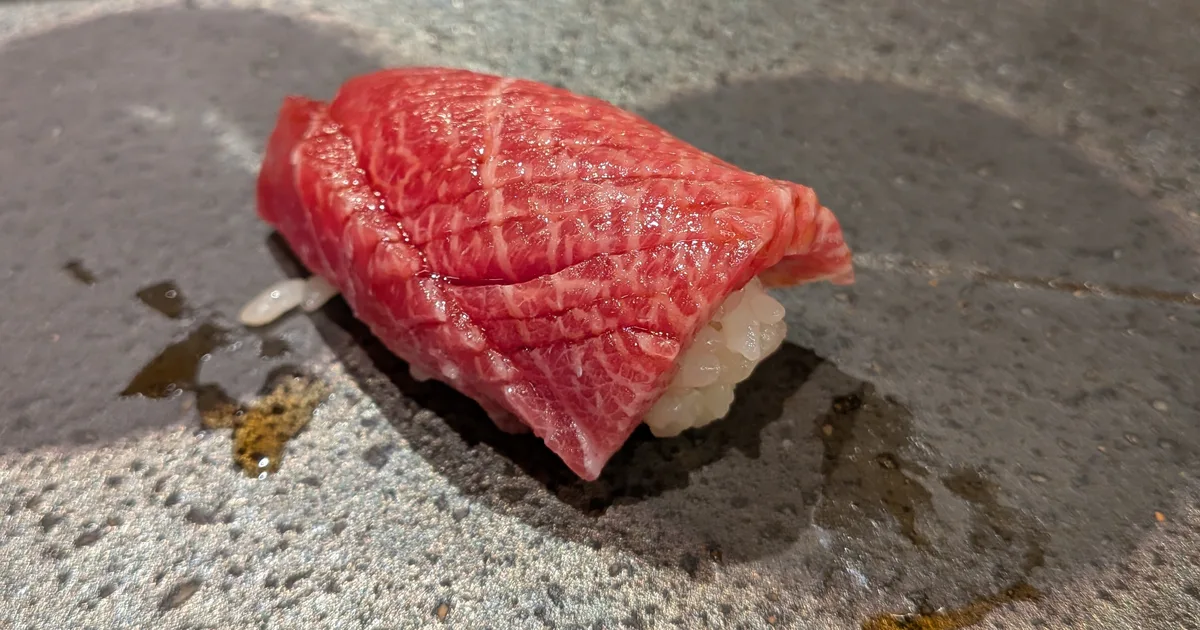
"Sushi" is not one dish. A piece of lean hirame with salt and a squeeze of citrus and a shrimp tempura roll with spicy mayo are different pairing problems, and the same bottle rarely solves both. A ranked list of bottles tends to hide that.
What follows is the other approach: work out what is actually on the plate — fat, vinegared rice, soy, salt, aromatics, nori, glaze — then read the six taste dimensions that respond to it. Sweetness, aroma, body, acidity, umami, and finish give you enough to reason about almost any counter.
First, decide what you want the sake to do
Before looking at a specific bottle, it helps to name the job. The same piece of fish can take three different sake depending on which of these you are after.
Reset
The sake contrasts with the food: acidity and a crisp finish can clear fat and rice so the next piece lands cleanly. Useful across a long run of nigiri, and particularly so with fried or mayonnaise-based rolls.
Match
The sake sits at the same weight as the food, so neither dominates. This is the quiet approach for delicate white fish, and why a light body can be an asset rather than a shortcoming.
Extend
The sake echoes and lengthens the savory side of the dish — soy, aged fish, nori, glazes. Umami-forward profiles tend to do this. It is the opposite intent from resetting, applied to the same piece of fish.
What you are actually pairing with
Most sushi pairing advice stops at the fish. The fish is one of at least eight things arriving on the palate, and several of the others can move the decision more.
- The fish, and how much fat it carries Body · Acidity
- Fat is one of the biggest variables on a sushi counter. Squid, scallop, and lean white fish leave relatively little behind on the palate; chutoro, otoro, and rich salmon coat it. The leaner the fish, the less the sake needs to do — a light body and restrained umami can keep the piece in the foreground. The fattier the fish, the more useful one of two things becomes: acidity to cut through, or enough body to stand alongside without being swallowed.
- The shari — vinegared rice under every piece Sweetness · Acidity
- Sushi rice is seasoned with vinegar, salt, and usually sugar, which means every piece already brings acidity and a little sweetness before the fish is counted. Two things tend to follow. A sake with pronounced sweetness can stack onto the shari's sugar rather than balancing it. And a very tart sake can double the vinegar rather than refresh it. This element is easy to overlook, and it is part of why "pair with the fish" alone is incomplete.
- Soy sauce Umami · Body
- Soy brings salt, savory depth, and its own aroma, and it tends to land on the palate more heavily than the fish it is dipped in. Umami-forward sake tends to extend soy rather than compete with it — the savory impression lengthens instead of splitting in two. A very clean, low-umami sake can get flattened by generously dipped pieces, which is worth knowing before you blame the bottle.
- Salt and citrus Aroma · Finish
- Many counters now finish pieces with salt and a squeeze of sudachi or lemon instead of soy. That is a lighter, brighter seasoning than soy, and it can leave room for a quieter, cleaner sake — the sort of profile that might disappear against a soy-dipped piece. It also means the seasoning is doing some of the cutting that acidity in the sake would otherwise do.
- Wasabi, ginger, shiso, yuzu kosho Body · Finish
- Pungency is not the same as heat, but both push at the palate. Gari between pieces already resets the palate, which means the sake does not always have to. Wasabi in particular interacts with alcohol — a high-alcohol genshu can amplify the burn rather than settle it. Herbal accents like shiso and yuzu kosho add their own aroma, which tends to compete with an aroma-forward sake more than with a quiet one.
- Nori Umami · Aroma
- Toasted seaweed adds a marine, mineral, faintly bitter note, and it shows up on hand rolls, gunkan, and maki. It tends to sit closer to savory sake than to highly aromatic sake: umami tends to meet it, while a floral or fruity aroma can sit awkwardly beside it.
- Nitsume and tare Body · Sweetness · Umami
- The reduced soy glazes brushed onto unagi, anago, and simmered shellfish are often the sweetest and heaviest thing in a sushi meal. They can overwhelm a delicate sake. Weight and savory depth are what tend to keep a bottle audible here, and a longer finish can be an advantage rather than a liability.
- Fried and mayonnaise-based rolls Acidity · Body
- Shrimp tempura rolls, spicy mayo, avocado, cream cheese. With fried or mayonnaise-based rolls, fat and creaminess often matter more than raw-fish delicacy. Acidity tends to be the main lever, body the second, and aroma usually matters least. This is also where the delicate, highly polished bottle often recommended for sushi can be overwhelmed.
A starting point, by sushi context
Editorial starting points rather than rules, and deliberately not expressed as score ranges — where a bottle should sit on each axis shifts with how the piece is seasoned and what else is on the table.
| Sushi context | Useful role | Six-axis starting point | Watch for |
|---|---|---|---|
| White fish, squid, scallop | Match | Light body, restrained aroma, low-to-moderate umami | A savory or strongly aromatic bottle can sit in front of the fish rather than beside it |
| Lean tuna with soy | Extend | Moderate-to-full body, savory depth, a finish that carries | A very clean, low-umami profile can be flattened by generously dipped pieces |
| Fatty tuna, rich salmon | Reset | Bright acidity, enough body to stay present | Low acidity can leave the fat sitting on the palate into the next piece |
| Vinegared fish — shime-saba, kohada | Reset or Match | Acidity that meets the cure, restrained sweetness | Pronounced sweetness can stack onto the marinade; a very tart profile can double the vinegar |
| Uni, ikura, tare-glazed pieces | Extend | Body and umami, with a longer finish as an advantage | A light, delicate profile can be overwhelmed by the glaze or the richness |
| Fried or mayonnaise-based rolls | Reset | Acidity first, body second, aroma least | Highly polished aromatic bottles can be overwhelmed here |
What the usual advice gets wrong
Just order something dry.
Dryness is one axis out of six. A bone-dry sake that is low in acidity, full-bodied, and heavy with umami behaves quite differently from a bone-dry sake that is light and crisp — the two can do opposite things to the same piece of fish. "Dry" narrows the field far less than it appears to.
Junmai daiginjo is the best sake for sushi.
Highly polished styles are often aromatic and light-bodied, which can suit delicate white fish and salt-seasoned pieces. That same profile is also the one most easily overwhelmed by soy, nitsume, or a spicy mayo roll. Polish ratio describes how a sake was made, not how well it holds up at a sushi counter.
Aromatic sake is the safe choice with raw fish.
Aroma intensity decides whether the sake sits in front of the fish or behind it. With a delicate piece, a strongly aromatic sake can bury what you ordered it for. That is a choice about foreground and background, not a quality judgment — sometimes the aroma is the reason to pour it.
Sake and sushi are both Japanese, so any pairing works.
Shared origin is not a pairing rule. Plenty of sake is built for grilled food, hot pot, or cheese, and shows it — full body, heavy umami, a long savory finish. Those bottles can roll straight over a piece of hirame.
One bottle should cover the whole meal.
It reasonably can, but the way to get there is usually to choose a profile that is moderate on every axis rather than excellent on one. A bottle that is superb with otoro is often the wrong bottle for the white fish that opened the meal.
Eight sushi situations, and the axis shape each one suggests
These are not ranked, and they are not the only bottles that fit. Each one is here because its six-axis shape makes a particular kind of sushi easier to reason about.
The notes describe each bottle's current TasteScore profile and what may follow from it. The badge on each card shows whether that profile is human-reviewed or AI-assisted; none of these bottles has been tasted with sushi by Sake Coordinates.
Opening the meal, or resetting between rich pieces
Fukucho "Seaside" Sparkling
Imada Shuzo · Junmai
SW 2 · AR 4 · BD 2 · AC 5 · UM 2 · FN 4
Its current AI-assisted profile is light-bodied, dry, and very high in acidity. That shape may help clear the palate rather than sit alongside a piece, which suggests a starting-point style rather than a bottle to carry a whole run of nigiri.
AI estimateLean white fish, squid, scallop
Okunomatsu “Ginjo”
Okunomatsu · Ginjo
SW 2 · AR 3 · BD 2 · AC 3 · UM 2 · FN 4
Its current AI-assisted profile is light-bodied and low in umami, with moderate aroma and acidity. Nothing on the profile pushes hard, which can be the point when the fish itself is the most delicate thing on the counter.
AI estimateOily fish — salmon, mackerel, aji — and salt-and-citrus seasoning
Izumibashi “Shirokoji” Junmai Ginjo
Izumibashi · Junmai Ginjo
SW 2 · AR 3 · BD 3 · AC 5 · UM 3 · FN 3
Its current AI-assisted profile is dry with the highest acidity in this set and moderate body. When acidity is the axis doing the work, the palate may feel cleaner after oily fish rather than coated by it.
AI estimateLean tuna and soy-dipped pieces
Otokoyama “Tokubetsu Junmai”
Otokoyama · Tokubetsu Junmai
SW 2 · AR 2 · BD 4 · AC 3 · UM 4 · FN 4
Its current AI-assisted profile is dry, full-bodied, and high in umami, with a long finish. A savory profile tends to extend soy sauce and the meatier red fish rather than stand apart from them.
AI estimateFatty tuna and richer pieces, when you want the palate cleared
Kagatobi Yamahai Junmai Extra Dry
Fukumitsuya · Junmai
SW 1 · AR 2 · BD 4 · AC 4 · UM 3 · FN 2
Its human-reviewed profile is very dry and full-bodied with bright acidity and a notably short finish — weight and acidity while the piece is in your mouth, then relatively little left behind before the next one.
Human reviewedNitsume and tare — unagi, anago, glazed shellfish
Kikusui “Funaguchi” Kunkou Black
Kikusui · Futsushu
SW 2 · AR 4 · BD 4 · AC 3 · UM 4 · FN 4
Its human-reviewed profile is full-bodied, savory, and aromatic with a long finish, and it is a futsushu — a reminder that category tells you little about weight at the table. Sweet, reduced soy glazes are often the heaviest point of a sushi meal, and a light profile can have trouble staying audible next to them.
Human reviewedWhen you want aroma in the foreground
Shichida “Junmai Daiginjo”
Shichida · Junmai Daiginjo
SW 2 · AR 5 · BD 2 · AC 2 · UM 3 · FN 4
Its current AI-assisted profile is highly aromatic, light-bodied, and low in acidity. That combination is expressive on the nose, which is either the reason to pour it or the reason not to, depending on whether you want the sake in front of the fish or behind it.
AI estimateOne bottle across a mixed run of pieces
Urakasumi “Zen”
Urakasumi · Junmai Ginjo
SW 2 · AR 3 · BD 3 · AC 3 · UM 3 · FN 3
Its current AI-assisted profile sits near the middle of the scale on every axis except sweetness. Nothing about it is dramatic, which can make it a practical starting point for one bottle across mixed pieces.
AI estimateWhat our field notes show — and what they do not
Everything above reasons from TasteScore profiles. Two published field notes come closer to first-hand evidence, and it is worth being precise about how far they reach — neither example was sushi.
Chigusa, Shinjuku — tuna, grated yam, and nori
The dish was tuna and grated yam rolled in nori, served without rice. Hitakami came across as firmly dry, with restrained aroma, bright acidity, and noticeable body — and it was the acidity and body together that kept the pairing structured. That is a live example of the reasoning behind the lean-tuna row above, arrived at over one dish on one night.
The namerou contained minced fish, miso, and aromatics. Tatsuriki showed rice umami that met the dish, and the finish kept the pairing from feeling heavy — savory depth extending a savory dish rather than cutting against it.
What these notes do not establish
- Neither example was sushi. These are seafood field notes, not proof of the catalog recommendations above.
- Shari was absent in both. The chigusa-maki was served without rice, and namerou has no rice at all.
- Sushi rice would add sweetness and acidity as another variable on top of the fish — the one element these notes cannot speak to.
- Neither bottle is in the catalog above, and neither was tasted alongside the eight bottles listed there.
Serving temperature
Chilled is the usual default with sushi, and there is a reason for it: cold tends to keep acidity defined and aroma precise, which is much of what a light or aromatic bottle has to offer. That is a default, not a rule.
- Warmth softens acidity and rounds out savory depth, which can suit an umami-forward bottle poured with soy-heavy or cooked toppings, and can be a loss when acidity was the point.
- Warmth also suppresses aroma, which can be a real cost with an aromatic bottle and much less of one with a quiet bottle.
- Very cold serving mutes umami along with everything else, so a savory bottle poured ice-cold may read as thinner than its profile suggests.
Each bottle page lists the serving temperatures that suit it, which is a better starting point than a blanket rule about sushi.
Working it out for yourself
- Name the meal honestly — a delicate omakase, a tuna-heavy order, or a table of rolls are three different problems.
- Pick the role: reset, match, or extend.
- Translate that into two axes. Fat and fried food tend to point at acidity; soy and nori tend to point at umami; delicate fish points at low body and restrained aroma.
- Compare bottles by position on the Taste Map, not by rank — nothing there is scored best to worst.
- Check the provenance badge before you commit. An AI-assisted profile is a research estimate, not a tasting note — see Methodology for what each tier means.
FAQ
What is the best sake for sushi?
There is no single best sake for every kind of sushi. The useful choice depends on the fish and its fat, how the piece is seasoned — soy, salt and citrus, or a sweet glaze — and what you want the sake to do: reset the palate, sit alongside the food, or extend its savory depth. A bottle that suits fatty tuna is often the wrong one for lean white fish.
What sake goes with sushi if I am only ordering one bottle?
Look for a profile that is moderate across all six dimensions rather than extreme on any one — enough acidity to handle fat, enough body to survive soy, and nothing so aromatic or so savory that it overwhelms a delicate piece. A balanced bottle will rarely be the best match for any single piece, and rarely be wrong for any of them either.
Is dry sake best for sushi?
Dry sake works well with sushi, but dryness alone does not make a bottle suitable. Sushi rice is seasoned with vinegar, salt, and usually sugar, so a piece is never a blank surface. What matters alongside dryness is acidity, body, and umami — a dry, light, crisp sake and a dry, heavy, savory sake can behave very differently at the same counter.
What sake goes with salmon sushi?
Salmon carries noticeable fat and a distinct flavor of its own. Acidity is generally the axis that does the most work here — bright acidity can cut oil on the palate rather than sitting on top of it. If the piece is finished with salt and citrus rather than soy, a lighter and quieter sake has more room to work.
What sake goes with tuna sushi?
It depends on which cut. Lean akami is meaty but not fatty, and often suits sake with savory depth, which can extend the soy and the fish together. Fatty chutoro and otoro are a different problem: they coat the palate, so you want either acidity to cut through or enough body that the sake is not simply swallowed by the fat.
What sake should I drink with sashimi?
Sashimi removes the vinegared rice from the equation, so the fish and its seasoning decide everything. With delicate white fish, a lighter body, restrained umami, and a clean finish can keep the fish in the foreground. Richer or aged cuts open the same choice as fatty sushi: cut through with acidity, or match the weight.
Should sake for sushi be served cold?
Chilled is the most common serving temperature for the styles usually poured with sushi, and it tends to keep acidity and aroma defined. It is not a rule. Warmth softens acidity and rounds out savory depth, which can suit an umami-forward bottle poured with soy-heavy or cooked toppings, and suppresses aroma, which can be a real loss with an aromatic bottle and much less of one with a quiet bottle.
Does more expensive sake pair better with sushi?
No. Price can reflect rice polishing, production scale, and rarity, none of which directly describe how a sake behaves next to fat, vinegar, and soy. Some of the most useful sushi bottles can be unglamorous on the label — the question is where the profile sits, not what it costs.