What Does Sake Taste Like?
Sake does not have one flavor. It can be dry or sweet, quiet or aromatic, light or full, soft or bright, clean or savory, with a finish that disappears quickly or stays with you.
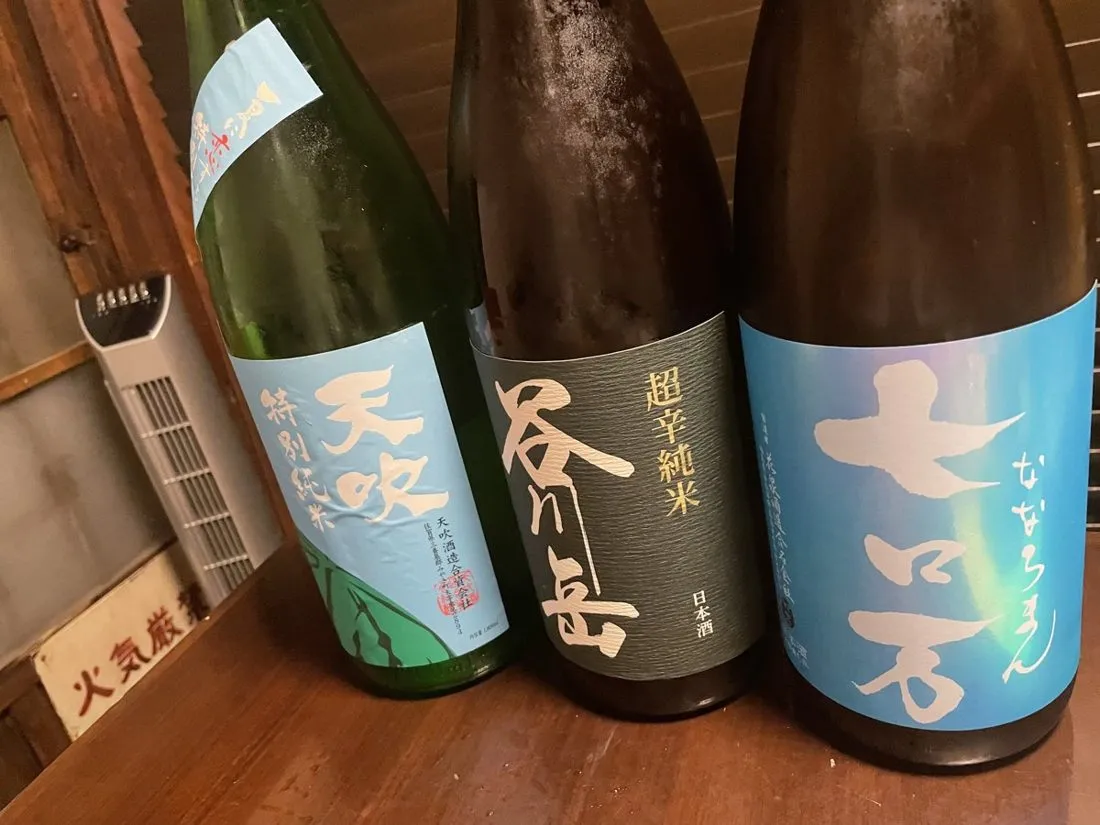
Sake can taste dry, sweet, fruity, floral, grain-driven, creamy, savory, tart, clean, or rich. No single word describes the category. The useful question is not "What does sake taste like?" but "Where does this bottle sit across sweetness, aroma, body, acidity, umami, and finish?"
Why sake does not have one taste
Sake is not one drink with small variations — it is a category with real range. Two bottles labeled Junmai, or two labeled Ginjo, can taste nothing alike: one dry and full-bodied, the other sweet and light. The Junmai, Ginjo, and Daiginjo categories and polish ratio tell you something about how a sake was made, but they do not tell you how it tastes.
"Dry or sweet" is also not enough on its own. It is one useful axis, but it leaves out aroma, body, acidity, umami, and finish — the dimensions that decide whether a sake feels light or substantial, quiet or expressive, short or lingering. If you are choosing a first bottle, the palate-first beginner guide turns those six dimensions into practical starting points.
The six taste dimensions
Sake Coordinates maps every bottle across six dimensions on a 1–5 scale. Full definitions and scoring detail live on the Methodology page — here is what each axis means for choosing a bottle.
- Sweetness DRY → SWEET
- Sweetness is how sweet the sake tastes on the palate, not a measurement of residual sugar in a lab. A low score feels dry and restrained; a high score feels noticeably sweet, sometimes rich or fruity. Dry does not mean thin, and sweet does not mean simple — sweetness is one axis among six, not the whole story.
- Learn how SMV and acidity change perceived sweetness →
- Aroma QUIET → AROMATIC
- Aroma is how much the sake announces itself on the nose before you taste it. A quiet sake is not lower quality — it can still be complex once you drink it. An aromatic sake can be floral, fruity, or yeasty depending on the style; the intensity and the character are two different things.
- Body LIGHT → FULL
- Body is the weight and texture a sake carries in the mouth. Light-bodied sake feels lean and easy to keep drinking. Full-bodied sake feels rounder, with more presence at the center of the palate. Body is not the same thing as sweetness or alcohol — a bone-dry sake can still be full-bodied.
- Acidity SOFT → BRIGHT
- Acidity is the perceived brightness or tartness on the palate, not a laboratory acidity value. Low acidity feels soft and round. High acidity feels sharp and energetic, and it can do real work at the table — especially with rich or fatty food.
- Umami CLEAN → SAVORY
- Umami is savory depth — broth-like, mushroom-like, or lactic, depending on the sake. A clean, low-umami sake is not lacking; it is simply built for a different role at the table. High umami does not automatically mean heavy — it can sit alongside a light body.
- Choose an umami-forward bottle for savory food →
- Finish CRISP → LINGERING
- Finish is how long the impression lasts after you swallow. A short, crisp finish is not a flaw — it can be exactly right for a delicate dish. A long, lingering finish is not automatically better; it just asks for more attention on the palate.
Reading the axes together
The six axes are independent. A sake's position on one does not decide its position on another — that is what makes combining them useful.
Dry + full-bodied
Dryness describes sweetness; body describes weight and texture. A sake can sit low on sweetness and high on body at the same time.
Sweet + bright acidity
A sake can show noticeable sweetness while bright acidity keeps the overall profile from feeling flat or one-dimensional.
Quiet aroma + long finish
A restrained nose does not require a short finish. Aroma intensity and the length of the aftertaste are separate dimensions.
Light body + aromatic
A sake can feel light on the palate while remaining expressive on the nose. Lightness is not the same as being plain.
Common misconceptions
Dry sake is always light-bodied.
Dryness is about sweetness, and body is about weight and texture. The two axes move independently — a dry sake can be full-bodied, and a sweet sake can be light.
Aromatic sake is always sweet.
Aroma describes intensity and character on the nose, not sweetness on the palate. Plenty of highly aromatic sake are dry once you actually taste them.
High umami means heavy.
Umami is savory depth, not weight. A sake can carry noticeable umami while still feeling relatively light in body.
Daiginjo always tastes better.
Polish ratio (the daiginjo standard) affects how clean and aromatic a sake can be, but it does not determine how interesting it is. A well-made junmai or honjozo can be more complex at the table than a highly polished daiginjo.
A score of 5 is better than a score of 2.
TasteScore is position, not quality. A 5 on umami is not a higher grade than a 2 — it describes where a sake sits on that axis, not how good it is.
Seeing the axes on real bottles
A few published bottles, chosen to show how different the six-axis shape can look from one sake to the next.
These notes describe each bottle's current TasteScore profile. The badge on each card shows whether that profile is human-reviewed or AI-assisted.
Kagatobi Yamahai Junmai Extra Dry
Fukumitsuya · Junmai
SW 1 · AR 2 · BD 4 · AC 4 · UM 3 · FN 2
Its human-reviewed profile is very dry and full-bodied, showing that dryness and weight are separate axes.
Human reviewedTsuchida "Kimoto"
Tsuchida Shuzo · Junmai
SW 3 · AR 3 · BD 4 · AC 4 · UM 4 · FN 3
Its human-reviewed profile combines bright acidity with savory depth.
Human reviewedKikusui “Funaguchi” Kunkou Black
Kikusui · Futsushu
SW 2 · AR 4 · BD 4 · AC 3 · UM 4 · FN 4
Its human-reviewed profile is aromatic, full-bodied, and savory despite its futsushu category.
Human reviewedKoshi no Homare “90” Pink
Koshi no Homare · Junmai
SW 4 · AR 4 · BD 3 · AC 4 · UM 2 · FN 3
Its current AI-assisted profile combines noticeable sweetness with bright acidity.
AI estimateOtokoyama “Tokubetsu Junmai”
Otokoyama · Tokubetsu Junmai
SW 2 · AR 2 · BD 4 · AC 3 · UM 4 · FN 4
Its current AI-assisted profile pairs restrained aroma with a longer, savory finish.
AI estimateShichida “Junmai Daiginjo”
Shichida · Junmai Daiginjo
SW 2 · AR 5 · BD 2 · AC 2 · UM 3 · FN 4
Its current AI-assisted profile is light-bodied and aromatic.
AI estimateIchinokura “Mukansa” Amakuchi
Ichinokura · Honjozo
SW 4 · AR 2 · BD 2 · AC 2 · UM 2 · FN 3
Its current AI-assisted profile is gently sweet with moderate weight.
AI estimateHow to use the Taste Map
Once the six axes make sense on their own, the Taste Map is where they become a tool for choosing a bottle.
- Choose the two dimensions you care about most — sweetness and body is a common starting pair.
- Compare bottles by position on the chart, not by rank. Nothing on the map is scored best to worst.
- Use the verification filter to see which profiles are AI-assisted estimates versus human-reviewed or directly tasted — see Methodology for what each tier means.
- Open a bottle page for serving temperature and food-pairing context before you buy.
Matching taste to food
The six axes point toward useful pairing decisions rather than fixed rules:
- Fried or fatty food often works with a sake that has some acidity — brightness can cut through the richness.
- Tuna, mushrooms, miso, or broth-based dishes can pair well with umami-forward sake, which tends to deepen rather than compete with those flavors.
- Delicate seafood may look for a quieter aroma and a clean, crisp finish so the sake does not overpower the dish.
- Creamy or rich dishes can call for either bright acidity to cut through, or enough body to stand alongside the texture.
- A shared izakaya meal with several dishes often benefits from a sake that stays balanced across most axes rather than extreme on any one.
These are starting points, not guarantees — food and sake interact in ways that can surprise you at the table. For one dish worked through in detail, see how to choose sake for sushi. If you are choosing at the counter, translate the same axes with our practical izakaya ordering guide.
FAQ
Is sake sweet or dry?
It depends on the bottle — sake spans the full range from very dry to noticeably sweet. There is no single answer for the category as a whole; the sweetness axis on the Taste Map shows where a specific bottle sits.
Does sake taste like wine?
Some tasting vocabulary transfers directly — acidity, aroma, body, and finish all apply to both. Sake has no tannin, and it typically carries more umami than wine. It is a distinct category, not a substitute for wine.
What does dry sake taste like?
Dry sake feels restrained rather than sugary on the palate — closer to a crisp white wine than to a dessert wine. Dry does not mean thin: a dry sake can still be full-bodied or high in umami.
Does higher polish mean better taste?
More polishing — meaning a lower seimaibuai, or a smaller percentage of the original rice grain remaining — often produces cleaner, more aromatic styles, but it is not a quality score. A less-polished junmai or honjozo can be more complex or better suited to food than a highly polished daiginjo.
Which sake taste dimension should a beginner start with?
Sweetness and body are the easiest starting points — they map most directly onto familiar wine vocabulary. Once those feel intuitive, acidity, umami, aroma, and finish add more precision to how you choose a bottle.