2026-08-02
Chigusa, Shinjuku: Hitakami Chokarakuchi Junmai with Chigusa-maki
Chigusa has the compact, old-school feel of a traditional Shinjuku izakaya. On July 11, 2026, the sake selection was broader than the room’s familiar atmosphere first suggested, but one combination became the clear reference point for the visit: Hitakami Chokarakuchi Junmai with Chigusa-maki.
The room and the order
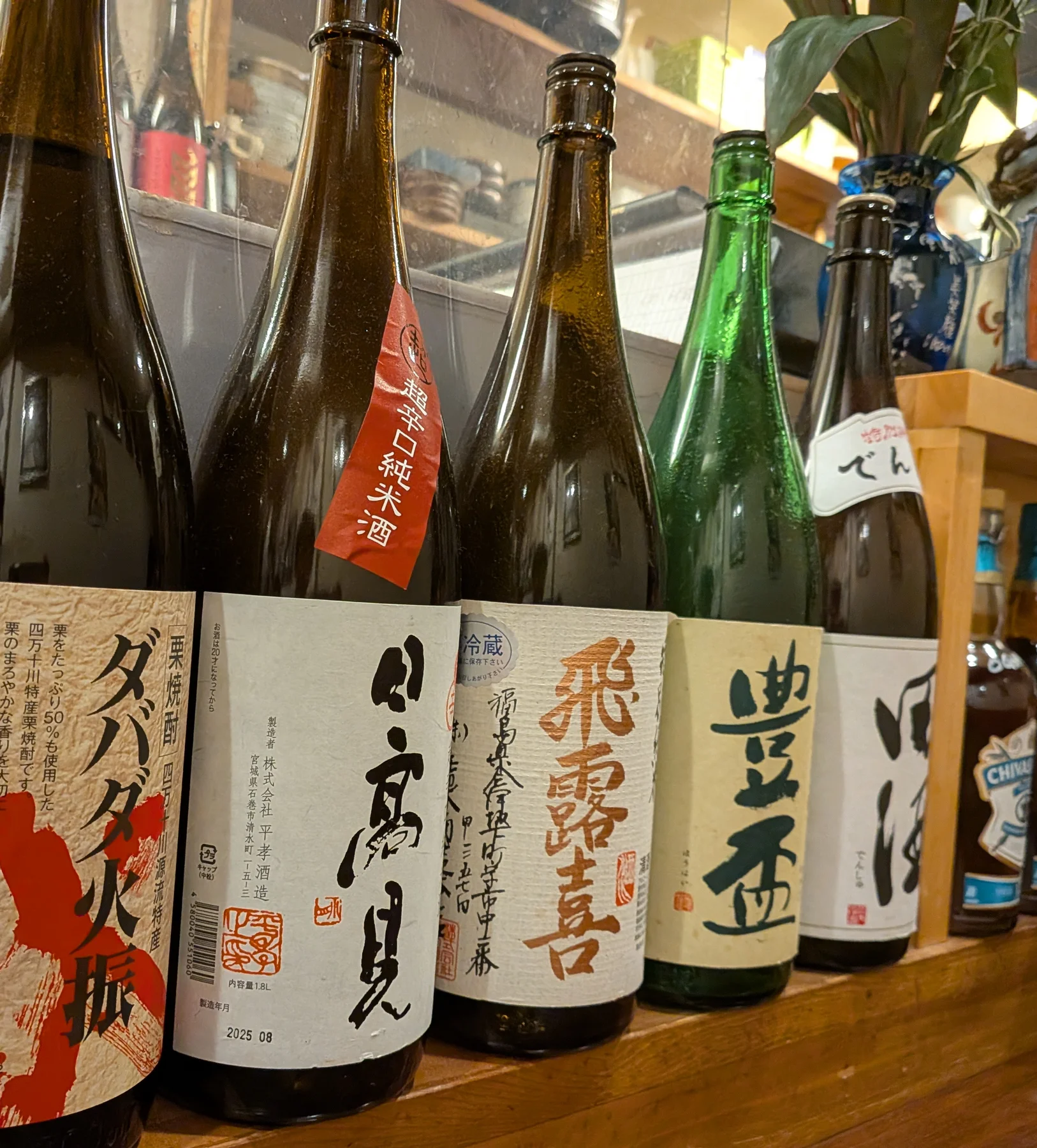
A view of the sake lineup inside Chigusa. This frame documents the room, not the bottle served at the table.
Chigusa-maki is the restaurant’s namesake dish: tuna and grated yam rolled in nori, served without rice. The soft yam, clean tuna, and savory nori made it a useful dish for seeing whether a sake could stay dry and structured without becoming severe.
The sake: Hitakami Chokarakuchi Junmai
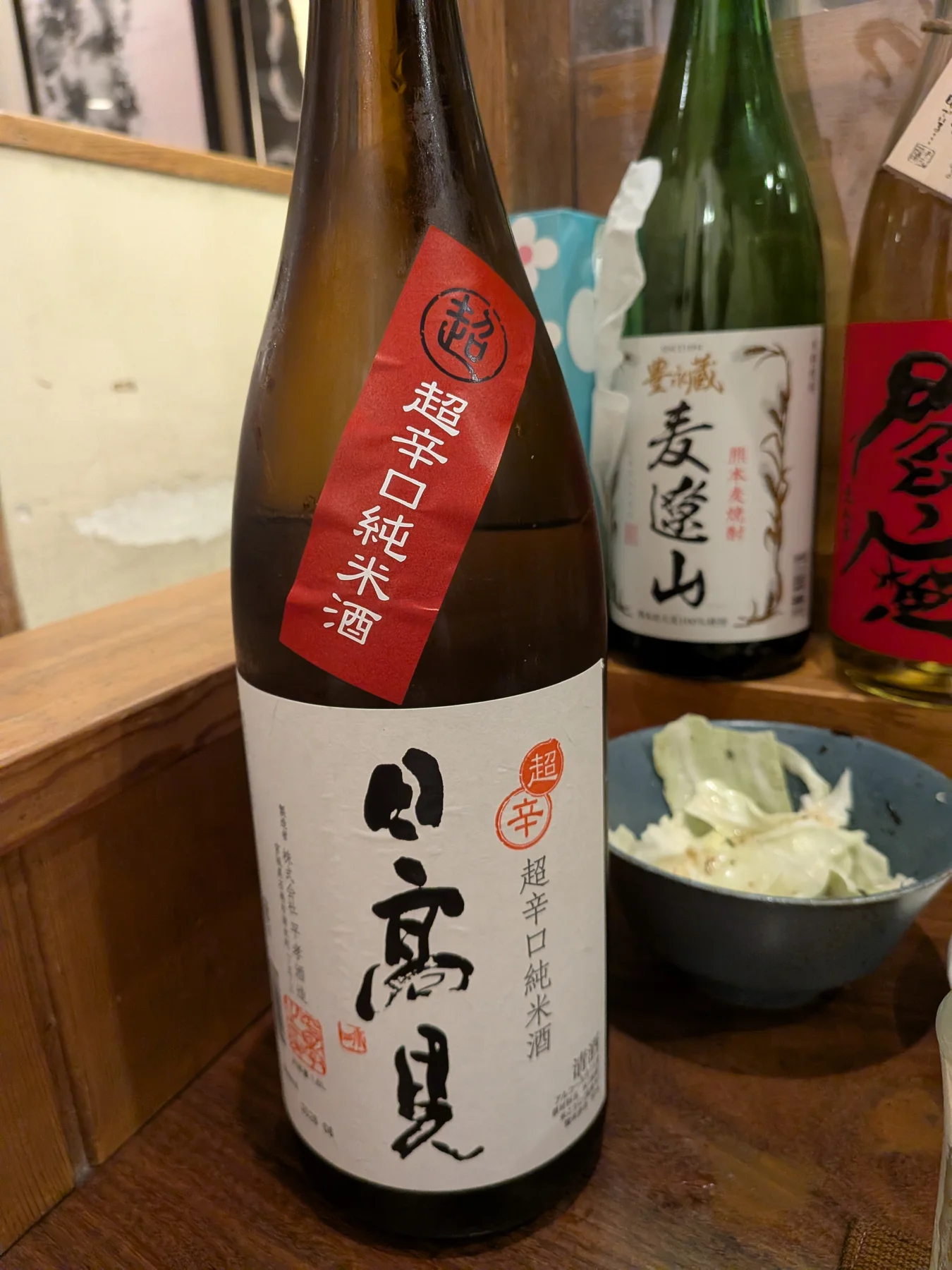
Hitakami Chokarakuchi Junmai, served chilled during the visit.
Hitakami Chokarakuchi Junmai — rendered here as “Hitakami Extra Dry Junmai” — came across as firmly dry, with restrained aroma, bright acidity, noticeable weight, and a crisp finish. It had enough structure to stay present beside food, but it did not pull attention away from the dish.
The dish: Chigusa-maki
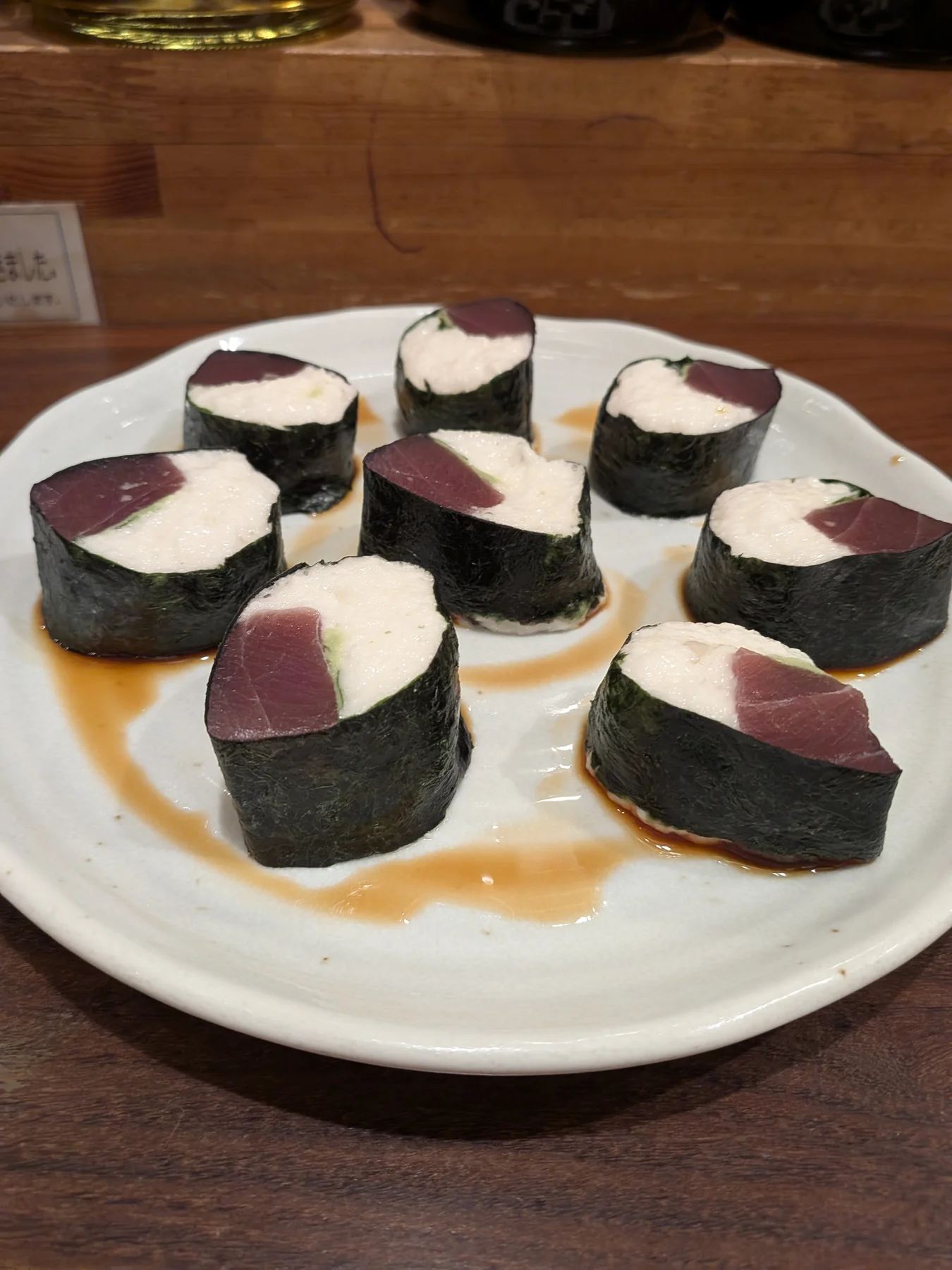
Chigusa-maki: tuna and grated yam wrapped in nori, served without rice.
Without rice, the dish stays focused on texture and savoriness. The tuna gives it a clean, meaty center, the grated yam softens the texture, and the nori adds a deeper savory edge.
Why the pairing worked
Hitakami’s dry profile and firm acidity carried the tuna, yam, and nori cleanly. The acidity kept the grated yam from feeling too soft, while the sake’s body stayed level with the tuna and nori rather than disappearing behind them.
It was the best match of this visit — a judgment limited to what was eaten and drunk at Chigusa that night, not a claim that this is the universal best pairing for Hitakami.
What stayed with me
The visit worked because the sake remained part of the meal. Hitakami had enough weight and acidity to define the pairing, but its restrained aroma left room for the food. That balance made the Chigusa-maki combination more memorable than either element on its own.
To apply the same acidity, body, aroma, and umami questions to pieces with vinegared rice, read how to choose sake for sushi by fish, fat, and seasoning. For the broader flow of choosing pours course by course, use the izakaya ordering guide.
Browse all sake by category, or compare bottles on the Taste Map.
Human-reviewed US alternative
Field notes — tasted once in Tokyo
Human-reviewed match
We do not currently track Hitakami Extra Dry Junmai as available in the US, but Kagatobi Yamahai Junmai Extra Dry was selected through human review of our eligible US candidate set — sharing Hitakami's restrained aroma, firm body, bright acidity, and food-friendly umami, with an even drier profile and a shorter, sharper finish.
The original field note paired Hitakami Extra Dry Junmai with Chigusa-maki (tuna and grated yam rolled in nori).
This match was approved from a human-tasted Hitakami Field Note and a traceable human-reviewed Kagatobi TasteScore profile. Kagatobi has not yet been directly tasted by Sake Coordinates.
Affiliate links — we may earn a small commission at no extra cost to you.